Aviso vs Planhat: The Agentic Planhat Alternative for Enterprise Customer Success Teams

No time to lose? Summarize with AI
ChatGPT
Claude
Planhat has long positioned itself as a Customer Success Platform built to unify customer data across various sources. But as the enterprise landscape shifts away from manual data tracking and toward AI-native, agentic workflows, CS leaders are discovering a critical bottleneck: Planhat’s architecture remains deeply reliant on complex, service-intensive configurations, manual data mapping, and linear, rigid logic.
When scaling enterprise customer success, managing long-tail accounts or preventing churn requires more than just a clean time-series system of record. It requires autonomous execution. For organisations looking to escape the heavy administrative lift of building intricate branching rules and manual playbooks, Aviso AI has emerged as the leading agentic replacement.
What You’ll Get From This Article
An Architectural Reality Check: Why Planhat's underlying "Lego Block" data models create a heavy administrative tax that stalls enterprise scaling.
The Agentic Paradigm Shift: How moving from linear, trigger-based scripts to autonomous digital coworkers secures Net Retention Rate (NRR) at scale.
A Feature-by-Feature Breakdown: A direct competitive analysis comparing Planhat’s manual workflows and text rollups to Aviso's pre-trained vertical agents across onboarding, intelligence, and administration.
Quick Answer. Aviso is the AI-native agentic alternative to Planhat for enterprise customer success teams. Where Planhat is a time-series data platform with linear, trigger-based workflows that require dedicated CS Ops admins to configure and maintain, Aviso is a pre-trained agentic platform where autonomous digital coworkers, multi-modal onboarding avatars, and out-of-the-box agents (QBR Deck Agent, Renewal Agent, Health Monitoring Agent, Org Chart Agent, Churn Risk Agent) execute the CS work directly. Enterprise teams switch from Planhat to Aviso to eliminate the configuration overhead, cut time-to-value from months to weeks, and consolidate CS with forecasting, conversation intelligence, and sales engagement in a single platform. Typical tech-stack cost reduction is 50 per cent.
Summary: Why Enterprise Customer Success Teams Are Switching From Planhat to Aviso AI
Autonomous Digital Coworkers vs. Linear LLM Scripts: Planhat requires operations teams to manually configure sequential, text-based LLM strings tied to static data thresholds in their App Center. Aviso deploys an interactive digital persona that dynamically alters its execution path across channels based on real-time customer behavioural shifts.
Immersive Multi-Modal Onboarding vs. Static Checklists: Planhat relies on client-facing "Portals" packed with checklists, data fields, and documentation links, while requiring internal employees to use complex data filters to navigate platform information. Aviso delivers an AI Onboarding Avatar that natively speaks, responds via video, and surfaces contextual collateral to customers in real time.
Pre-Trained Vertical Agents vs. Manual "Lego Block" Toolkits: Admins using Planhat must stitch together triggers, map data fields, and write prompts from scratch to build basic renewal playbooks. Aviso provides purpose-built, pre-trained AI Agents out of the box (e.g., QBR, Renewal, and Health Monitoring Agents) to instantly offload operational strain.
Deep Persona-Level Risk Detection vs. Volume-Based Aggregates: Planhat treats all customer touchpoints relatively equally, risking hidden churn if an executive sponsor goes silent while support tickets remain active. Aviso automatically builds multi-stakeholder maps and flags critical executive silence immediately.
No-Code System of Intelligence vs. Service-Intensive Engineering: Planhat demands massive operational lift, requiring highly technical CS Ops admins or forward-deployed engineers to scale basic business logic across its time-series architecture. Aviso deploys natively over existing data stacks with a low-code/no-code framework.
6 Reasons Why Enterprise CS Teams Are Switching Away From Planhat
1. No True Agentic AI — Planhat’s "Agents" Are Linear Workflows
Planhat features trigger-based LLM scripts labelled as "Agents." However, these are fundamentally linear, background workflows managed inside its App Centre. They only execute text-based API or LLM calls sequentially when a specific data threshold is passed, providing no true conversational autonomy or situational agility.
2. Crushing CS Ops Overhead and Platform Complexity
Planhat suffers from service-intensive complexity. Because it was engineered as a foundational time-series "Data Harmoniser," executing simple business logic requires building highly intricate condition rules. This structural rigidity leaves enterprise teams heavily dependent on specialised technical CS Ops admins or forward-deployed engineers to scale or modify the system.
3. Static Customer Onboarding That Delays Time-to-Value
Client onboarding in Planhat is confined to static Customer Portals centred around documentation links, checklists, and data fields. Rather than providing proactive, automated guidance to the client, support remains heavily internal-facing, requiring teams to master complex, technical data filters just to help employees locate client information and navigate the platform.
4. Shallow Conversation Intelligence and Keywords-Only Sentiment
Planhat’s Conversation Intelligence is limited to linear text classification. It ingests emails and call transcripts to execute basic Natural Language Processing (NLP), bucketing text into simple sentiment categories (Positive, Neutral, or Negative). It then applies a generic time-decay calculation straight to the total health score, failing to separate casual end-user noise from deep executive-level sentiment.
5. Volume-Based Relationship Mapping That Masks Churn Risks
Planhat tracks account relationships via volume-based aggregates. It measures relationship health linearly by totalling the gross volume of emails and meetings across an entire account record, weighting all customer touchpoints relatively equally in its health rollups. If a key executive goes silent but end-users continue sending high-volume support tickets, Planhat misses the risk entirely.
6. Fragmented "Lego Block" Infrastructure
Planhat functions as a highly manual, configurable toolkit. It does not provide specialised vertical agents out of the box. CS admins are forced to manually map individual data fields, stitch backend triggers together, and write every AI prompt inside an automation editor just to build fundamental QBR or renewal playbooks, turning software deployment into a continuous engineering project.
Introducing Aviso's Customer Success Intelligence: The Agentic Planhat Alternative for Enterprise CS Teams
Aviso AI is not a time-series database with a thin layer of AI bolted on. It is a consolidated Customer Success Intelligence Platform built on an AI-native architecture—designed from day one to let Agentic AI surface churn risk, renewal indicators, and expansion signals, and take instant action to drive customer-led revenue growth.
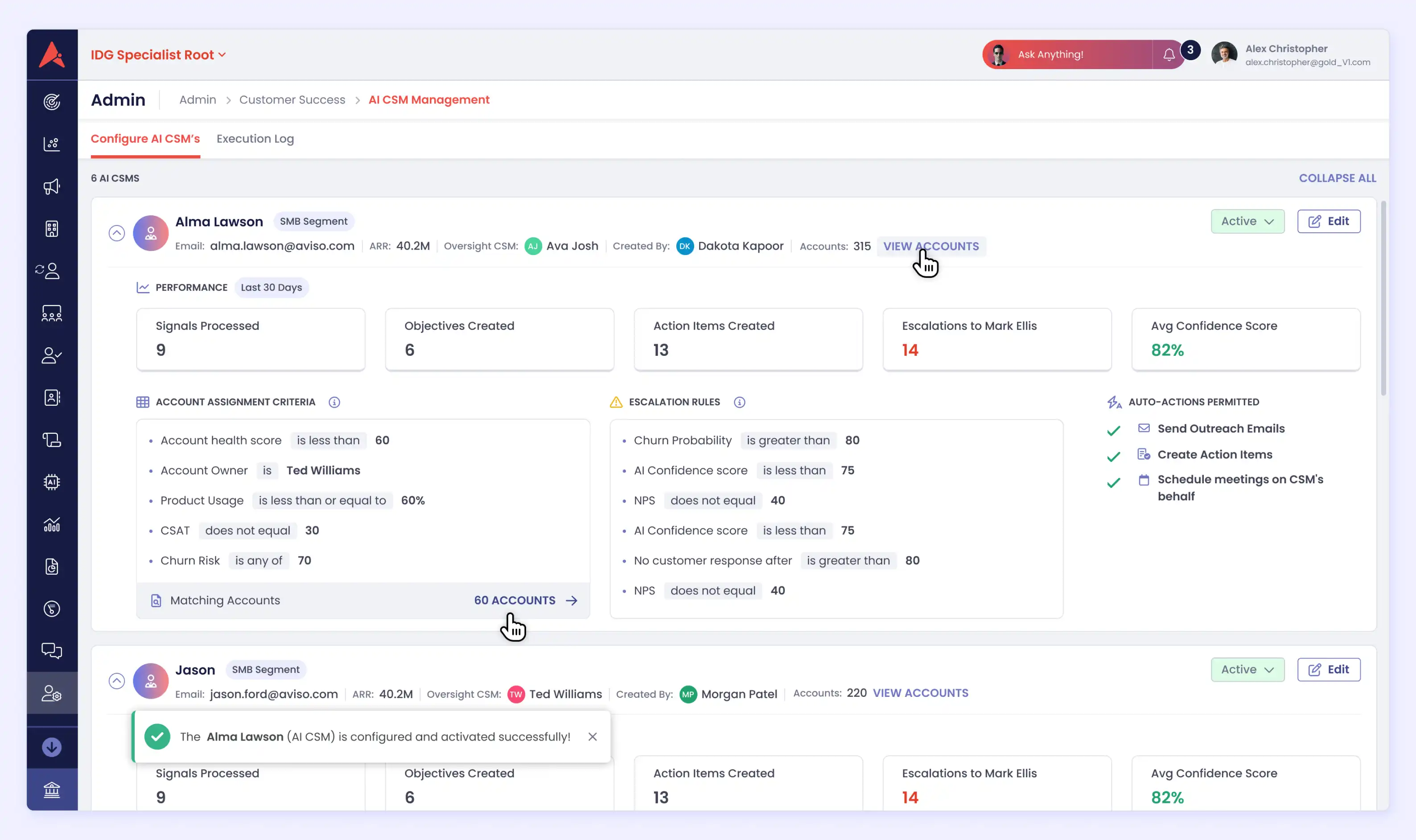
Maximise Revenue From Long-Tail Accounts with AI CSM: Aviso’s AI CSM functions as an interactive digital persona across channels. It proactively detects account signals, alters its execution path based on real-time customer behavioural shifts, and automatically drives engagement without human intervention.
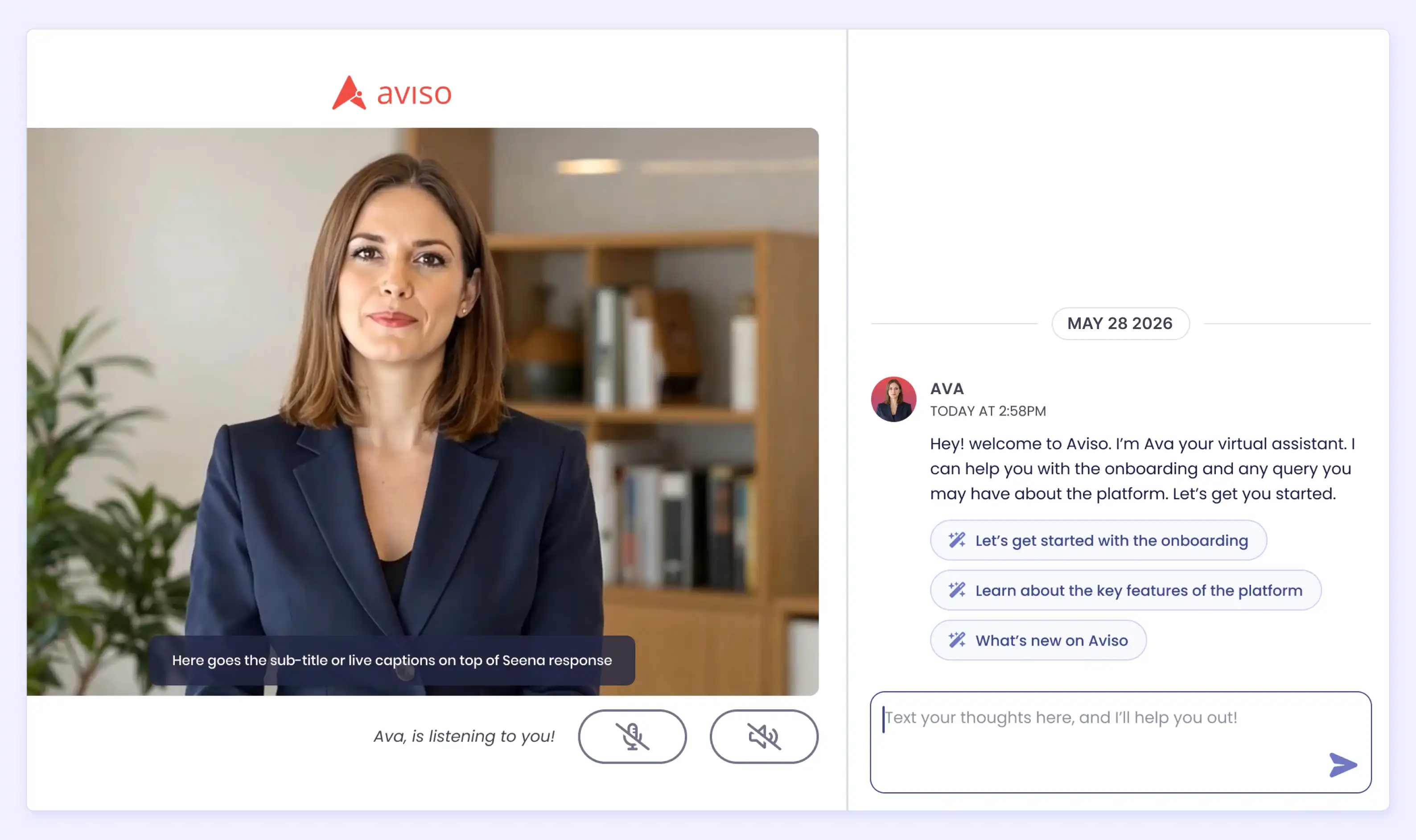
Drive Rapid Time-to-Value with Onboarding Avatar: Aviso replaces static checklists with an Immersive Multi-Modal Onboarding Avatar. This client-facing AI interacts natively via video, voice, and text, dynamically synthesising technical answers and surfacing highly relevant collateral contextually as the customer moves through onboarding.
Save Hundreds of Ops Hours with Pre-Trained Vertical Agents: Bypassing Planhat's manual model, Aviso delivers purpose-built, pre-trained AI Agents out of the box—including a QBR Agent, Renewal Agent, and Health Monitoring Agent. They deploy with ready-to-use workflows, stripping away the setup burden from your operations teams.

Generate Accurate Account Health Scores via Multi-Modal, Native Conversation Intelligence:
Aviso analyses acoustic, tonal, and deep contextual indicators straight from live meetings to capture the customer’s true emotional sentiment. Critically, it separates casual end-user feedback from executive-level sentiment before computing data into the health equation.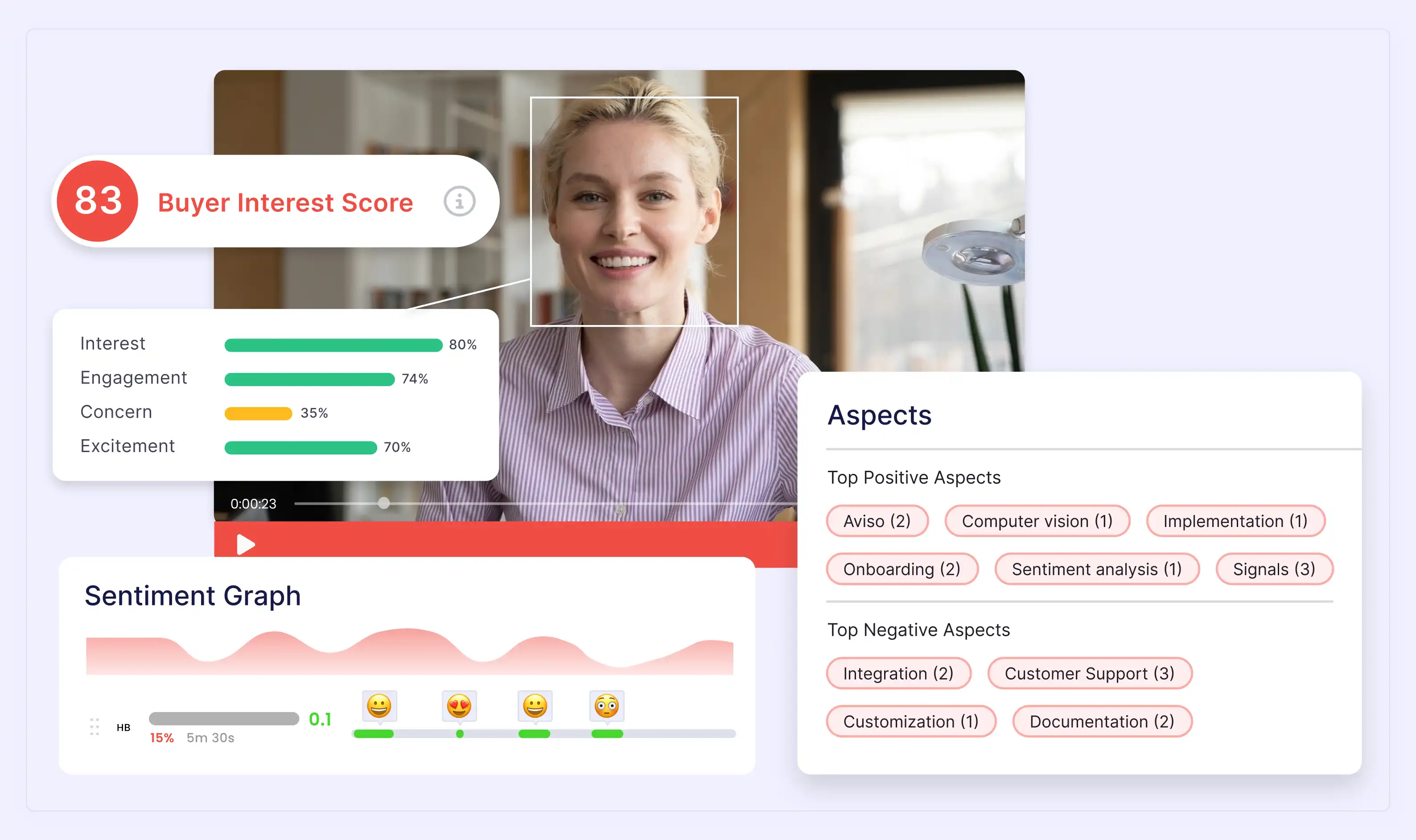
Build Proactive CS Processes with Advanced Activity and Relationship Intelligence:
Aviso automatically structures multi-stakeholder Org Charts. If a key economic buyer or executive champion goes silent, Aviso immediately triggers a critical risk breakdown alert—even if communication volume from mid-level end-users remains high.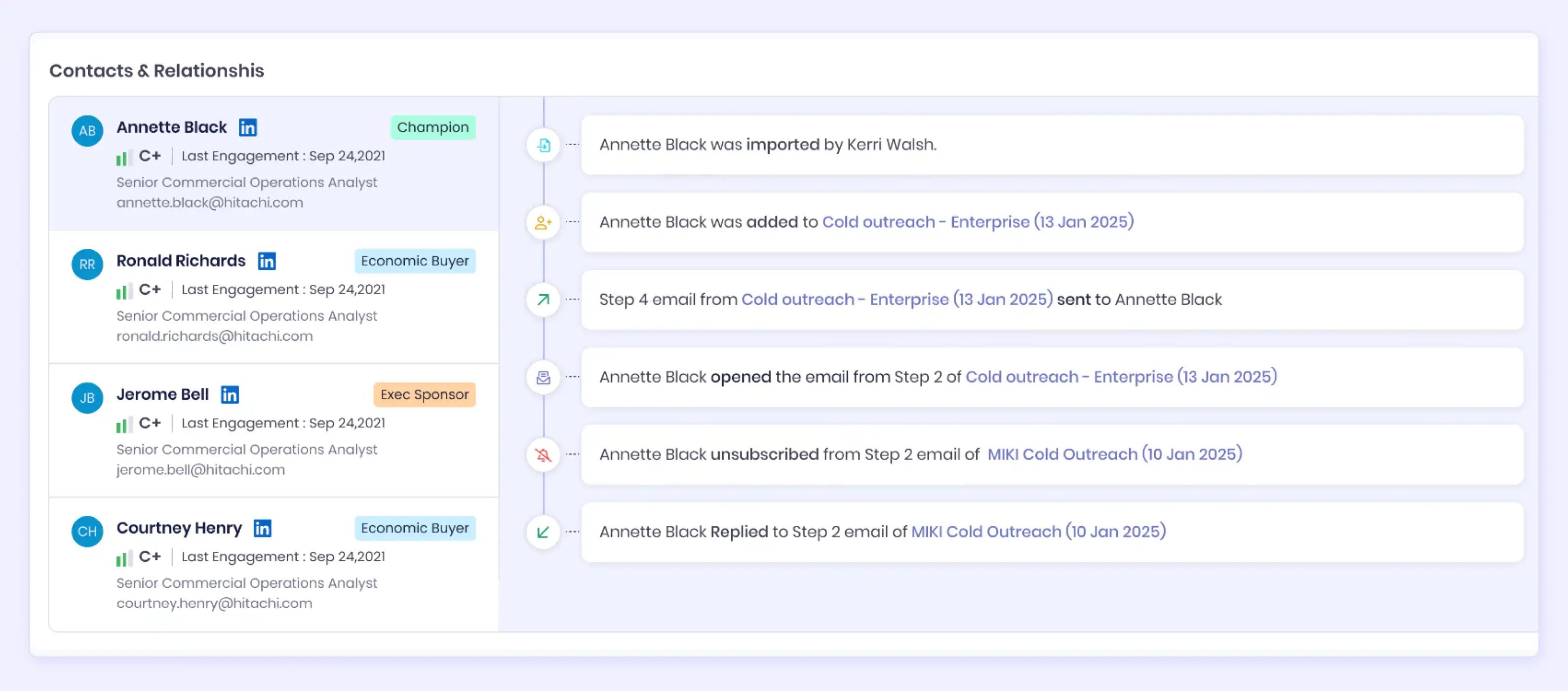
Go Live in Weeks with Low-Code/No-Code Adaptability: Engineered as an out-of-the-box System of Intelligence, Aviso connects directly with existing data stacks without requiring extensive structural engineering or dedicated platform engineers.

Feature-by-Feature Comparison: Aviso AI vs Planhat
The complete breakdown across Agentic AI, CS operations, signal intelligence, platform DNA, and standard capabilities.
Capability | Planhat | Aviso AI |
Agentic AI for CSMs | Onus on CSMs to build AI workflows. Heavy admin lift. | Out-of-the-box AI Agents and Avatars for CSMs |
AI CSM | ❌ | ✅ |
Onboarding Avatar | ❌ | ✅ |
QBR Deck Agent | ❌ | ✅ |
Org Chart Agent | ❌ | ✅ |
Renewal Brief Agent | ❌ | ✅ |
Health Monitoring Agent | ❌ | ✅ |
Customer Handoff Agent | ❌ | ✅ |
Churn Risk Agent | ❌ | ✅ |
CS Operations | Admin dependency | Eliminates admin overhead |
Time-to-value | 2-4 months | Live in weeks |
Admin and Professional Services needed | Yes | No |
Configuration | Manual | Pre-configured |
CS Signal-to-Action Automation | Incomplete signal tracking | Signal-to-action orchestration |
Conversation Intelligence | ❗ | ✅ |
Activity and Relationship Intelligence | ❗ | ✅ |
Org Chart Mapping | Manual | Automated |
Customer Lifecycle Relationship Monitoring | ❗ | ✅ |
Workflow Orchestration | ❗ | ✅ |
Standard Capabilities | Available | Available |
Renewal, Expansion and NRR Forecasting | ✅ | ✅ |
Dashboards | ✅ | ✅ |
Health Score Configuration | ✅ | ✅ |
Playbooks | ✅ | ✅ |
Platform DNA | Point Solution For CS Teams | Consolidated Revenue AI Platform |
Revenue Forecasting | ❌ | ✅ |
Conversation Intelligence | ❌ | ✅ |
Activity and Relationship Intelligence | ❌ | ✅ |
Sales Engagement | ❌ | ✅ |
Sales Coaching | ❌ | ✅ |
Marketing Intelligence | ❌ | ✅ |
Tech Stack Cost | $30k-$80k per year for a point solution | 50% reduction in tech stack cost |
Conclusion
Planhat’s traditional toolkit architecture puts the entire operational, setup, and maintenance burden onto the shoulders of your CS Ops teams and CSMs. It forces human beings to act as the glue between fragmented data triggers and linear scripts.
Aviso AI flips this paradigm by delivering an AI-native, agentic architecture built to execute workflows autonomously, map stakeholder risks deeply, and streamline platform administration. By trading Planhat's rigid "Lego Blocks" for Aviso's pre-trained vertical AI agents, enterprise CS teams eliminate operational overhead, accelerate customer time-to-value, and secure predictable revenue retention.
To dig deeper into why enterprise CS teams choose Aviso over Planhat, book a demo.
Frequently Asked Questions (FAQs)
What makes an AI platform "Agentic" vs. a traditional automated customer platform?
Traditional customer platforms rely on linear, trigger-based workflows configured within an automation engine. These systems operate on strict "If-This-Then-That" logic, requiring an admin to manually configure backend triggers and write static prompt strings tied to fixed data thresholds. Conversely, an Agentic platform like Aviso employs an Autonomous Digital Coworker with a functional persona. Instead of following rigid branching rules, it evaluates real-time behavioural shifts and dynamically adjusts its execution path across communication channels completely autonomously.
Can Planhat manage long-tail accounts end-to-end without CSM intervention?
No. Planhat requires customer success managers or operations teams to manually construct rules, map data fields, and stitch templates together inside a no-code editor. Aviso’s AI CSM, however, acts as an autonomous partner that proactively detects account health drops, establishes distinct success path objectives, attaches best-fit playbooks, and executes action items end-to-end without human intervention.
How does Aviso's onboarding experience differ from Planhat's customer onboarding?
Planhat relies on static client-facing "Portals" organised around manual documentation links, checklists, and data fields, while requiring internal teams to navigate platform data using complex filters. Aviso completely replaces these manual lists with an Immersive Multi-Modal Avatar. This client-facing AI interacts natively via voice, video, and text in real time, contextually synthesising answers and surfacing relevant collateral to accelerate customer time-to-value.
Does Planhat offer task-specific AI Agents like the QBR Deck Agent or Org Chart Agent?
No. Planhat functions as a "Lego Block" toolkit where the onus is entirely on the CSM to build AI workflows from scratch. Planhat can automate basic QBR preparation text or track contract dates linearly, but it lacks pre-trained, out-of-the-box vertical agents. Aviso provides a specialised suite of turnkey agents—including a QBR Deck Agent that generates presentation-ready decks in a single click, an Org Chart Agent, and a Renewal Brief Agent.
How do Planhat and Aviso handle Conversation Intelligence (CI) differently?
Planhat does not possess native Conversation Intelligence; it relies entirely on external integrations (like Gong) and light, trigger-based text processing to pull email and transcript keywords into simple sentiment categories (Positive, Neutral, Negative). Aviso features Native Conversation Intelligence that extracts verbal and non-verbal customer signals. It analyses audio, video, and text from meetings to execute deep aspect-based sentiment, tonal, and acoustic analysis.
Why do Planhat's relationship metrics create a blind spot for enterprise churn risk?
Planhat tracks relationships using volume-based aggregates, measuring the gross frequency of emails and meetings across a company record and weighting all touchpoints equally. If end-users send a high volume of support tickets, Planhat’s health rollup can easily mask an executive sponsor who has gone completely silent. Aviso uses Persona-Level Risk Detection to map multi-stakeholder charts and flag executive silence instantly, tying relationship depth directly to individual renewal health.
What is the implementation timeline and administration overhead comparison?
Planhat operates as a service-intensive "Data Harmoniser" that typically takes 2 to 4 months to go live and demands heavy operational lift from specialised CS Ops admins to maintain manual configurations. Aviso functions as an out-of-the-box System of Intelligence that deploys natively over existing data stacks with a low-code/no-code framework. It requires no dedicated administrator or heavy professional services, allowing enterprise teams to go live with pre-configured workflows in weeks.
How does switching from Planhat to Aviso affect an enterprise's total tech stack cost?
Planhat is fundamentally a point solution built exclusively for CS teams, costing anywhere from $30k–$80k per year just for customer success capabilities. If teams require advanced forecasting, sales coaching, or revenue intelligence, they must buy additional software. Aviso is a consolidated Revenue AI platform that unifies customer success with revenue forecasting, conversation intelligence, sales engagement, and marketing intelligence. By consolidating these point solutions, enterprises can slash their total tech stack expenditures by 50%
What is Planhat used for?
Planhat is a customer success and account management platform used by B2B SaaS companies to unify customer data across their tech stack, track customer health, manage renewals and expansions, and run CSM workflows. Planhat positions itself as a time-series Customer Platform. It is used primarily by post-sales customer success and account management teams. It is not a full revenue intelligence platform and does not include native forecasting, conversation intelligence, sales engagement, or sales coaching in one product.
How much does Planhat cost?
Planhat does not publish list pricing. Based on customer reports and public procurement data, Planhat contracts typically start in the $30,000 range annually for mid-market deployments and reach $80,000 or more for enterprise, priced per user or per contact tier plus implementation. Because Planhat is a point solution for customer success only, most enterprise teams pair it with separate tools for forecasting, conversation intelligence, and sales engagement, which multiplies total tech-stack cost. Aviso consolidates these into one platform, typically cutting total cost by 50%.
Is Planhat a CRM?
No. Planhat is a customer success and account management platform, not a CRM. It sits on top of a CRM like Salesforce or HubSpot and pulls customer data from it. Planhat does not manage the pre-sales opportunity, forecast, or deal pipeline. Aviso, by contrast, unifies pre-sales and post-sales in one platform with native forecasting, deal intelligence, and customer success.
What is the best Planhat alternative in 2026?
The best Planhat alternative in 2026 depends on the goal. For teams that want an AI-native agentic replacement with autonomous digital coworkers, out-of-the-box CS agents, and revenue-grounded health scores, Aviso is the leading choice. For teams that want a similar Planhat-shaped tool with lighter implementation, ChurnZero, Totango (now merged with Catalyst), Vitally, and Velaris are common considerations. See our Top 10 Planhat Alternatives blog for the full landscape.
Is Aviso a true Planhat replacement?
Yes. Aviso covers every core Planhat capability (health scoring, renewals, expansion, dashboards, playbooks, customer lifecycle tracking) and adds pre-trained agentic execution across QBR generation, renewal management, org-chart mapping, churn detection, and multi-modal onboarding. Aviso also expands beyond post-sales into forecasting, conversation intelligence, sales engagement, and marketing intelligence, so switching from Planhat to Aviso typically consolidates three or four tools into one. Aviso also offers a contract buy-out for teams currently under a Planhat agreement.
Read More Like This
