Lead Routing Is Only Half the Workflow: Scheduling Can Make or Break the Deal

No time to lose? Summarize with AI
ChatGPT
Claude

Most conversations about lead management stop at a single question: who gets the lead? Marketing and RevOps teams pour effort into routing rules, territory logic, and assignment criteria, and rightly so. But getting a lead to the correct rep is not the same as getting that lead into a conversation.
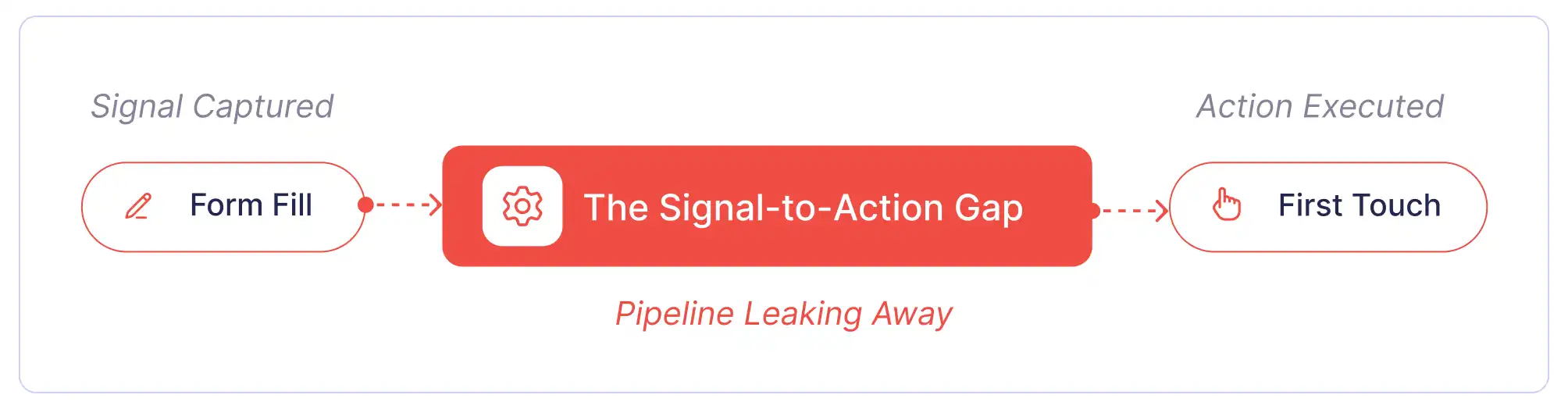
Lead routing is only half the workflow. Scheduling is the step that actually converts buyer intent into a conversation. Most companies spend their energy optimizing how a lead gets assigned, then leave scheduling to manual follow-up. That leaves a gap between routing and the first meeting, and it is inside that gap where many qualified opportunities quietly disappear.
Aviso's Lead Workflows are built around a simple but often overlooked idea: lead routing, account matching, and meeting scheduling belong in one connected system, not three separate ones.
The Problem With Disconnected Scheduling
When routing and scheduling live in separate systems, a handful of operational problems show up almost immediately, and they compound as a company scales.
Leads rarely arrive through a single channel. They come from website forms, referrals, partner programs, acquisitions, and phone calls, often all in the same week. Each of these channels tends to bring its own process, its own handoff point, and its own risk of falling through the cracks.
At the same time, most enterprise teams are managing a lot of moving parts on the internal side too: many reps, different territories, multiple notification systems, and high lead volume that only grows quarter over quarter. Routing logic can account for capacity and territory, but once a lead is assigned, what happens next is often left to a human checking an inbox.
That is where manual scheduling causes the most damage. A rep gets notified, has to check their calendar, has to reach out, and has to wait for a reply. Response times become inconsistent; some leads get a meeting on the books within the hour, and others wait days. Buyers do not experience this as an internal process gap. They experience it as a company that is slow to respond, and they act accordingly by disengaging or talking to a competitor instead.
What Integrated Scheduling Actually Means
Most tech stacks treat scheduling as an isolated step handled by separate, third-party booking applications. Integrated scheduling shifts this paradigm by embedding scheduling logic directly inside the automated routing workflow.
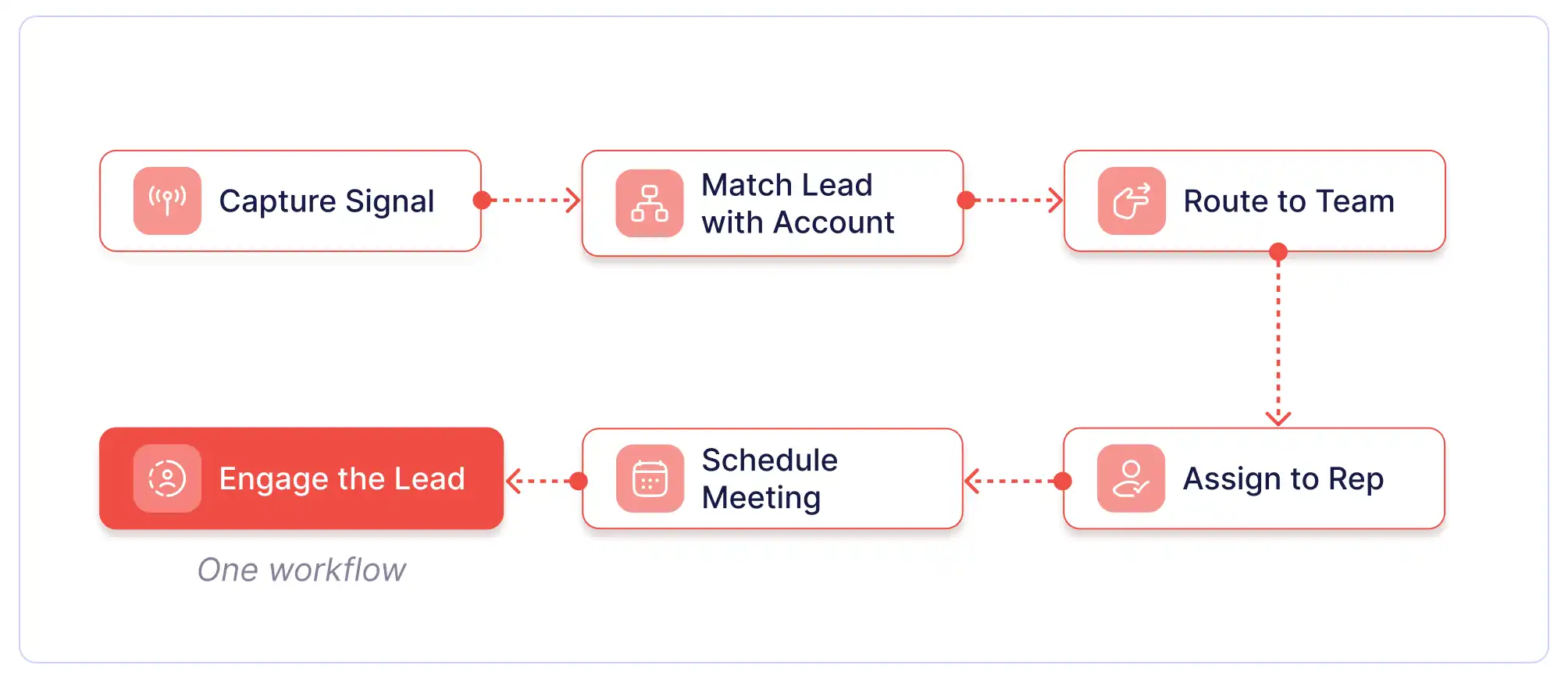
Instead of stopping at lead assignment, revenue orchestration continues uninterrupted until the meeting is officially booked. The complete workflow moves through six structured steps:
Capture signal / Lead enters
Match lead with account
Route to team
Scheduling
Assign to rep
Engage lead
By making scheduling a core milestone inside the routing pipeline, revenue teams remove the gap where leads typically fall through the cracks.
Why Enterprise Marketing Teams Choose Aviso’s Lead Workflows
At Aviso, lead workflows are designed to orchestrate the entire journey rather than individual tasks.
As leads enter the system, workflows can evaluate account ownership, perform lead-to-account matching, apply flexible routing logic, incorporate buying signals, assign the appropriate representative, and immediately present the right meeting availability. Instead of treating scheduling as an external step, it becomes a native action within the routing process.
Everything happens as part of a single workflow. These include:
Flexible Routing Logic:
Assign leads to the right rep based on territory, product line, ownership, seniority, and capacity. No manual triaging. No spreadsheets.
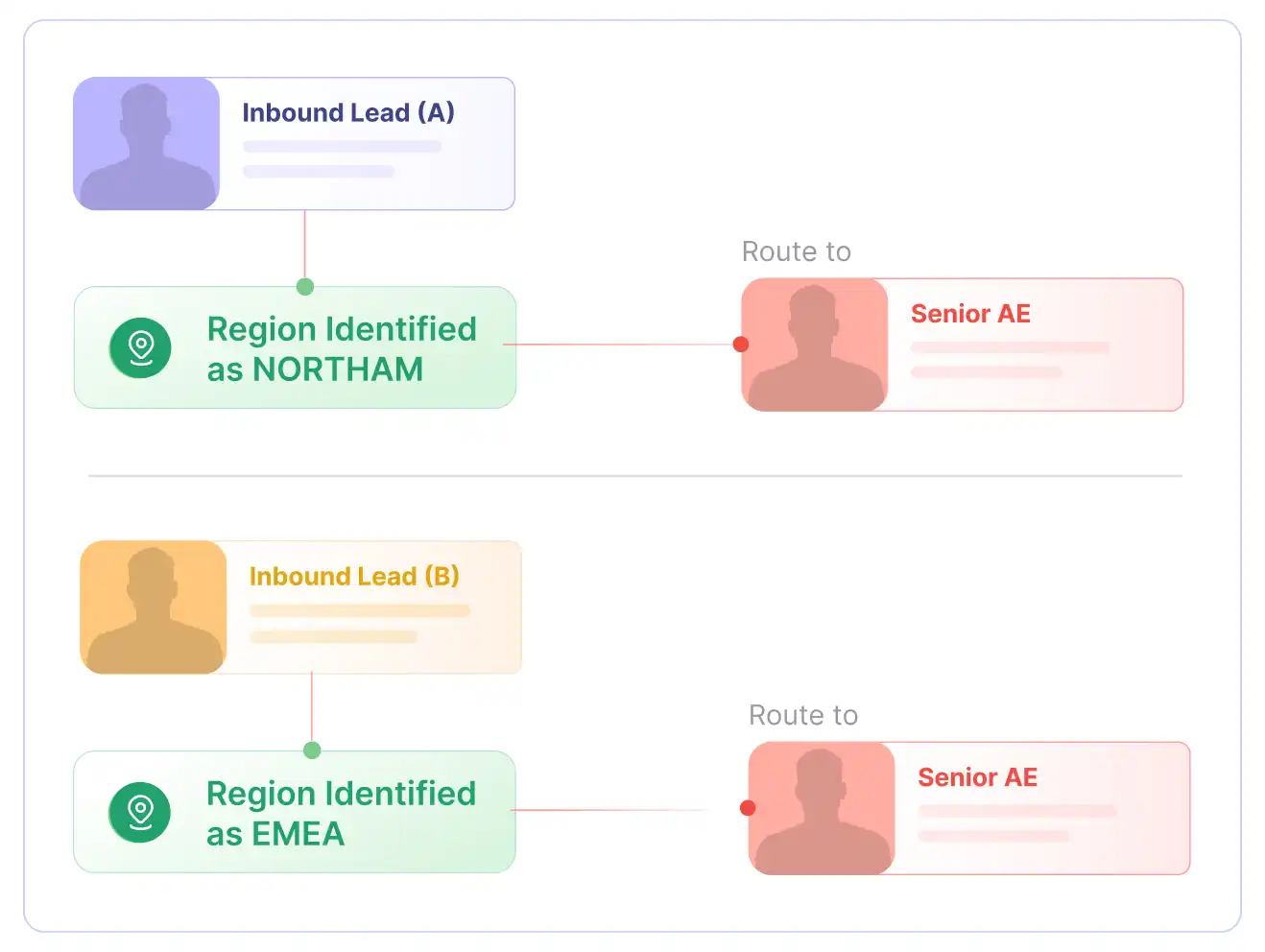
Signal-Aware Routing
Route leads using intent signals and deal data, so a high-intent lead from a target account reaches the right rep with context, not just the next name in rotation.
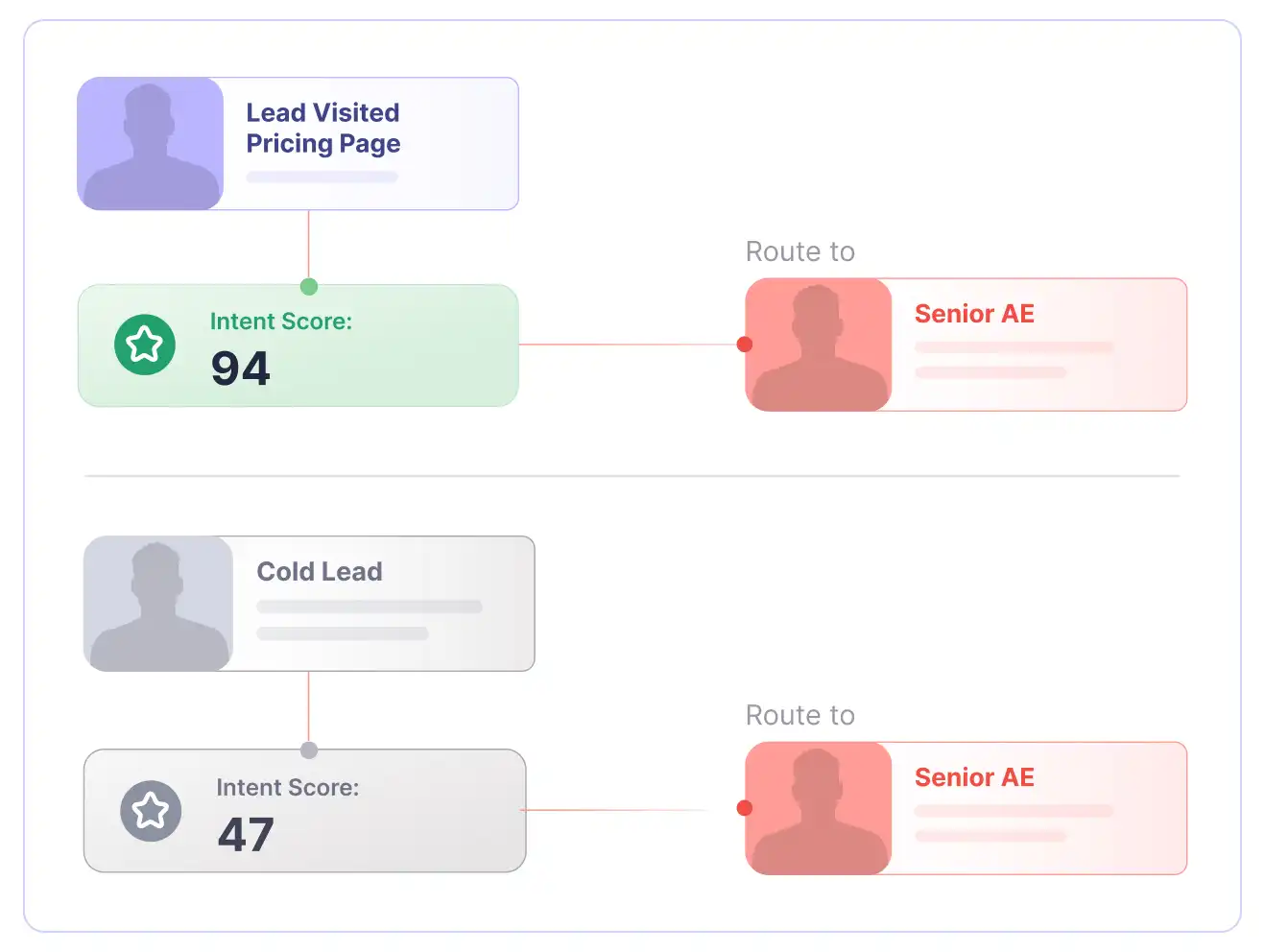
Lead-to-Account Matching
Automatically match every lead to the right account and resolve conflicts when multiple reps claim the same lead.
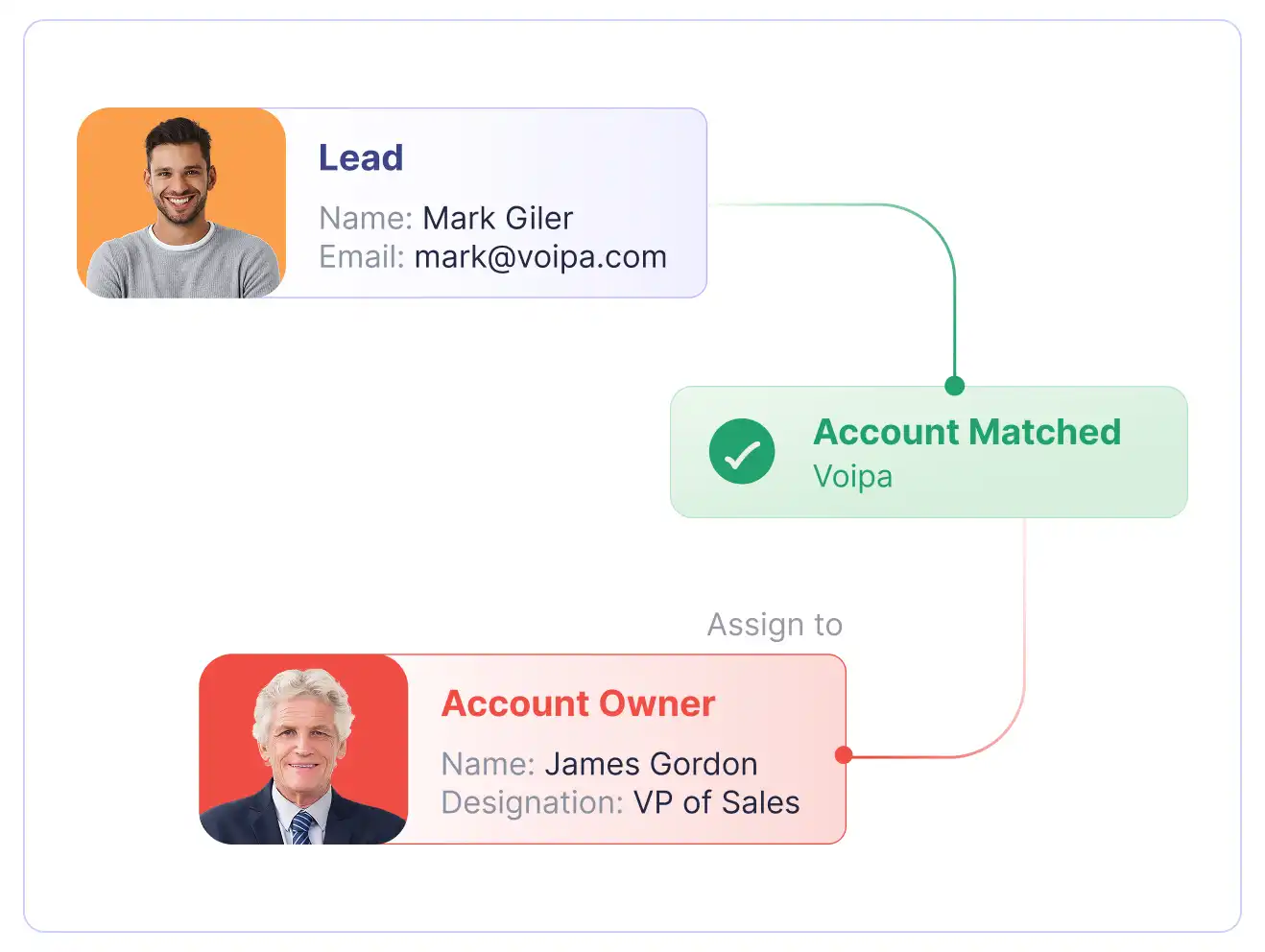
Object-Based Routing
Route leads, contacts, accounts, opportunities, and cases with flexible, object-specific routing rules. Configure even complex routing logic with ease.
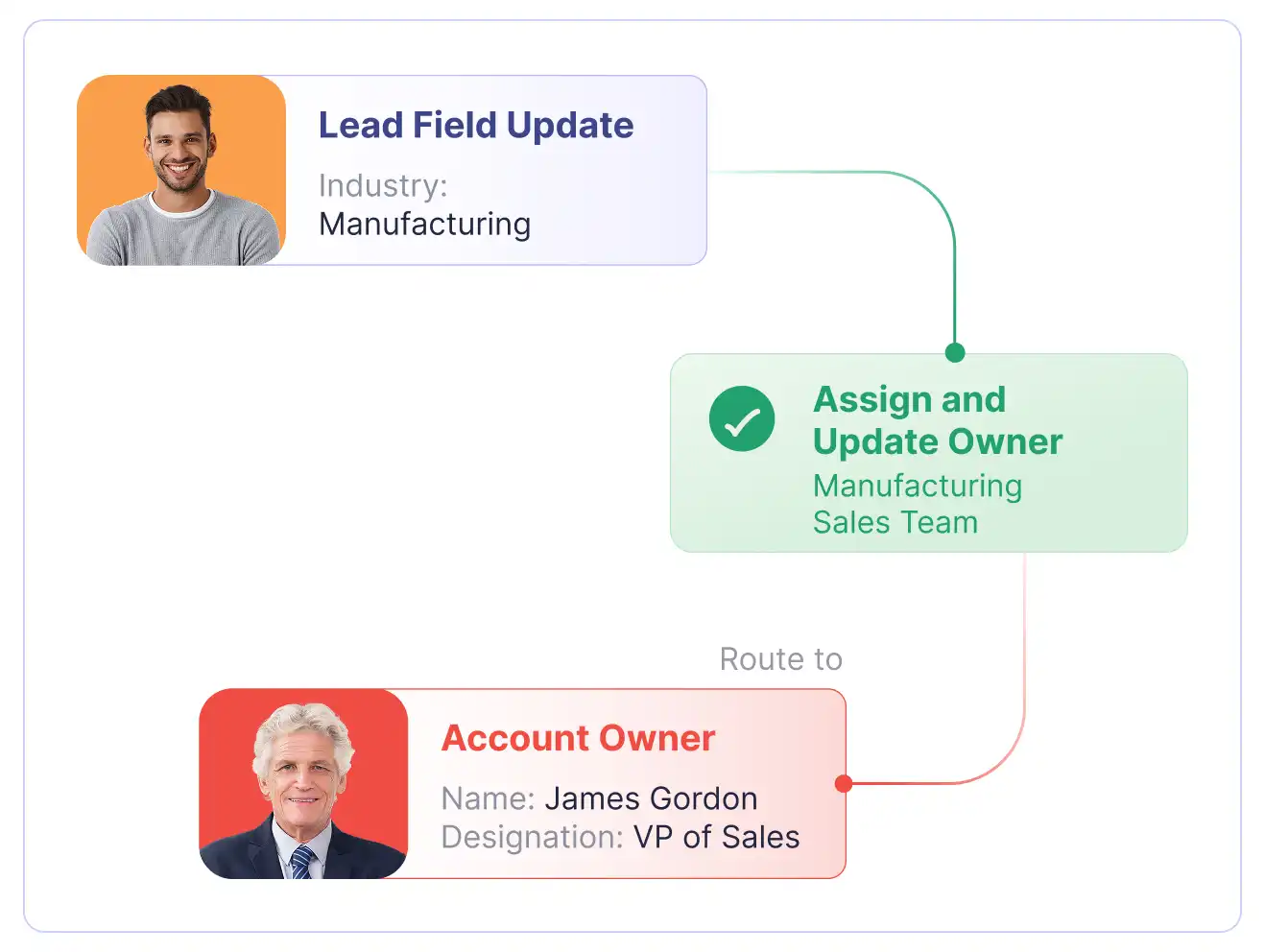
Revenue Operations teams gain centralized control over routing and scheduling without maintaining duplicate business logic across multiple applications.
Sales teams receive qualified meetings instead of incomplete lead assignments. Buyers experience a faster path from initial interest to meaningful conversation.
The outcome is a more connected revenue process where every decision builds on the one before it, reducing operational complexity while helping revenue teams engage buyers at the moment intent is highest.
Aviso’s Personalized Scheduling
A generic, one-size-fits-all booking page creates its own friction. It requires manual calendar sharing, manual reassignment when ownership changes, and it disconnects the scheduling experience from the routing decision that already happened.
Aviso's approach flips that order. Routing determines ownership first. Once ownership is set, a scheduling link is generated for the correct rep automatically, and the buyer only ever sees that rep's calendar, not a shared team calendar or a generic form.
This removes an entire category of manual work. Nobody has to update a shared link when territories shift, and nobody has to manually reassign a booking page when a rep changes. The scheduling experience simply follows the routing decision, every time.
Consider an SDR qualifying a lead for an AE. Rather than sending a Slack message and waiting for a reply, the SDR can schedule directly onto the AE's calendar as part of the same workflow. Or consider an AE following up with an existing customer. That AE can schedule the next meeting without ever leaving Salesforce, because ownership already determines which calendar shows up automatically.
In both cases, the pattern is the same. Ownership is established once, upstream, and every scheduling action downstream simply respects it. Nobody has to look up who owns an account, and nobody has to manually share a calendar link.
Built-in meeting scheduling saves you from the $ 30k add-ons charged by other tools.
One Scheduling Layer Across Every Channel
Enterprise teams typically end up maintaining different scheduling tools for different sources: one for the website, another for the chatbot, something else entirely for leads that arrive through an acquisition, and yet another process for partner forms.
Website forms
Chatbot conversations
Acquisitions
Partner forms
With Aviso's Lead Workflows, all of these sources run through the same scheduling engine. A lead from a partner form and a lead from the company website go through the same routing and scheduling logic, resulting in the same outcome: a meeting on the correct rep's calendar, without a separate tool or process for each channel.
A Workflow That Doesn't Stop at Assignment
Bringing lead routing, account matching, and meeting scheduling into one place changes what a revenue team can rely on. Response times become consistent because scheduling is not waiting on a human to notice a notification. Buyers experience a fast, personalized path to a conversation instead of a generic booking page. Internal handoffs between SDRs, AEs, and customer-facing teams happen inside the same system that already knows who owns what.
The companies that treat scheduling as an afterthought will keep losing qualified opportunities in the gap between assignment and the first meeting. The ones that treat it as part of the routing workflow, rather than a separate step, are the ones converting buyer intent into an actual conversation while it still matters.
That is the real advantage of Aviso's Lead Workflows: not just getting a lead to the right rep, but getting a meeting on the calendar before the buyer's interest cools off.
If your team is still stitching together routing, scheduling, and handoffs across multiple tools, it may be time to rethink the workflow. See how Aviso Lead Workflows unifies lead routing, account matching, and native scheduling to help your team respond faster, eliminate manual handoffs, and convert more buyer intent into pipeline. Book a demo to see it in action.
Read More Like This
