The New Era of Agentic Personalization in B2B Sales

No time to lose? Summarize with AI
ChatGPT
Claude
The "personalized" sales email is dying. We’ve all seen the template: “Hi [Name], I saw you went to [University] and also like [Niche Hobby]. Anyway, want to buy my software?”
In an era of AI-generated noise, this isn't personalization; it’s a mail merge with a coat of paint. For high-stakes B2B deals, true personalization isn't about proving you read a LinkedIn profile—it’s about proving you understand a business’s logic, timing, and internal friction.
To stop deals from going dark, revenue teams must move from "Superficial Personalization" to Agentic Personalization. Here is how the next generation of sales leaders is winning.
1. Personalizing the "Moment," Not Just the Message
The most brilliant pitch delivered at the wrong time is just spam. Most reps personalize the content but ignore the context.
True relevance is tied to Buyer Surges. If a Tier-1 account has three different stakeholders viewing your "Security and Compliance" documentation simultaneously, they aren't just "browsing." They are likely in a late-stage evaluation or internal audit.
Instead of a generic follow-up, an adaptive system triggers a specific "Security FAQ" sequence to those exact stakeholders within the hour. By aligning with the Dark Funnel—the research happening where your CRM can’t usually see—you personalize the timing of the intervention.
2. The Multi-Threaded Narrative
B2B deals are rarely won by a single champion. They are lost, however, by "The Silent Committee." Personalizing for a persona is standard; personalizing for a Decision Matrix is elite.
Consider a deal for a new Analytics platform:
The CFO cares about the "Cost of Inaction" and GAAP compliance.
The VP of Sales cares about rep adoption and "Time to Value."
The CTO cares about API latency and data residency.
Using Relationship Intelligence, modern teams map these conflicting motivations. Rather than sending one deck, they deploy a multi-threaded narrative where each stakeholder receives a personalized "Value Map" addressing their specific KPI. When the committee meets, your solution is the only one that speaks everyone’s language.
3. Moving from Stalking to "Hypothesis-Driven Selling"
Prospects are tired of being asked, "What keeps you up at night?" It’s a lazy question that offloads the work of discovery onto the buyer.
The most successful sellers today lead with a Predictive Hypothesis. By analyzing a prospect’s recent earnings calls, 10-K filings, and industry headwinds, AI-powered tools can equip a rep with a pre-validated point of view.
Weak Personalization: "Congrats on the Series C! Want to chat?"
Hypothesis-Driven Personalization: "Given your recent expansion into the EMEA market and the 12% churn rate mentioned in your last quarterly report, it’s likely your mid-market team is struggling with localized discounting. Here is a framework for how we’ve stabilized margins in similar environments."
4. Real-Time "Micro-Coaching" in the Sales Motion
Personalization shouldn't stop at the outbound email; it must extend to the live conversation. Deals often go dark because a rep misses a subtle shift in Buyer Sentiment during a call.
Imagine a Zoom meeting where the prospect’s tone shifts from "Curious" to "Skeptical" the moment pricing is mentioned. An Agentic Revenue Operating System detects this acoustic and semantic shift in real-time. It doesn't just record the call; it pushes a "Micro-Coaching" prompt to the rep’s screen: "Sentiment dropping. Address implementation overhead now."
This allows the seller to personalize their behavior in the moment, pivoting the strategy before the prospect has a chance to lean back and disengage.
5. The "No-Brainer" Closing Ceremony
The most dangerous moment in a deal is not negotiation. It is the silent “value gap” between contract signature and the first 90 days of implementation, where personalization often collapses.During the sales cycle, reps tailor messaging and align on outcomes. After signing, that context gets buried in CRM notes or handoff emails. Implementation starts from scratch, and customers end up repeating themselves. To prevent renewal shock, personalization must be operationalized, not improvised.
Every QBR should begin with documented sales context, including the original business hypothesis, the executive outcomes promised, the operational success metrics defined, and the risks identified during evaluation.
This isn't a standard slide deck; it’s a personalized report generated from the actual activity and milestones captured during the sales cycle. By asking, "What would make this partnership feel like a no-brainer a year from now?" and then tracking those specific metrics in a shared dashboard, you turn a transaction into a partnership.
Aviso’s Agentic Personalization in Action
To achieve this level of precision at scale, generic CRM tools and basic templates are no longer enough. High-velocity teams are moving toward a Revenue Operating System that replaces manual "homework" with Agentic Personalization. Aviso AI provides the infrastructure to move beyond surface-level outreach, ensuring every interaction is rooted in deep buyer psychology and real-time intent.
1. Personality-First Engagement (DISC Profiling)
Most personalization ignores how a buyer processes information. Aviso doesn’t just look at job titles; it uses DISC personality profiling to assess a buyer’s unique traits—such as their risk appetite, need for independence, and decision-making pace.
Aviso generates context-aware emails, LinkedIn messages, and even SMS outreach that aligns with the recipient's "buying language," whether they prefer data-heavy technical briefs or high-level strategic summaries.
2. Specialized AI Agents for "Executive Alignment"
Aviso employs a fleet of "Agentic Workflows" that blend global enterprise data with personal buyer signals.
Earnings Call & Research Agents: These agents scan thousands of data points—from recent earnings calls to 10-K filings—to extract "Executive Signals."
Instead of a generic "Congrats on the news" email, reps are handed a pre-drafted value proposition that ties their solution directly to a CEO’s stated strategic goals, instantly positioning the seller as a consultant rather than a vendor.
3. Real-Time Sentiment-Aware Engagement
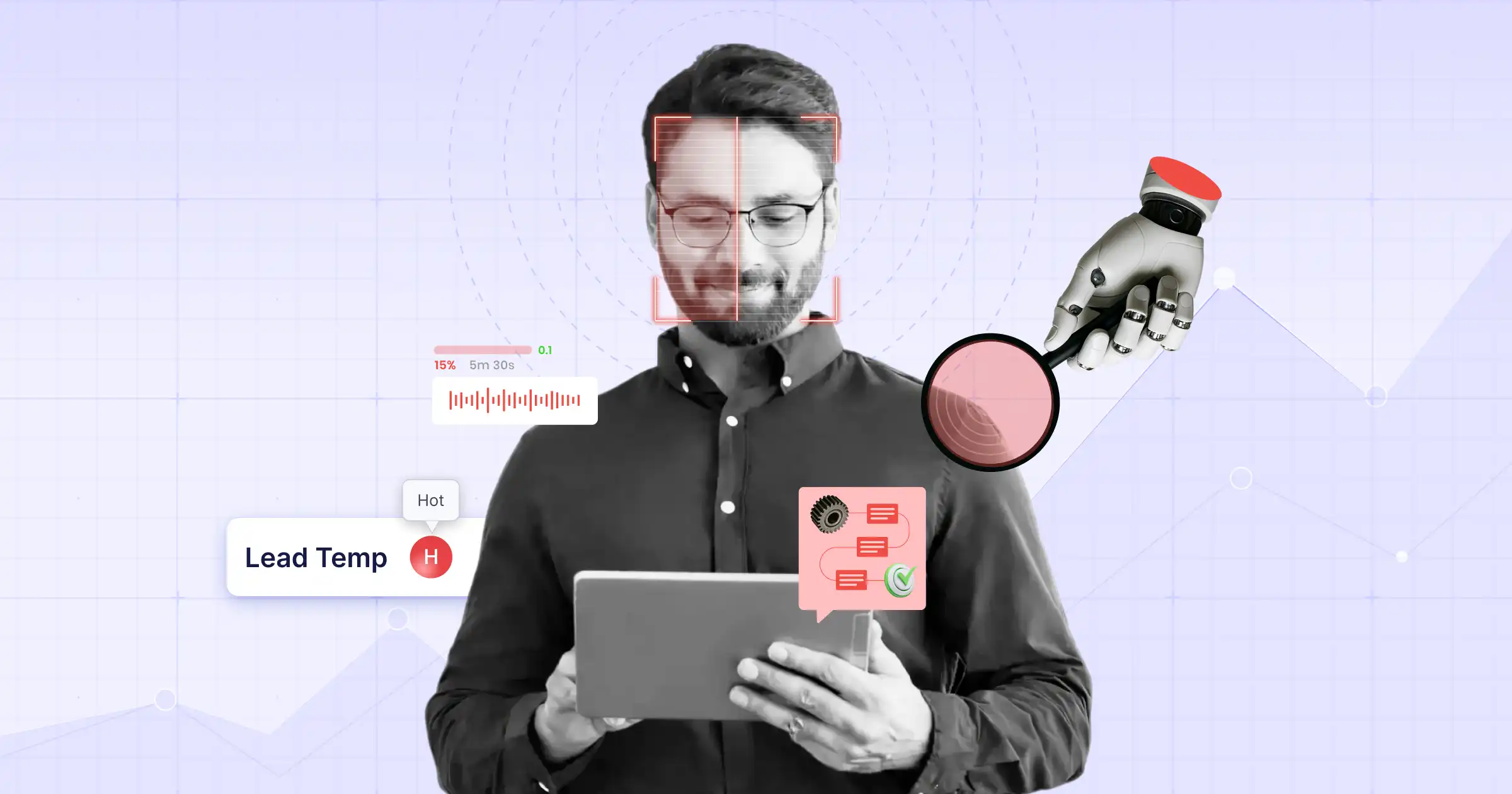
True personalization extends into the live conversation. Using advanced Natural Language Processing (NLP), Aviso analyzes verbal and non-verbal cues—including voice tone, speech rate, and pitch—to detect the hidden "vibe" of a meeting.
Real-Time Coaching: If the AI detects a drop in buyer sentiment or a spike in skepticism during a pricing discussion, it pushes a Real-Time Coaching prompt to the rep’s screen. This allows the seller to pivot their approach instantly, addressing pricing concerns before they become deal-breakers.
4. Autonomous, Context-Driven Engagement
Personalization at scale cannot rely on static sequences or manual research.
Aviso’s AI SDR Avatar combines product knowledge, buyer intelligence, historical deal patterns, rep strengths, and live intent signals into a single contextual engine. It interprets behavioral signals such as repeat visits, pricing-page engagement, and content consumption, enriches firmographic and CRM data, and adapts outreach in real time across chat, voice, and email. Qualification frameworks like BANT or MEDDIC are applied dynamically within the conversation, and once qualified, a rich interaction summary with next-best actions is passed to the rep.
Personalization moves beyond templates to continuous, context-driven engagement aligned to the buyer’s role, stage, and intent.
Measurable Impact: Personalization That Converts
When engagement is context-driven instead of template-based, personalization translates directly into pipeline growth and measurable revenue impact.
With Aviso, teams see 4x more conversations, driven by outreach aligned to real-time buyer intent and context. Personalized engagement translates into 30% more meetings booked per AE and a 24% larger pipeline.
The End of Generic Outreach
Generic outreach builds a brand that "doesn't matter." In a world where every buyer is shielded by gatekeepers and automated filters, the only way through is intelligence. When you move beyond the “First Name” tag and start personalizing based on intent signals, sentiment shifts, and clear business hypotheses, you do more than prevent deals from going dark. You create conversations your competitors can’t replicate. You shift from chasing attention to earning it. And that’s what makes you impossible to ignore.
If you're ready to turn engagement signals into real revenue momentum, it’s time to see intelligence in action.
Book a demo with Aviso and discover how AI-driven relationship and deal intelligence can help your team win before the competition even shows up.
Read More Like This
