Top 10 6sense Alternatives For B2B Marketing Intelligence in 2026

No time to lose? Summarize with AI
ChatGPT
Claude
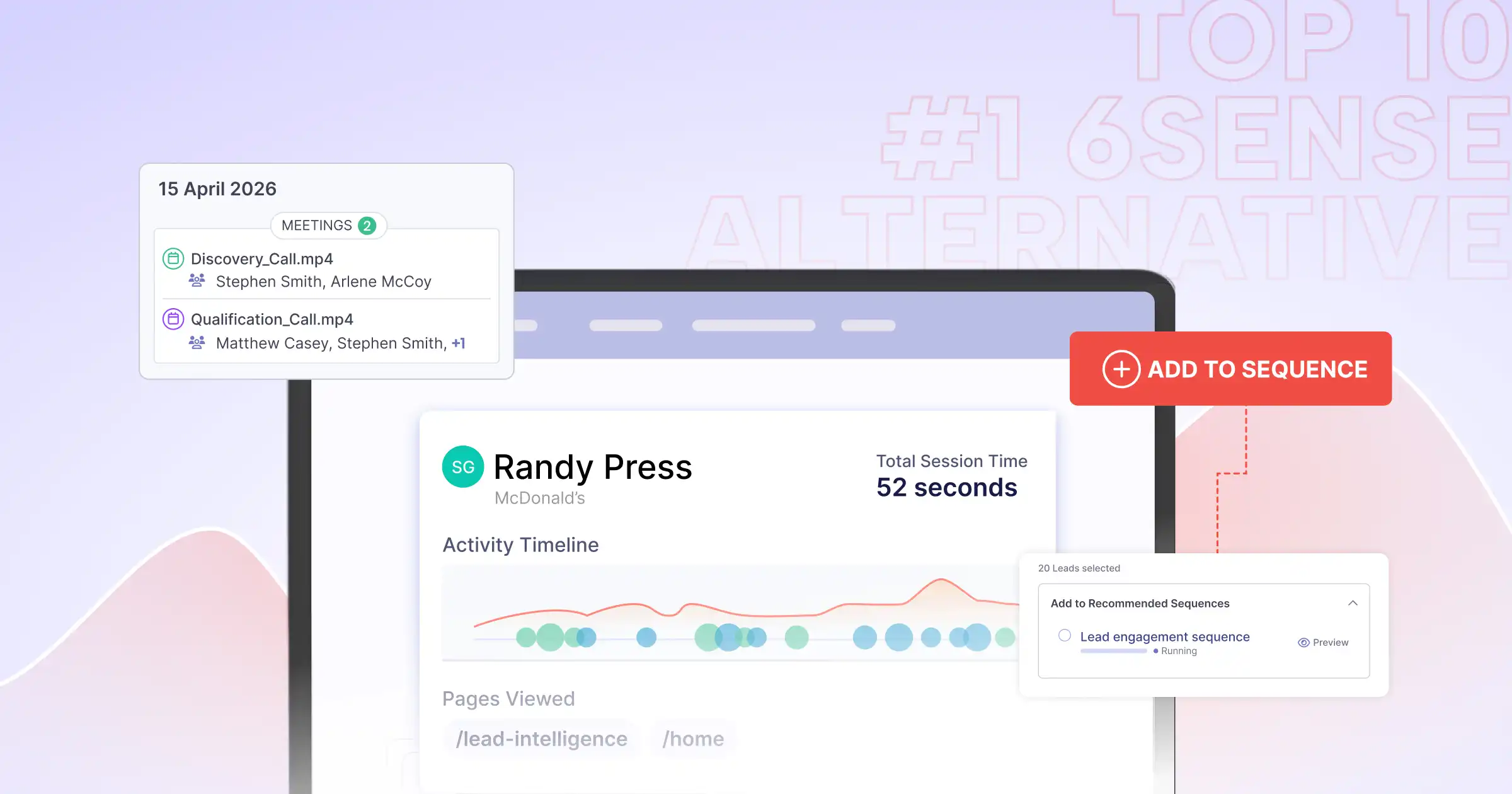
In today’s hyper-competitive B2B landscape, the greatest barrier to revenue isn't a lack of data- it’s the "Execution Gap" between marketing intelligence and sales action. GTM teams are realizing that identifying intent is only half the battle; if your marketing signals cannot be instantly converted into a personalized sales conversation, that intelligence is effectively dead on arrival. This disconnect is the #1 reason why organizations are actively seeking alternatives to 6sense. While 6sense provides a powerful predictive layer, it often operates as a siloed "marketing engine," requiring heavy implementation and external tools to bridge the gap to actual sales execution.
For marketing teams seeking the ability to identify and score intent, qualify against ICP fit and immediately activate personalized plays across the entire outreach cycle, here are the top 10 alternatives.
Why Teams Are Looking Beyond 6sense
The Action Gap: Because 6sense is a predictive engine rather than a unified execution platform, marketers often face "API sync delays," losing precious minutes while a lead goes cold before a rep can engage.
Account vs. Person Identification Disconnect: 6sense excels at account-level predictive scoring but often leaves marketers "blind" to the specific human decision-makers interacting with the brand.
Implementation Burden: Five-figure contracts and multi-month rollouts create a high barrier to entry, forcing teams to rely on separate, disconnected tools for outreach and content delivery.
Our Criteria for a Modern Alternative
Unified Execution: Does it bridge the gap between "marketing intelligence" and "sales action"?
Contact-Level Precision: Can it move beyond anonymous accounts to identify specific decision-makers?
AI-Native Automation: Does it use agentic AI to personalize outreach and engagement in real-time?
Predictive Accuracy: Does it calibrate ICP based on actual revenue outcomes rather than just superficial signals?
1. Aviso: The AI-Native 6sense Alternative
Aviso stands apart as the only platform that unifies marketing intelligence with downstream revenue execution. While 6sense is a predictive ABM layer, Aviso is a Revenue Operating System that connects top-of-funnel inbound signals directly to revenue outcomes
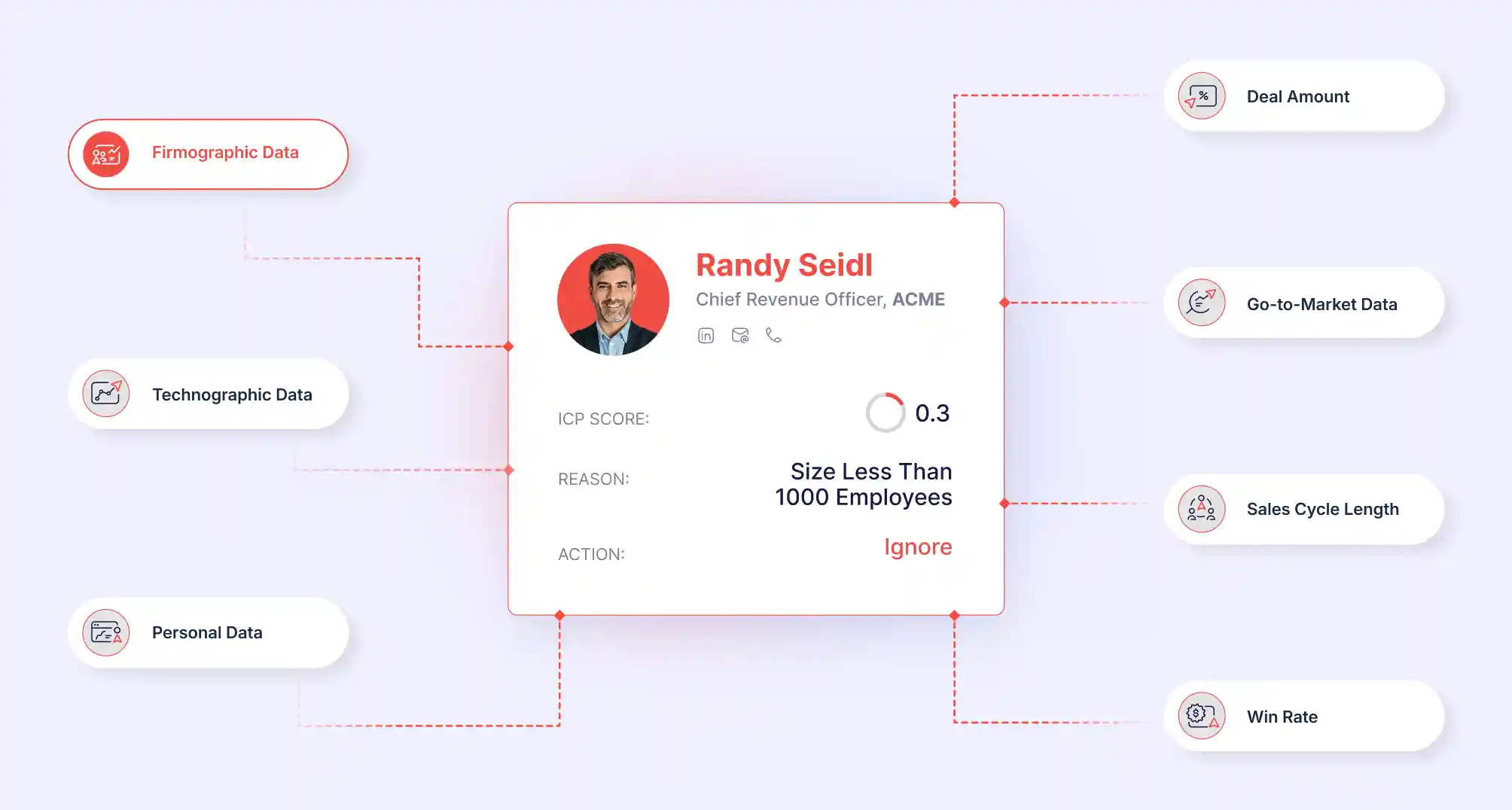
What Aviso Does: Aviso identifies accounts and contacts visiting your website, enriches CRM leads with a waterfall model encompassing multiple providers, scores leads on ICP fit and intent, and uses Agentic AI to engage them instantly across video, voice and text.
Top Capabilities:
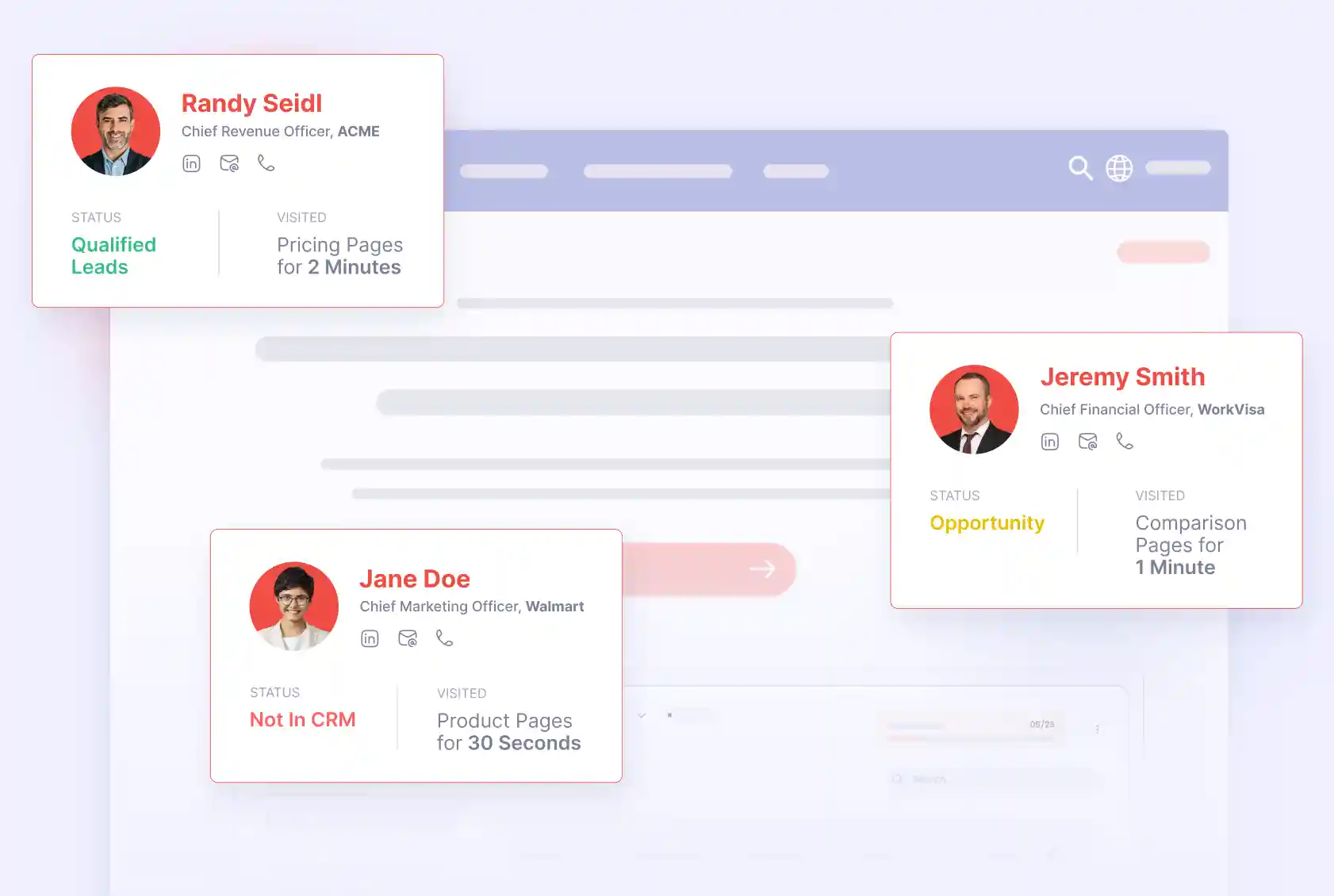
Person-Level De-anonymization of Website Visitors: Instantly transforms anonymous website traffic into known, actionable contacts by uncovering exactly who is visiting your site and what they are researching.
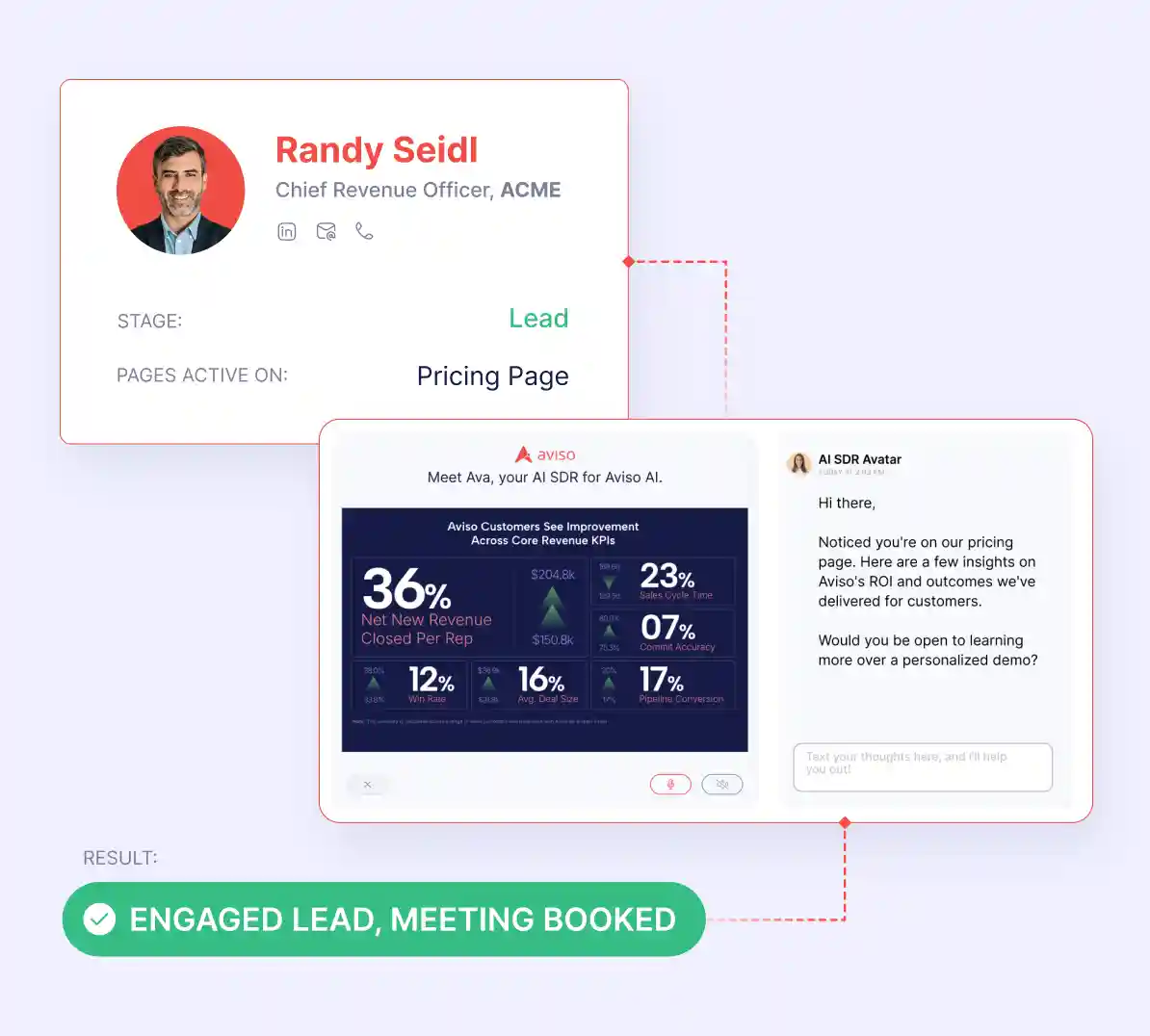
AI SDR Avatar: An autonomous, agentic AI avatar that engages website visitors in real-time through voice, video, and text to answer questions and book meetings 24/7.
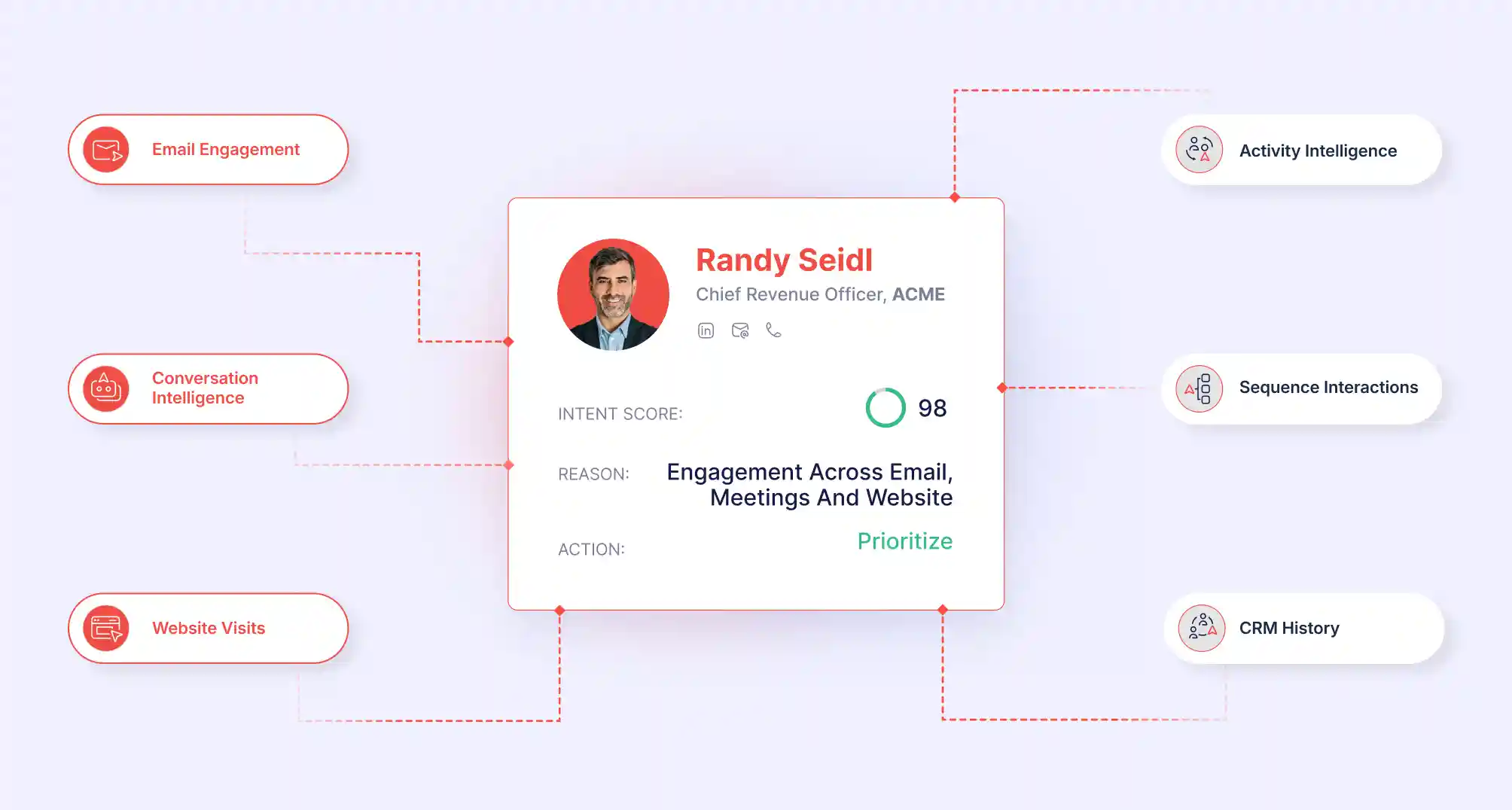
Intent Scoring Across Multiple Data Sources: Unifies first-party website activity, second-party G2 signals, and third-party data to accurately identify high-intent leads with genuine buying momentum.
ICP Scoring Based on Win Fingerprint: Moves beyond basic rules by analyzing your unique historical win data to score leads based on their true statistical likelihood to close.
Advantages: Dramatically reduces speed-to-lead to under 60 seconds. Provides a "Lifetime Lead Unlock" pricing model where you pay for companies once, not per visit.
Limitations: Designed specifically for enterprise GTM teams. If you are a small business needing only a basic list of emails, the platform's advanced AI capabilities may be more than you require.
Aviso vs 6sense: Feature Comparison Deep-Dive
Capability | Aviso AI | 6sense |
Lead Intelligence | 360° lead context+superior qualification | Missing context+manual qualification |
ICP ‘Win Fingerprint’ Auto-Generation | ✅ | ❌ |
ICP Scoring | ✅ | ❌ |
Intent Scoring | ✅ | ❗ |
Explainable AI Scoring | ✅ | ❌ |
Lead Deduplication | ✅ | ❌ |
Website Visitor Intelligence | Identifies the person+company | Identifies only the company |
Person-Level Visitor Deanonymization | ✅ | ❌ |
Multi-Channel Journey Tracking | ✅ | ❌ |
Native Sales Engagement (Signal-to-sequence) | ✅ | ❌ |
Lead Enrichment | Build a complete lead dataset | Lacks multi-source enrichment |
Waterfall Enrichment Model | ✅ | ❌ |
Credit Rollover | ✅ | ❌ |
Zero Charge For Failed Lookups | ✅ | ❌ |
CRM-First Enrichment | ✅ | ❌ |
Signal-Triggered Enrichment | ✅ | ❌ |
Workflows | Flexible routing logic | Limited capabilities |
Built-in Meeting Scheduling | ✅ | ❌ |
Hubspot CRM Support | ✅ | ❌ |
OOO Handling | ✅ | ❌ |
CRM Object-Based Routing | ✅ | ❗ |
Signal-Aware Routing | ✅ | ❗ |
Visual Flow Builder | ✅ | ❗ |
Lead-to-Account Matching | ✅ | ❗ |
Final Verdict: If you want to turn inbound signals into revenue with complete lead context, automated qualification and high speed-to-lead, Aviso is the only marketing intelligence alternative that fixes these challenges in 6sense.
2. Demandbase
What They Do: An ABX platform that unifies advertising, sales intelligence, and engagement for enterprise organizations.
Top 3 Capabilities:
ABX Cloud: Provides a centralized hub to manage account-based experiences.
Orchestration Suite: Automates complex multi-channel marketing campaigns.
Precision Advertising: Target-specific display ads for accounts that show high intent.
Advantages: Unmatched depth in enterprise-scale ad orchestration and massive third-party data coverage.
Limitations: Often criticized for being marketing-centric. It requires significant technical alignment and can be "overkill" for teams that need instant sales activation.
Verdict: Great for heavy-duty ABM marketers, but lacks the native AI SDR execution of Aviso.
3. ZoomInfo
What They Do: A massive B2B data directory and GTM platform focused on contact-level accuracy.
Top 3 Capabilities:
WebSights: Tracks IP addresses to identify companies visiting your site.
Intent Data: Large-scale 3rd-party research signals showing market interest.
Contact Directory: Industry-leading database of professional emails and direct dials.
Advantages: It offers one of the largest datasets available, making it excellent for high-volume cold outbound prospecting.
Limitations: Functions primarily as a static directory. It shows you who to contact, but doesn't natively understand your CRM’s deep deal context or relationship strength.
Verdict: Essential for data volume, but requires significant manual work to orchestrate marketing plays compared to Aviso.
4. Clay
What They Do: A data enrichment and orchestration tool that acts as a "spreadsheet on steroids" for GTM teams.
Top 3 Capabilities:
Waterfall Enrichment: Automatically chains 50+ data providers for maximum record accuracy.
Claygent: AI-driven autonomous web research for personalized prospect insights.
Data Orchestration: Advanced logic to build hyper-targeted GTM lists.
Advantages: Unbeatable for technical GTM teams building custom, logic-heavy enrichment workflows that 6sense cannot replicate.
Limitations: Primarily a data platform. It lacks a native dialer or an "AI Brain" to manage ongoing pipeline or deal health.
Verdict: A powerful data utility, but lacks the "agentic" capabilities of Aviso to drive deals from lead to meeting.
5. Apollo.io
What They Do: An all-in-one prospecting and engagement platform built for SMBs and mid-market teams.
Top 3 Capabilities:
Prospecting Database: Access to 265M+ professional contacts.
Sales Engagement: Built-in email sequencing and automated dialer tools.
Market Intelligence: Basic filters for firmographic and intent-based targeting.
Advantages: Highly accessible pricing and immediate time-to-value for smaller marketing teams.
Limitations: Scoring is largely static compared to the revenue-outcome-based predictive models in Aviso. Users often report inconsistent data quality.
Verdict: Great for entry-level prospecting, but lacks the enterprise-grade ABM intelligence of 6sense or Aviso.
6. Bombora
What They Do: The industry standard for third-party intent data based on content consumption.
Top 3 Capabilities:
Company Surge: Proprietary intent scoring based on web research trends.
Intent API: Seamless data delivery to other GTM platforms.
B2B Topic Taxonomy: Precise categorization of buying research trends.
Advantages: The most accurate signal source for what accounts are researching across the open web.
Limitations: A data provider, not an execution platform; it does not provide the "how" (engagement) or "who" (contacts).
Verdict: A critical data layer, but it requires a platform like Aviso to turn its intent signals into revenue.
7. Cognism
What They Do: Premium contact intelligence specializing in verified mobile numbers and EMEA data.
Top 3 Capabilities:
Diamond Data: Human-verified mobile numbers for high-intent prospects.
GDPR/CCPA Compliance: Built-in data privacy and regulatory standards.
Intent-Triggered Outreach: Real-time alerts for surging prospects.
Advantages: Gold standard for highly accurate European mobile data and privacy compliance.
Limitations: Primarily a "Who" tool. It lacks advanced workflow automation, AI SDRs, or predictive routing.
Verdict: Best for EMEA-focused outbound, but lacks the AI-native ABM features of Aviso.
8. Clearbit (by HubSpot)
What They Do: Real-time data enrichment and visitor de-anonymization.
Top 3 Capabilities:
Reveal: Real-time IP-to-company identification.
Form Enrichment: Dynamic field shortening to boost conversion rates.
HubSpot Native Sync: Seamless data flow into the marketing stack.
Advantages: Seamless for HubSpot-heavy marketing teams wanting "plug-and-play" data.
Limitations: Lacks the complex AI-driven predictive win-scoring or sales engagement found in Aviso.
Verdict: A great utility for marketers, but insufficient for large teams needing full-funnel revenue alignment.
9. Dealfront (formerly Leadfeeder)
What They Do: A website visitor identification platform with deep European firmographic insights.
Top 3 Capabilities:
Visitor Identification: Real-time tracking of anonymous web traffic.
Company Profiles: Deep insights into European firmographics.
Trigger-Based Alerts: Instant notifications when target accounts visit.
Advantages: Highly intuitive identification of anonymous traffic for agile teams.
Limitations: Lacks the predictive depth and enterprise-grade ABM reporting of 6sense or Aviso.
Verdict: Useful for tracking, but misses the mark on Aviso’s ability to automate the entire revenue cycle.
10. UnifyGTM
What They Do: A modern "warm outbound" platform that automates prospecting workflows.
Top 3 Capabilities:
Signal-Based Prospecting: Connecting intent signals to automated email plays.
Warm Outbound Workflows: Streamlining the find-enrich-engage cycle.
GTM Intent Layer: Modern data orchestration for high-growth teams.
Advantages: Modern "Agentic" approach that is more agile than legacy players.
Limitations: Lacks the "Revenue OS" capabilities needed to manage the entire visitor-to-close cycle.
Verdict: A strong startup contender, but Aviso provides the proven infrastructure needed for enterprise-scale GTM.
Which platform is right for your GTM team?
In 2026, the era of the predictive-only ABM platform is closing. CMOs no longer have the luxury of waiting weeks to implement a tool that produces a dashboard of intent signals. They need a platform that turns those signals into meetings.
If your primary need is enterprise-scale ad orchestration, Demandbase or 6sense remain staples. But if your goal is to unify marketing intelligence with sales action to drive closed-won revenue, Aviso offers the most complete AI-native 6sense alternative on the market today.
To dig deeper into Aviso’s advantages against 6sense, book a demo.
FAQs
Why are GTM teams searching for a 6sense alternative?
Sales and marketing teams are looking for alternatives to 6sense because 6sense, while identifying lead intent, creates an Action Gap - the gap between an ICP lead showing interest and sales action. This delay causes potential opportunities to slip through the cracks, hurting inbound pipeline.
Why is Aviso the best 6sense alternative?
Aviso and 6sense overlap in terms of their ability to identify lead intent. However, GTM teams switch to Aviso because it de-anonymizes website visitors at the person-level, scores ICP fit and most importantly, offers multiple avenues to take instant sales action- notably an AI SDR Avatar that sits on your website, engages high-intent visitors across video, voice and text the second they show interest and converts them into opportunities.
What are some considerations to apply when evaluating 6sense alternatives?
When searching for a 6sense alternative, here are a few questions to ask each vendor:
1. Do you de-anonymize website visitors at the person-level or just at the company-level?
2. Do you qualify leads against ICP fit?
3. Do you use multiple data sources to score intent?
4. Do you enrich missing fields with AI, or is enrichment manual?
5. Do you leverage multiple data providers to procure the most accurate lead data?
6. Do you offer capabilities to drive high speed-to-lead, once a qualified ICP persona visits the website?
7. Do you offer flexible lead routing logic, or is routing rigid?
Aviso is the only 6sense alternative that offers all these capabilities.
What is the best 6sense alternative for the enterprise?
Aviso supports 450+ enterprise and high-growth companies. And delivers enterprise-grade data privacy and security on top of the richest lead signal dataset available in the space today. Aviso is certainly an alternative to consider if you’re looking to upgrade to a lead intelligence solution that can meet the demands of the enterprise.
Why are CMOs switching from 6sense to Aviso?
The most-cited reasons: closing the execution gap between marketing signal and sales engagement, reducing speed-to-lead to under 60 seconds, moving from account-level to person-level identification, and consolidating a fragmented marketing-tech stack into one Revenue OS.
What is 6sense?
6sense is a B2B account-based marketing (ABM) platform that uses predictive intent data to identify accounts showing buying signals. It aggregates third-party intent, applies firmographic and technographic data, and produces account-level scores that marketers use to prioritize ABM campaigns. 6sense is a mature ABM intelligence layer- it tells you which accounts are interested, but typically requires separate tools to actually engage them.
What are the best alternatives to 6sense in 2026?
The strongest 6sense alternatives in 2026 are Aviso (AI-native Revenue OS with execution built in), Demandbase (enterprise ABX), ZoomInfo (B2B contact data + intent), Clay (data enrichment + AI workflows), Apollo (SMB/mid-market all-in-one), Warmly (visitor de-anonymization), and Cognism (compliant European data). The right choice depends on whether you need predictive intent only, a full GTM platform, or person-level execution alongside the marketing signal.
Why are GTM teams looking for 6sense competitors?
Three reasons surface most often. First, the execution gap: 6sense identifies intent but typically requires separate engagement tools, creating API sync delays. Second, the account-vs-person disconnect: 6sense scores accounts but rarely surfaces specific decision-makers. Third, the implementation burden: five-figure contracts and multi-month rollouts are difficult to justify against newer AI-native alternatives.
What's the difference between 6sense and Demandbase?
Both are enterprise ABM platforms with a similar feature profile. Demandbase tends to lead in advertising depth and ABX orchestration. 6sense leads on predictive intent modelling and proprietary buyer-stage tagging. Most enterprise teams evaluate both head-to-head; the deciding factor is usually existing ad-tech investment and which sales/marketing alignment model the team prefers.
What's the difference between 6sense and ZoomInfo?
6sense is a predictive ABM platform that tells you which accounts are showing buying intent. ZoomInfo is primarily a B2B data directory that tells you who to contact at those accounts. The two are complementary more than competitive; many teams run both.
What's the difference between 6sense and Clay?
6sense is an enterprise ABM platform with proprietary intent modelling. Clay is a flexible data enrichment and orchestration workspace. Clay can replicate parts of 6sense's data layer through provider waterfall enrichment, but it isn't a predictive ABM tool out of the box. Teams choose Clay when they have RevOps engineering capacity and want custom workflows.
What's the best cheaper 6sense alternative?
Apollo.io has the most accessible pricing of the platforms in this category and is the most common, cheaper alternative for SMB and mid-market teams. Clay's entry plans are also affordable for small teams that want enrichment without an enterprise contract.
How much does 6sense cost?
6sense doesn't publish list pricing. Based on public reporting, expect mid-five-figure to six-figure annual contracts for mid-market through enterprise deployments. Pricing varies based on data access tier, ad orchestration scope, and CRM integration depth.
Read More Like This
