Transform RFPs from Paperwork to Pipeline Progress with Aviso RFP Agent
No time to lose? Summarize with AI
ChatGPT
Claude
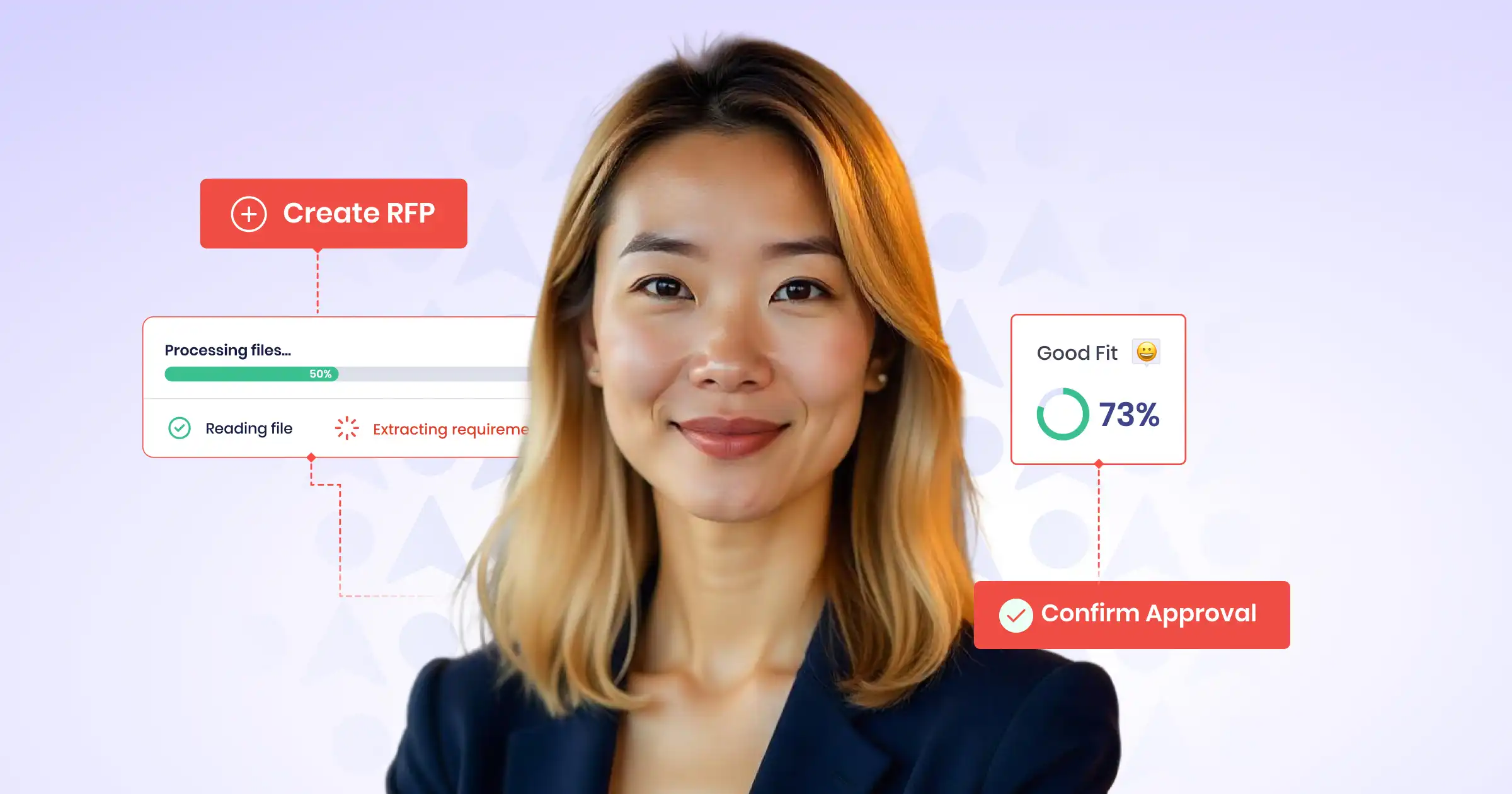
For most sales organizations, RFPs are a paradox. They should signal serious buyer intent. Instead, they drain weeks of your team's time with zero visibility into which deals will actually close.
Here's the real problem: RFPs live outside your revenue engine. Most tools just help you fill out forms faster. But they don't tell you which opportunities are actually worth your time, or how your proposals connect to your forecast.
So your teams treat every RFP the same, whether it's a qualified enterprise buyer or someone just doing market research with no budget. You don't know the difference until you've already spent close to 40+ hours on it.
Aviso RFP Agent fixes this.
What If Your RFPs Were Actually Connected to Your Revenue Data?
Imagine your RFP process connected directly to deal data, forecast signals, and your historical win patterns, where you could assess if an RFP is a good fit before you draft a single response. Where what you learned from past wins actually became useful for current proposals.
That's what Aviso RFP Agent does. It turns proposals from a compliance checkbox into actual revenue intelligence, based on what's worked for your specific business.
Here's how it works in practice.
Step 1: Upload and Get Instant Intelligence
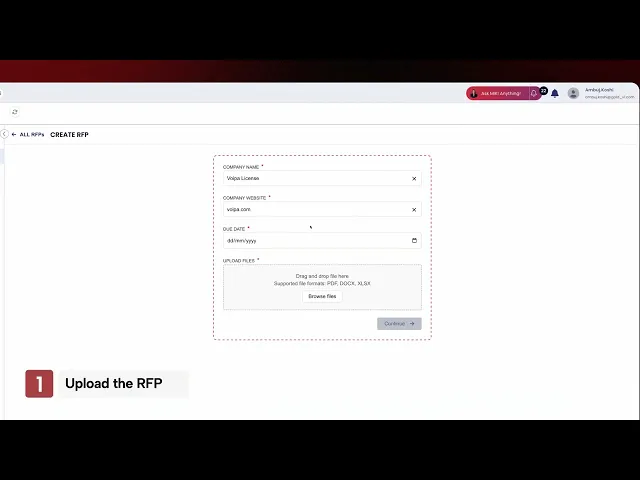
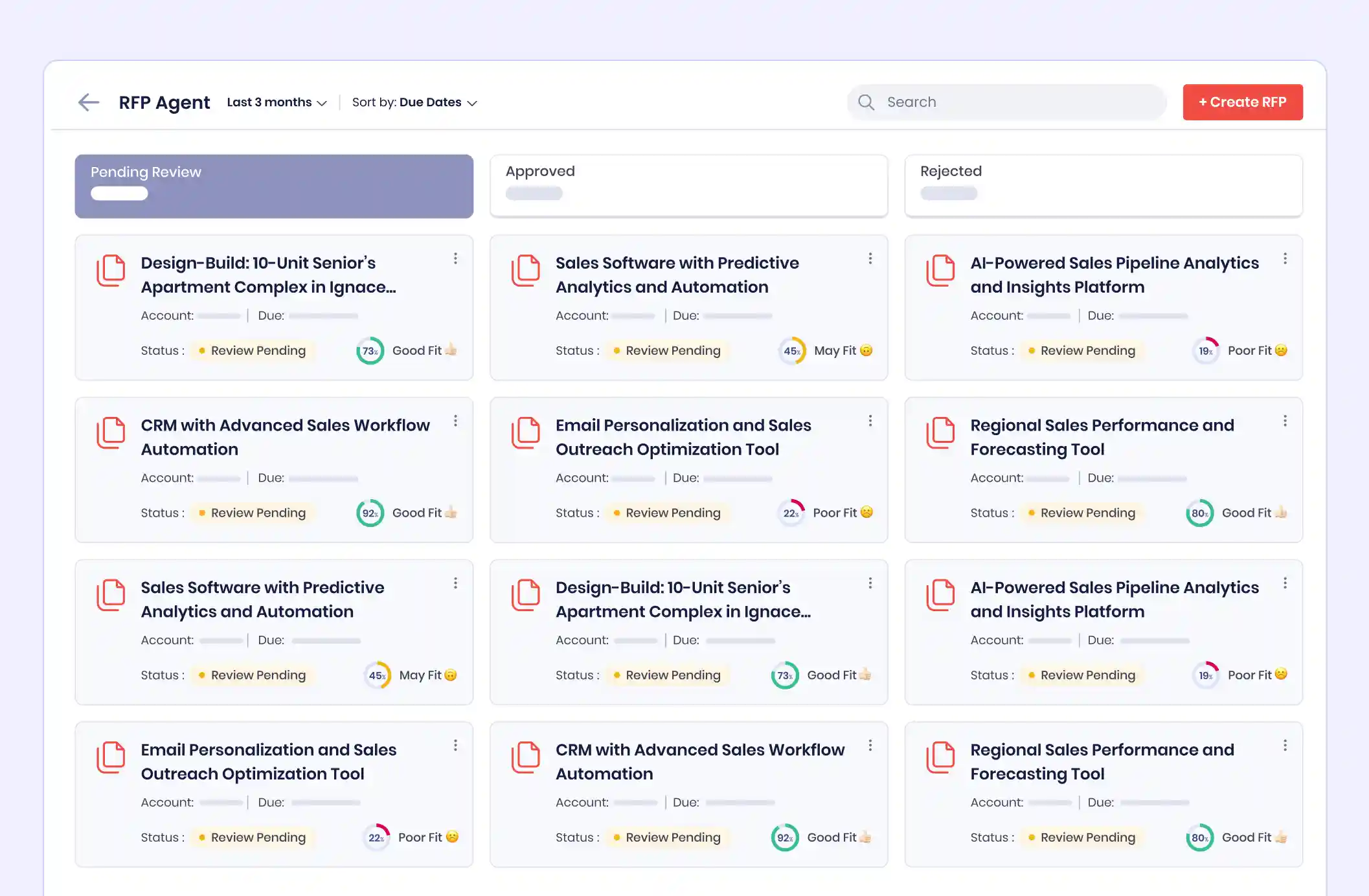
You're the sales engineer. You upload an RFP document. Within seconds, two things happen at once.
First, Aviso begins drafting responses.
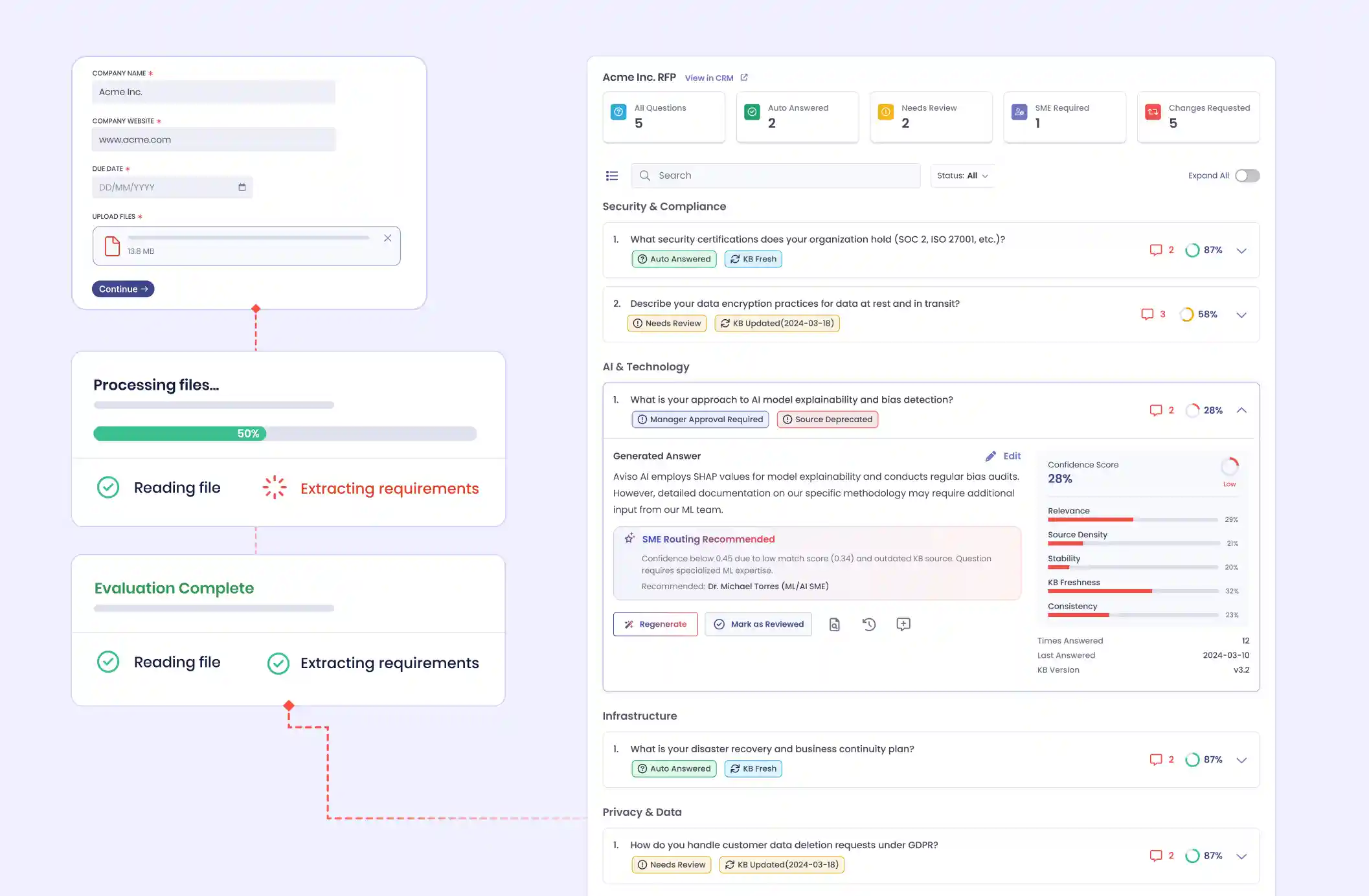
Every response draws from the knowledge base you've fed to the agent: your historical wins, past proposals, and previous buyer conversations. The agent utilizes this institutional knowledge to generate contextual responses tailored to your business and this specific opportunity.
Look at that budget question example. The response references real discovery conversations, mentions competitors you discussed, and includes implementation details specific to this deal. It's not filling in a template. It's built from context.
Second, you get a scorecard that assesses if this RFP is a good fit to use.
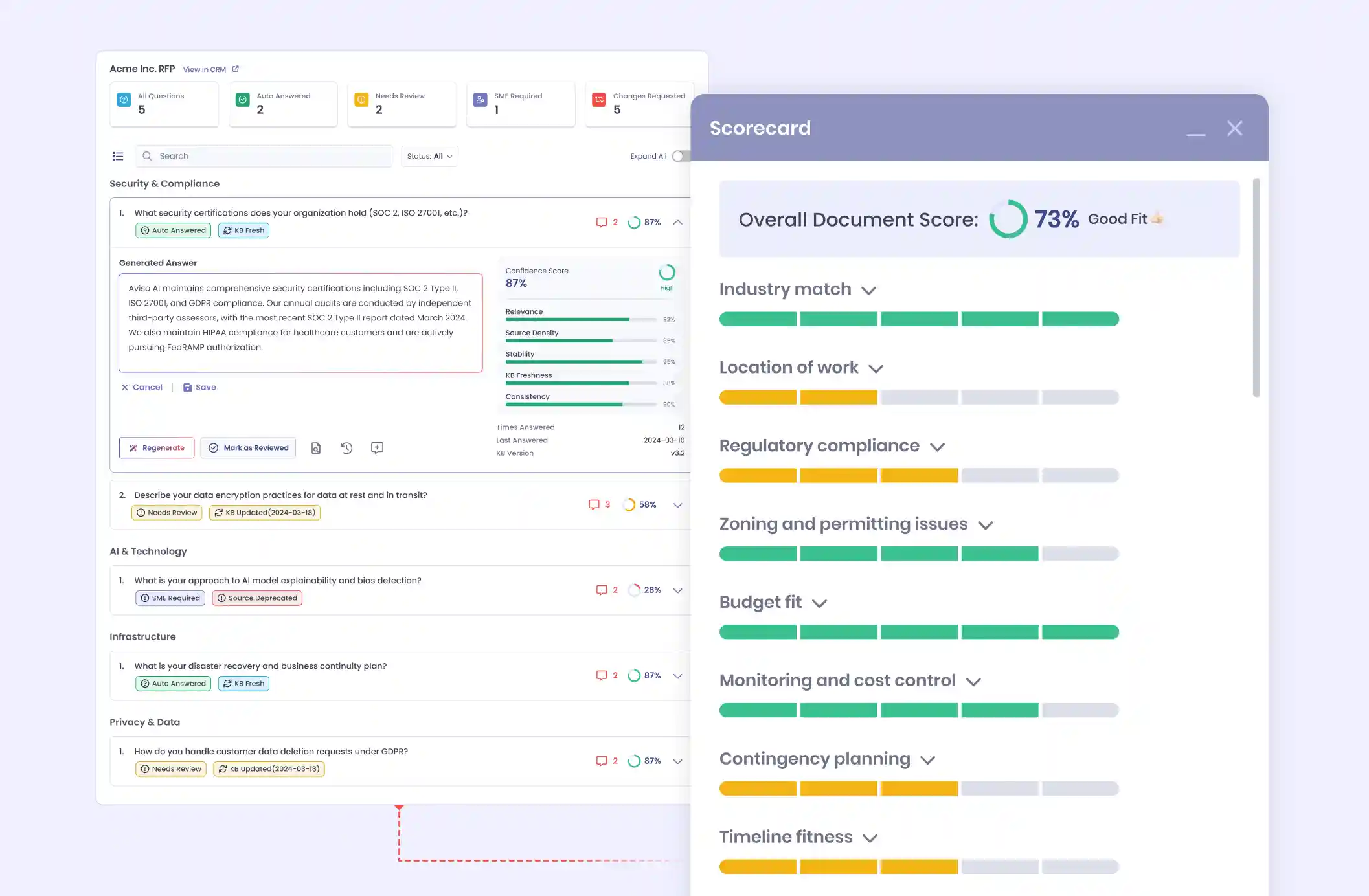
Before you touch a single response, you see how this RFP matches up against your past wins. Industry fit, budget alignment, location match, timeline feasibility, and compliance requirements. All scored against what actually closed for your team, not some generic benchmark.
Green means you're in your sweet spot. Yellow means there's risk or gaps. You can see immediately where this RFP plays to your strengths and where you'll need to address concerns.
Bottom line: You now have something you've never had, ie, content generation and RFP fit assessment happening simultaneously. You're not just moving faster. You're making smarter decisions about which RFPs to pursue.
Step 2: Refine Responses
The drafts are solid, but you want to adjust them. Maybe more technical depth. Different tone. Tighter language.
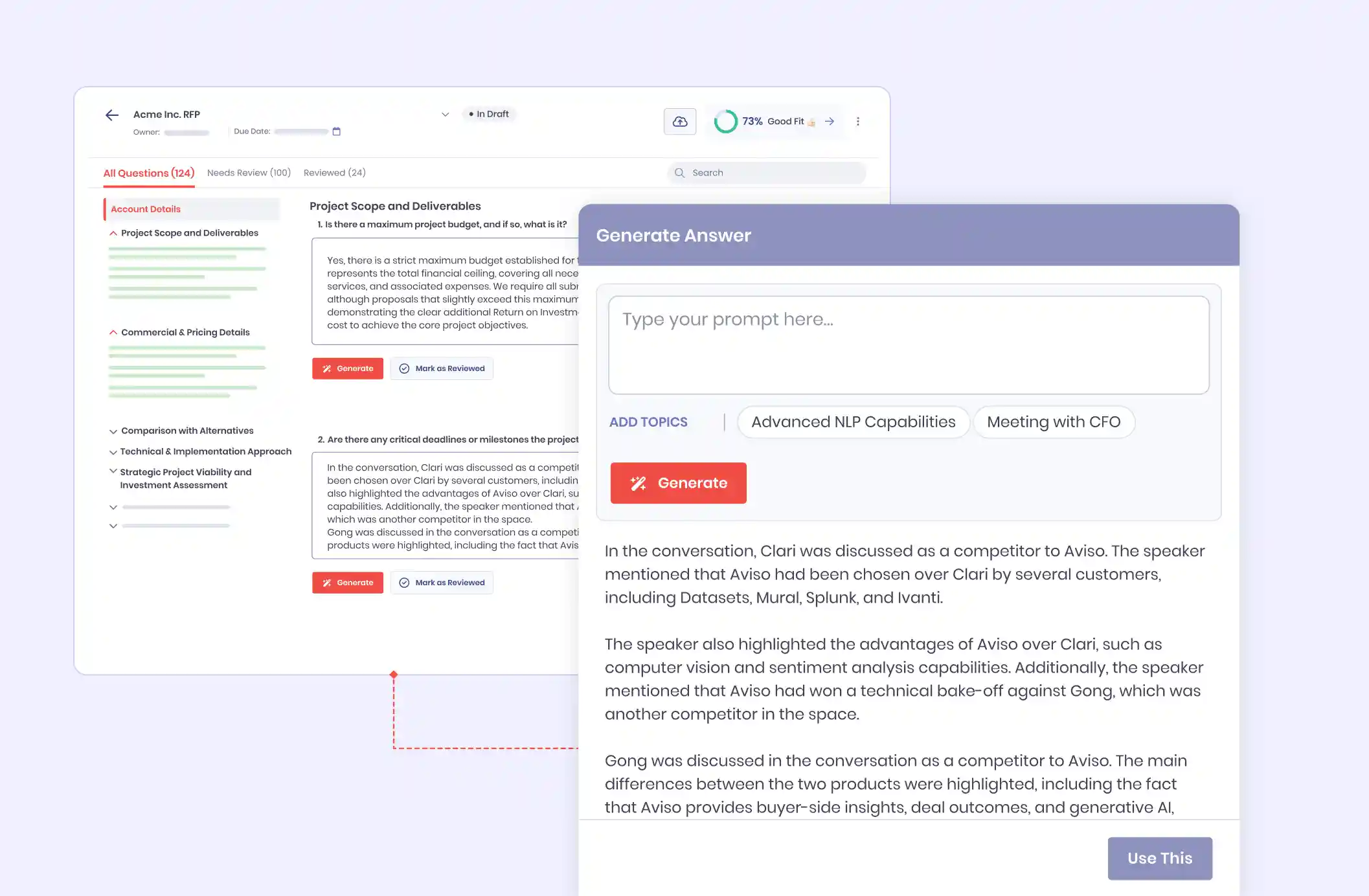
You've got two options: request changes (tell the AI what to adjust) or mark as reviewed (approve and move on).
This is where the leverage really kicks in. AI did the heavy lifting of pulling information and drafting comprehensive responses. You just calibrate the messaging to make sure it lands right for this specific buyer.
The value: You maintain quality control without starting from scratch every time.
Step 3: Dig Into the Scorecard
While you're refining responses, you notice Location of work scored yellow. You need to understand why before sending this to your proposal manager.
You click to expand.
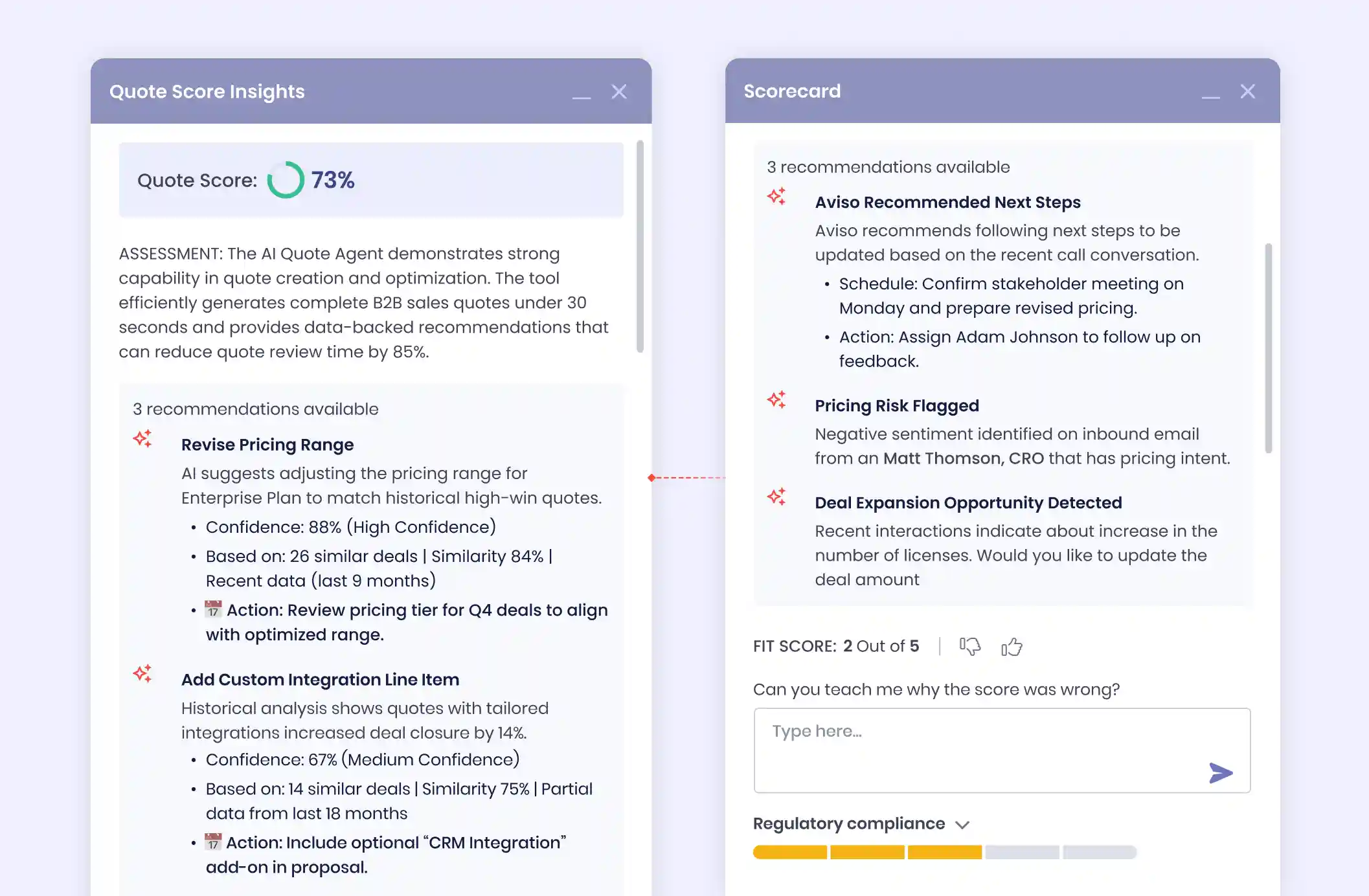
Now you see exactly why it scored that way. You have regional experience, but this specific Ontario location hasn't been explicitly addressed in the RFP text. That's a gap you can address.
Below the assessment, you get specific recommendations:
- "Schedule: Confirm stakeholder meeting on Monday and prepare revised pricing"
- "Action: Assign Adam Johnson to follow up on feedback"
These aren't generic "follow up with prospect" reminders. They're based on what worked in similar deals and what's missing in this specific opportunity. The system flagged that you need stakeholder alignment and pricing revision before submitting.
What you do: Schedule the stakeholder meeting. Loop in Adam Johnson. Address the risks before your proposal manager even sees this.
Step 4: Send to Proposal Manager
Responses are refined. Scorecard gaps are addressed. You're ready for a manager review.
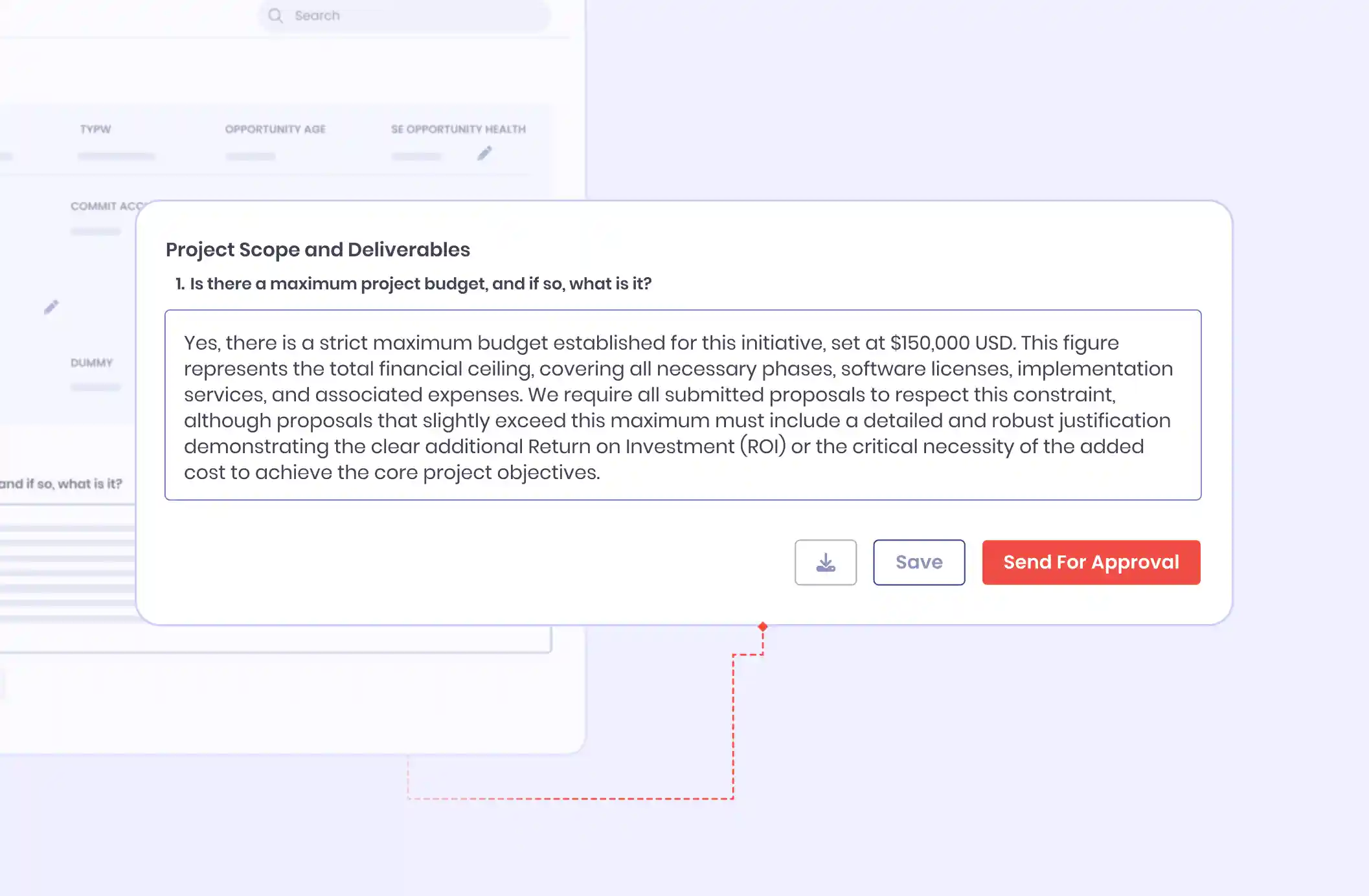
You send the RFP to your proposal manager. Everything's in one place: the completed responses, the scorecard, the actions you've already taken. No email attachment. No version confusion. It's all linked to the Acme Inc. opportunity in your CRM.
Proposal Manager Workflow: Review and Decision
Step 5: Review and Add Comments
Now you're the proposal manager. The RFP arrives for your review.
You see the full RFP with all responses. As you review, you add comments directly on specific questions. "@alma.lawson@example.com, Can we verify if the 'technical bake-off' information is verified or sourced from a conversation transcript?"
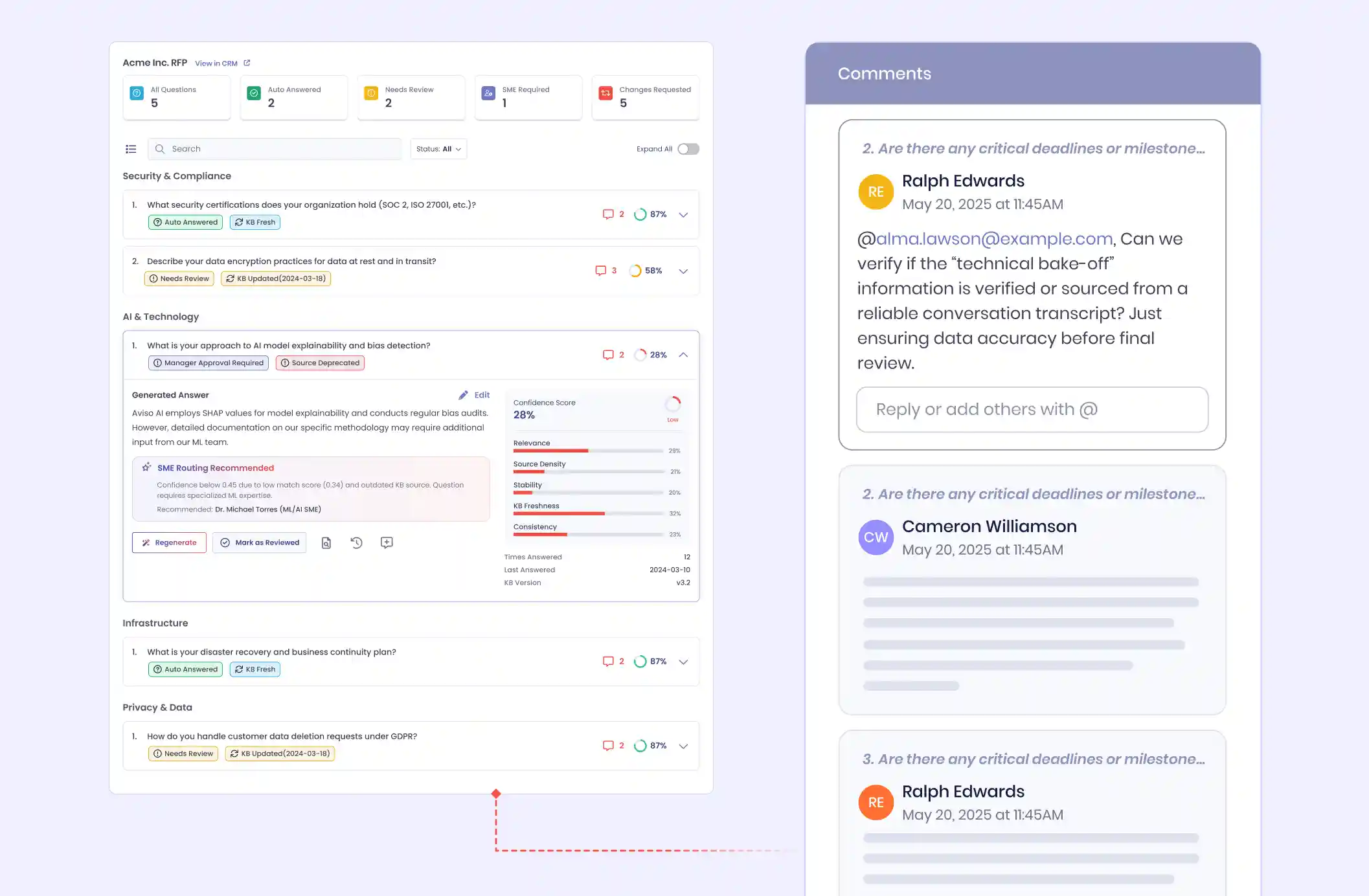
Comments stay attached to their questions. No more "which version has the updated security section?" problems. Your sales engineer sees your feedback in real-time, right where it matters.
With real-time collaboration, you and your sales engineer will be able to work simultaneously with presence indicators and inline editing.
You've got two choices: Approve or Reject (send back for rework).
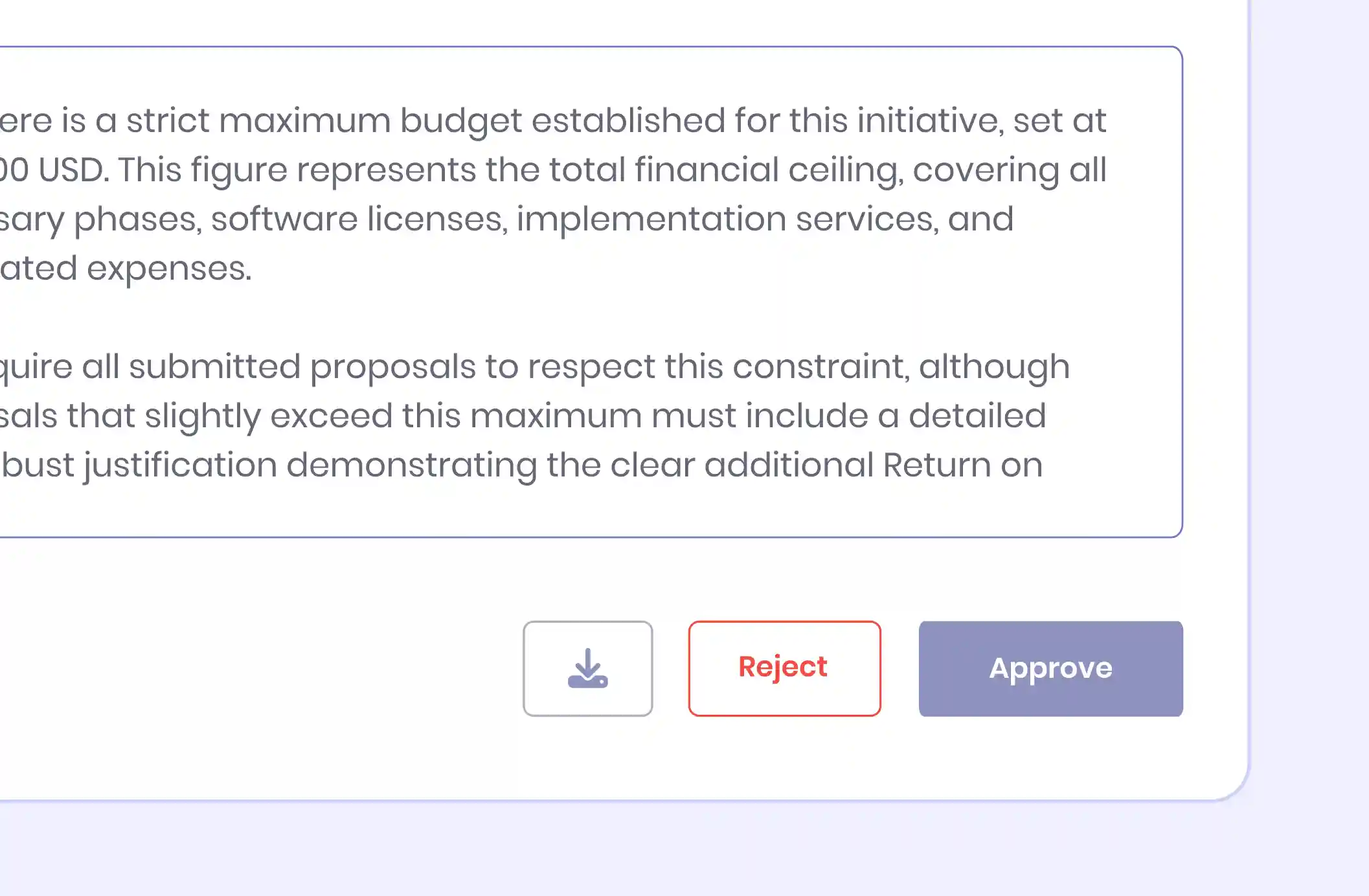
If you spot issues like weak messaging, missing information, or poor competitive positioning, you reject with specific comments on what needs fixing. The RFP goes back to your sales engineer with clear feedback tied to specific questions.
If the responses are solid and the scorecard shows strong fit, you approve.
The difference: No email chains. No file version chaos. Clear decisions with context intact.
Step 6: Sales Engineer Sends to Buyer
Once you approve, your sales engineer gets notified. They download the RFP and send it via email to the buyer.
The proposal stays linked to your CRM opportunity (Acme Inc., $500K IARR, Neil Ringers) and your forecast. Leadership can see which RFPs are in progress, which have been submitted, which are awaiting approval, and how proposal activity correlates with pipeline health.
What this gives you: Sales engineers track status precisely. You maintain oversight without digging through email. RevOps connects proposals to revenue data. CROs understand how RFP activity maps to actual execution.
What Changes
Three things shift fundamentally when you implement Aviso RFP Agent.
First, you stop treating all RFPs equally. Sales engineers see RFP fit immediately through scoring. They pursue high-probability RFPs and address gaps before they become problems. Resource allocation becomes rational instead of reactive.
Second, response quality goes up while effort goes down. Drafts come from proven wins, get refined through AI, and reviewed with contextual feedback from proposal managers. The blank-page problem disappears. The document archaeology stops.
Third, proposals actually connect to your revenue operations. Every RFP links to opportunity data, forecast signals, and win patterns. The proposal function stops being an isolated document factory and becomes part of your revenue intelligence.
The behavioral shift is obvious: your teams stop responding to every RFP that lands in their inbox. They start selecting opportunities that match your strengths, responding with messaging that's proven to work, and maintaining tight coordination between sales engineers and proposal managers.
Compliance exercises become predictable revenue motions.
See How RFP Agent Actually Works
Watch how Aviso RFP Agent helps sales engineers identify high-value opportunities, generate winning responses, and collaborate effectively with proposal managers. Book Your Demo.
RFP Agent is one of 50+ AI agents built to automate every part of your revenue process, from lead qualification to forecast accuracy to customer retention. Explore all agents.
Read More Like This