AI Agent Builders for Sales Teams: GTM Leader's Quickstart Guide
No time to lose? Summarize with AI
ChatGPT
Claude

Your sales team has all the intelligence they need. Conversation intelligence shows which deals are at risk.
Your CRM highlights pipeline gaps. Forecasting tools flag commit issues.
But nothing happens automatically.
Reps still manually follow up. Managers still chase forecast updates. RevOps still fixes data hygiene issues one record at a time.
You have intelligence. You lack execution, intelligent execution with the enterprise control you need.
This is the gap that AI agent builders solve, and why forward-thinking GTM leaders are treating them as the next evolution beyond traditional sales automation.
What Is an AI Agent Builder?
An AI agent builder is a platform that lets GTM teams create intelligent AI agents that execute revenue workflows continuously, with configurable governance that ensures enterprise control over high-stakes actions.
Here's what makes it fundamentally different from the tools you already know.
Traditional sales automation, like workflow builders, marketing automation, and CRM flows, work by rigid configuration. You set up: "When deal stage changes to Closed Won, send email to customer success." Static if-then logic that breaks when fields change or APIs update, requiring drag-and-drop configuration or custom code to maintain.
AI agent builders work differently. You describe what you want: "When deals close, analyze the sales process, extract key buyer insights, personalize the CS handoff based on their journey, and schedule a kickoff at the optimal time." The platform handles intelligent reasoning about what actions to take, executes routine decisions continuously, and routes high-stakes actions you define to appropriate approvers, all through natural language conversation.
The shift is from configuring mechanical workflows to building intelligent agents with enterprise control.
Why "Agent" vs "Automation"?
The terminology matters. It signals a fundamental change in how execution works.
Traditional automation executes predefined steps. If A happens, do B. Always. Forever. Until something breaks. When conditions change (a rep goes on vacation, a template gets deleted, an API hits rate limits), the workflow stops.
Agents execute toward goals with configurable governance. They reason about outcomes rather than follow fixed rules. Achieve outcome Z, figure out how, adapt when conditions change. Routine decisions are executed automatically. Strategic decisions route to approvers based on your governance rules.
This is the difference between workflows that scale intelligently and workflows that break constantly.
Here's a real-world example of the difference.
The automation approach: "When lead score hits 80, assign to John, send email template #5, create task."
What happens when John is on vacation? The automation breaks. Template #5 gets deleted? Breaks. API rate-limits? Breaks.
The agent approach: "When high-value leads show buying intent, route them to available qualified reps and initiate personalized outreach based on their engagement history."
If John is unavailable, the agent routes to the next qualified rep. If email templates change, it adapts messaging. If one system fails, it routes through an alternative. The agent reasons about the goal and executes intelligently—automatically for routine actions, with approval for high-stakes decisions.
Why GTM Teams Need Agent Builders (Not Just Automation Tools)
Traditional sales automation fails enterprises in six fundamental ways:
1. Best Practices Don't Scale Beyond Top Performers
Your top performers build winning workflows, the perfect qualification sequence, objection handling framework, and follow-up timing. But that intelligence stays trapped in their heads. When they leave, you lose it. When new reps join, they start from scratch. Your best practices remain tribal knowledge instead of becoming institutional assets that every rep can deploy instantly.
Traditional automation can't capture how your best reps think and work. Agent builders turn tribal intelligence into scalable workflows.
2. Revenue Data Lives in Disconnected Silos
Your CRM holds pipeline data. Your conversation intelligence tool has buyer insights. Your sales engagement platform tracks email patterns. But these systems don't talk to each other intelligently. You're manually connecting dots across five different tools before automation can act.
Generic automation treats each tool as an isolated API. Revenue agent builders ground agents in unified knowledge across your entire GTM stack—CRM, conversation intelligence, engagement platforms, and historical patterns working together.
3. Generic AI Doesn't Understand Sales Workflows
Tools built for HR or IT workflows don't understand what "pipeline coverage" means. They can't assess MEDDICC qualification. They don't recognize when deal velocity drops signal risk. You spend more time teaching these tools about sales concepts than actually executing workflows.
Revenue agent builders understand GTM context natively—pipeline health, forecast categories, deal stages, qualification frameworks—no translation required.
4. Traditional Automation Breaks When Your Business Changes
Building automation takes weeks of drag-and-drop configuration. When your sales process evolves, you're rebuilding from scratch. When Salesforce fields change, workflows break. When APIs update, execution stops. Your ops team spends more time maintaining automation than building new capabilities.
Agent builders use natural language and self-healing architecture. Describe what you need conversationally. When integrations fail, agents automatically switch tools and keep executing.
5. Black-Box AI Lacks Enterprise Control
Autonomous AI acts without oversight. You can't see what it's doing. You can't control who builds workflows or what gets deployed. You can't enforce approval rules for high-stakes actions. IT and compliance teams block adoption because they can't govern execution.
Agent builders provide transparent governance—you define exactly which actions execute automatically versus which require human approval. Full audit trails. Role-based permissions. Enterprise-ready from day one.
6. Integration Bottlenecks Slow Everything Down
Every new tool requires custom API work. Rate limits cause failures. Connections break and require manual fixes. Your ops team babysits integrations instead of building intelligence. When one system goes down, all your automation stops.
Agent builders with the MCP protocol connect to 200+ revenue tools natively. Self-healing execution automatically switches to backup systems when primary tools fail. Zero downtime for revenue workflows.
Traditional automation made workflows mechanical. Agent builders make them intelligent—with the enterprise control you need.
Key Features to Look for in an AI Agent Builder
Not all agent builders are created equal. Here's what separates purpose-built revenue platforms from generic tools.
Natural Language Agent Creation
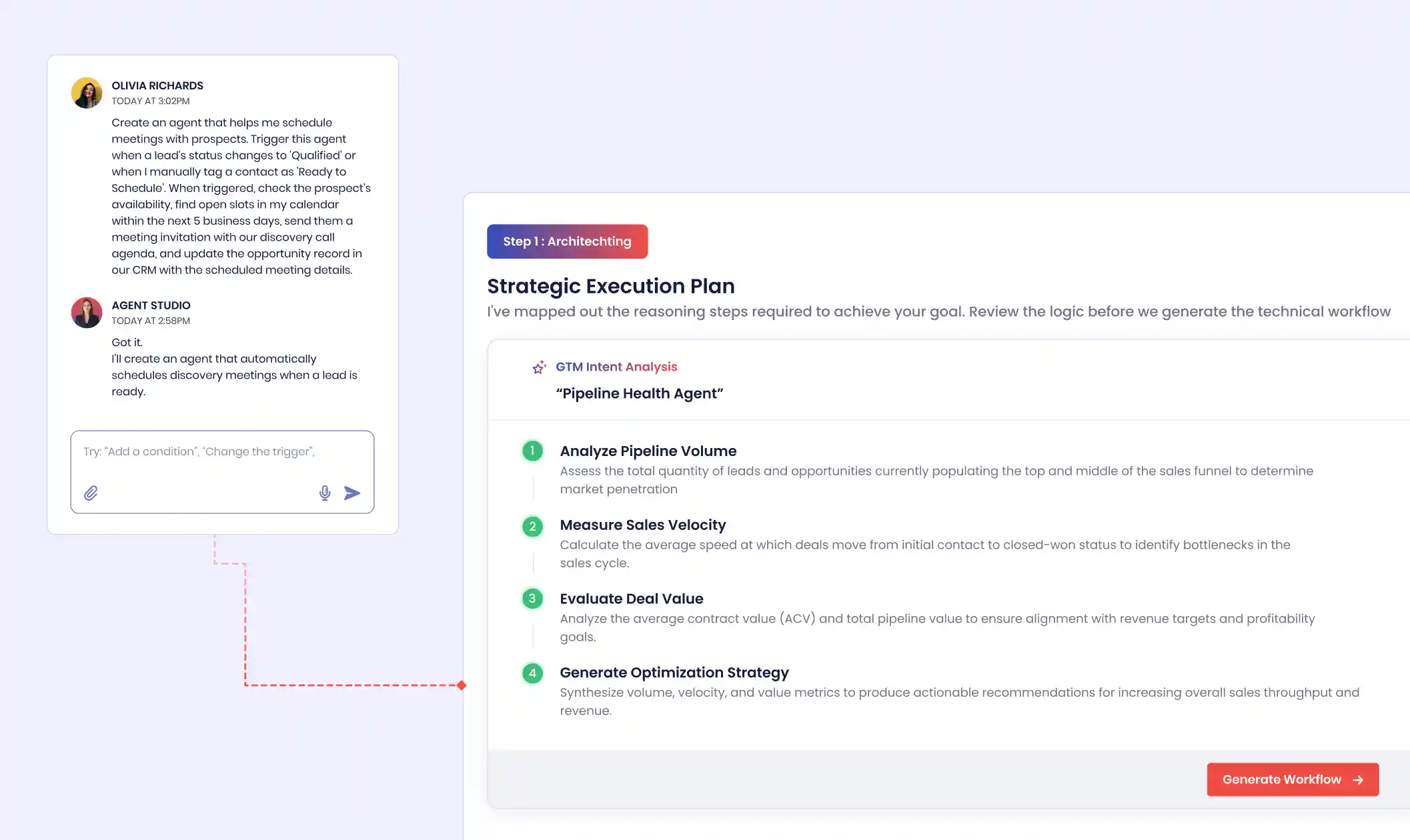
The best agent builders let you describe what you need conversationally. Instead of dragging nodes and configuring triggers manually, you simply say: "When enterprise leads visit our pricing page twice in one week, score them as hot, notify the assigned AE immediately with context about their browsing behavior, and trigger our high-intent outreach sequence."
The platform converts this into an executable agent automatically, showing you a visual workflow graph with triggers, conditions, and actions. You refine through conversation rather than wrestling with configuration interfaces.
This matters because RevOps and Sales Ops teams can build sophisticated agents in 30 minutes instead of spending weeks on traditional automation configuration. No engineering bottlenecks. No technical debt.
GTM-Native Knowledge Integration
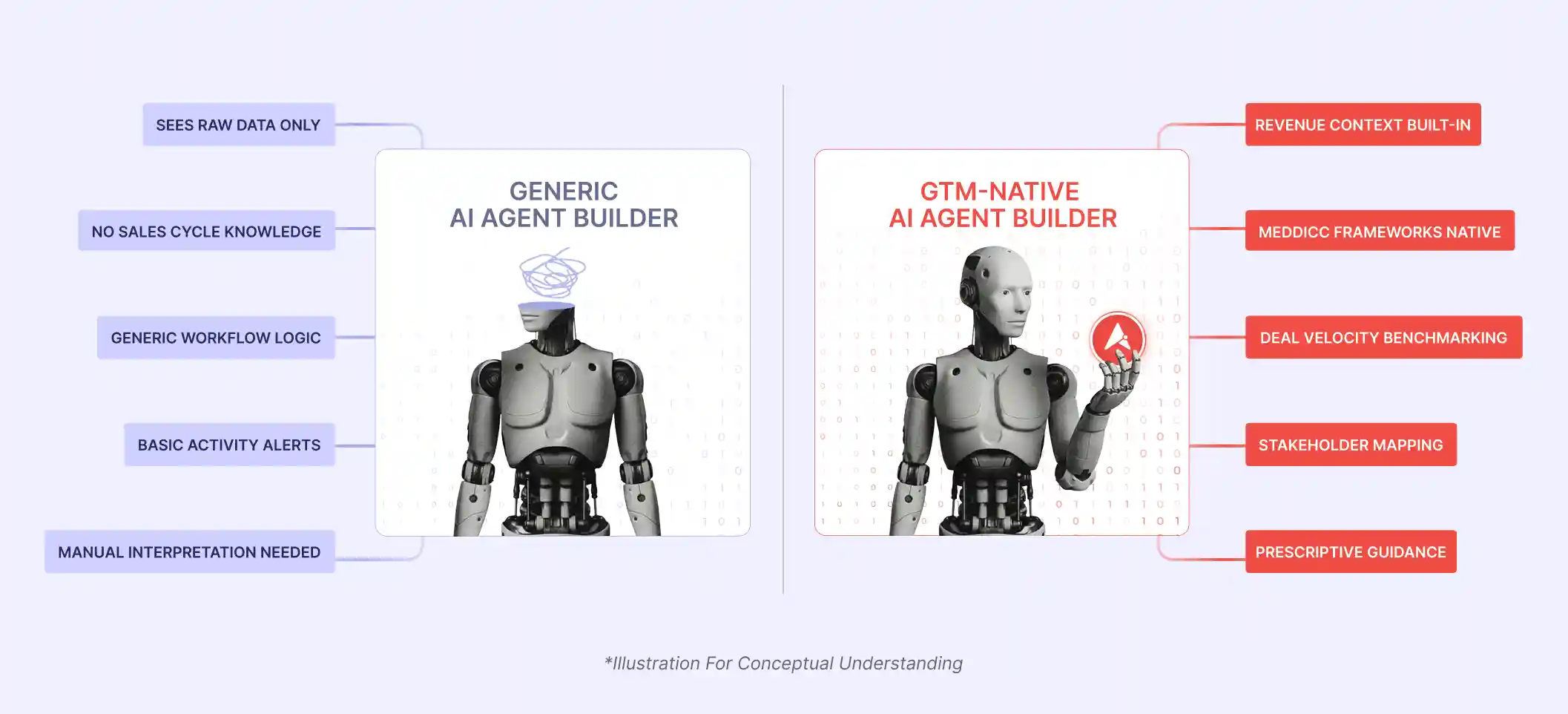
Revenue decisions require domain knowledge that generic platforms simply don't have. The difference shows up immediately in what agents can understand.
A generic agent builder sees: contact.last_activity_date = 2025-01-15
A GTM-native agent builder sees: "Economic buyer hasn't engaged in 8 days despite the champion pushing internally. Deal velocity dropped 40% compared to similar opportunities at this stage. Technical validation completed, but business case not yet built. Missing: CFO engagement, formal ROI discussion, procurement involvement."
This contextual intelligence comes from understanding pipeline coverage thresholds, MEDDICC qualification frameworks, forecast categories, and GTM plays natively. Generic AI built for HR workflows can't navigate complex B2B sales cycles with multiple stakeholders, long deal cycles, and committee-based decisions.
If your workflows involve enterprise sales complexity, you need agents that understand revenue context by default.
3. Enterprise Knowledge Database
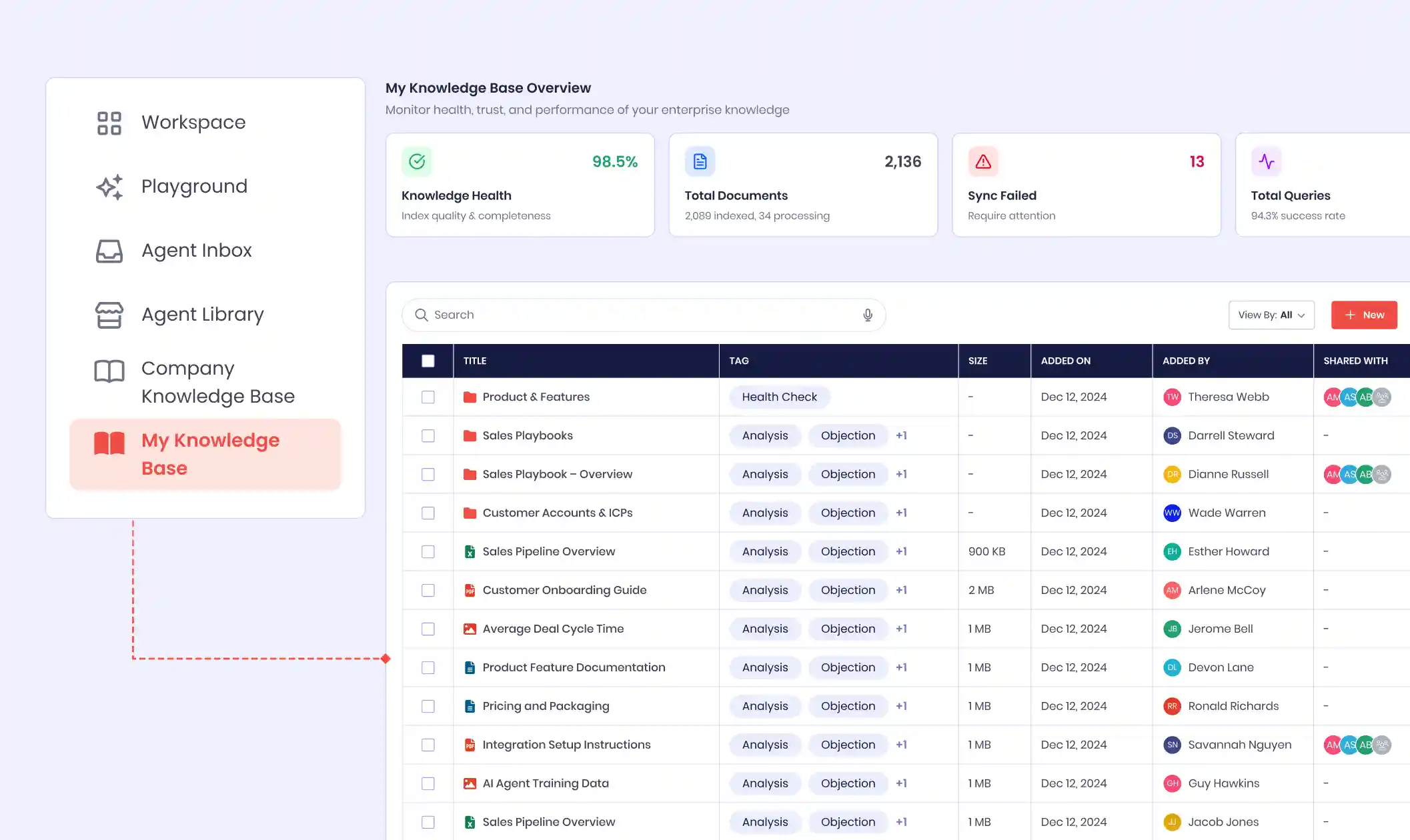
The most critical capability in any agent builder is how it grounds agent decisions in your enterprise knowledge. Most AI agents either rely on public LLM knowledge (leading to hallucinations) or do basic document retrieval without context.
Revenue agent builders need unified access to structured and unstructured data across your GTM stack: CRM fields, conversation intelligence, internal playbooks, historical deal patterns, and external context.
Key technical requirements:
Multi-Modal Ingestion: Handle both structured (CRM, databases) and unstructured data (transcripts, emails) as one unified system.
Tenant Isolation: Your knowledge completely isolated from other organizations. Non-negotiable for enterprise deployment.
Context-Aware Retrieval: Agents access knowledge based on their role, the user, and the specific task being executed.
Why this matters: Without knowledge grounding, agents send generic nudges like "Update this opportunity." With it, they provide intelligent coaching: "Deal velocity dropped but champion is active. Missing: economic buyer engagement. Recommend: Executive alignment call with CFO."
Watch for platforms that can't show what knowledge informed each decision or where knowledge lives in separate APIs.
4. Safe Testing Environment
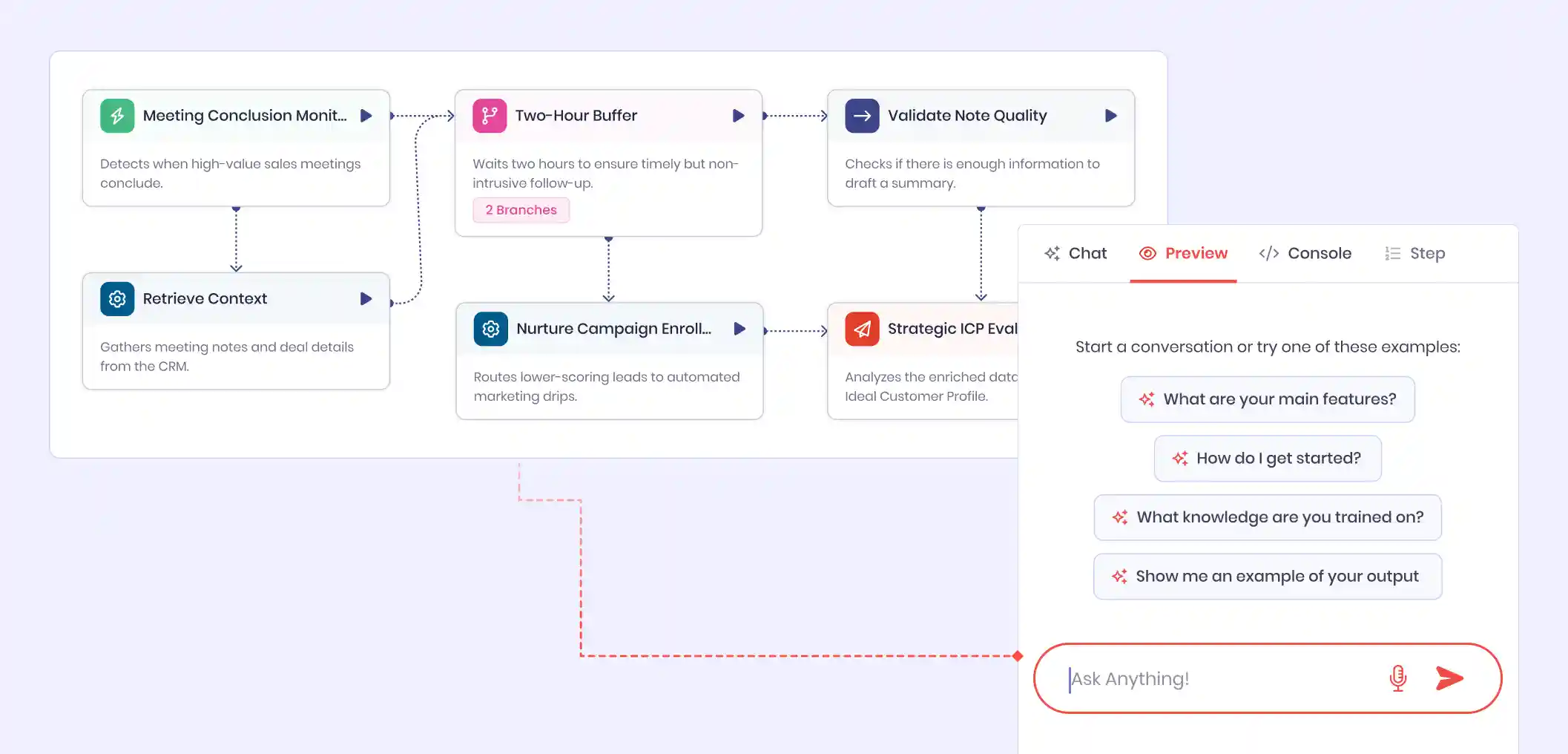
You can't afford to break CRM data or send wrong emails to customers while figuring out if an agent works correctly.
The right platforms provide sandbox mode to test agents on real historical data without affecting production systems. Build a "Deal Risk Detection Agent" and, before deploying it live, run it against the last 6 months of closed deals. See which deals it would have flagged as at-risk. Compare against actual outcomes. Refine logic until accuracy hits your threshold. Then deploy to production with confidence.
Testing in a sandbox prevents costly mistakes and gives you confidence that the logic works as intended before committing.
5. Transparent Governance (Not Black-Box AI)
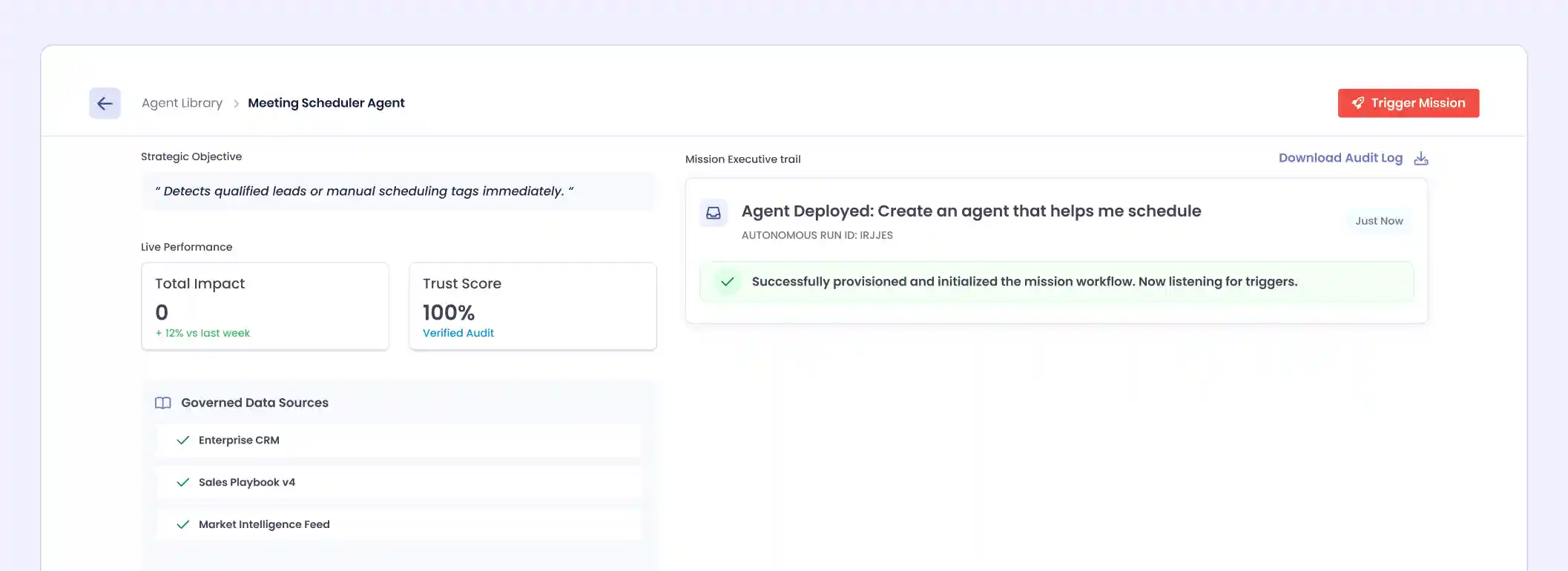
This is where agent builders diverge sharply from autonomous AI tools, and it matters for enterprise adoption.
Black-box autonomous AI sends emails to customers without your review, updates forecasts without manager sign-off, and makes pricing decisions without approval. There's often no audit trail of what it did or why. Enterprise teams simply can't deploy this safely, regardless of how intelligent the AI is.
Agent builders with governed execution take a different approach. You decide approval rules by action type. Low-risk actions like data updates and alerts execute automatically around the clock. High-risk actions like pricing and contracts route to appropriate approvers. Full audit trail of every decision. Enterprise-ready from day one.
Here's what governance rules look like in practice:
Agent automatically sends routine follow-up emails: No approval needed
Agent automatically updates CRM forecast categories: No approval needed
Agent recommends discount greater than 15%: Requires manager approval
Agent recommends contract changes: Requires legal approval
This is how enterprises actually adopt AI—fast execution for routine decisions, human judgment for strategic ones. You get the speed of automation with the control that compliance and risk management require.
6. Org-Wide Accessible Agent Library & Marketplace
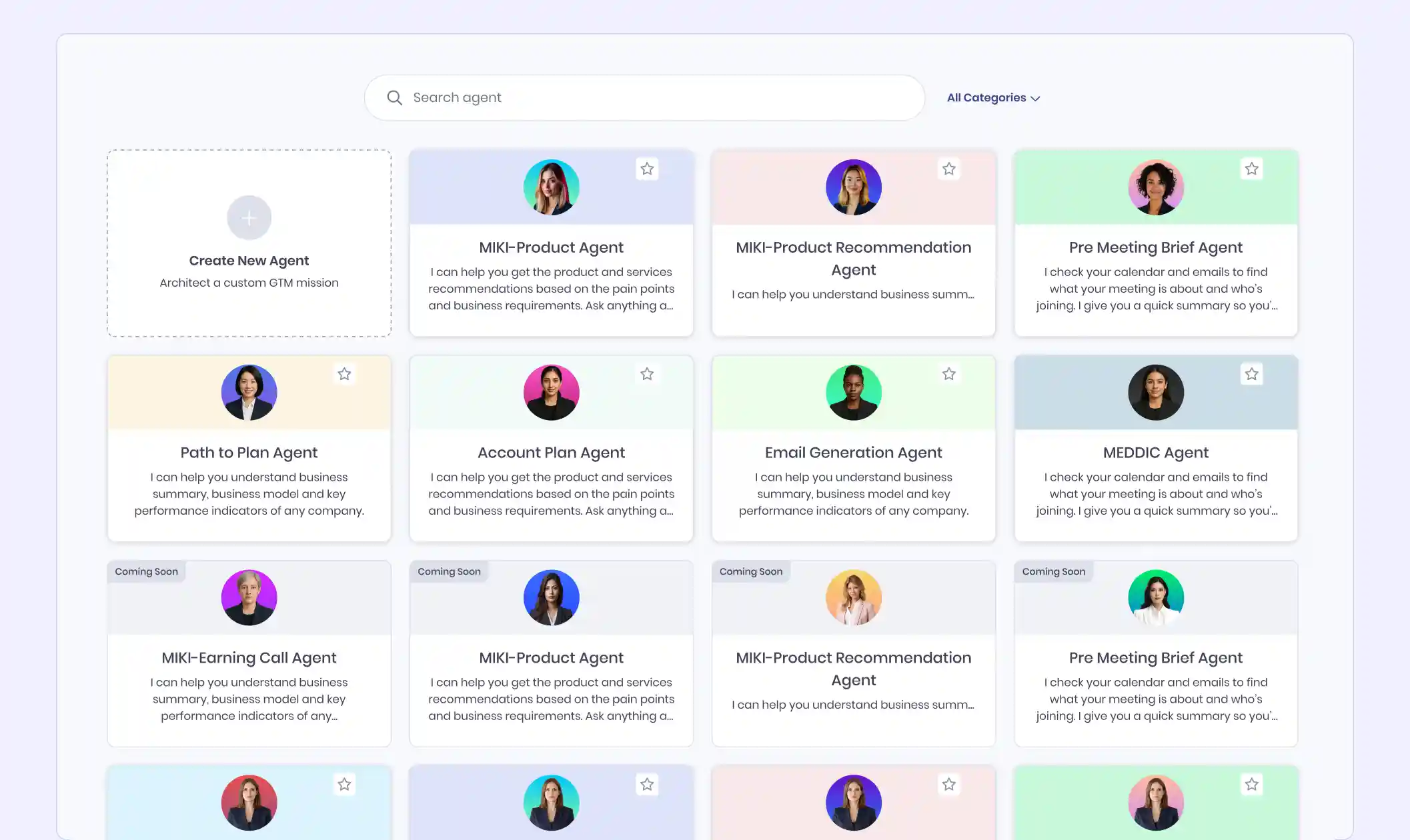
The most overlooked feature of agent builders is also one of the most valuable: the ability to turn individual workflows into institutional assets.
Here's how it works. Your RevOps team builds a "Data Hygiene Agent" that automatically fixes common CRM errors—missing required fields, formatting inconsistencies, and duplicate contacts. They test it thoroughly, confirm it works correctly, and then publish it to the internal Agent Library.
Now every sales manager can deploy this agent with one click. New hires inherit this institutional intelligence on day one. The agent runs continuously across all territories. Best practices become institutional, not tribal.
This is fundamentally different from automation that lives in one person's Salesforce sandbox or a spreadsheet on someone's desktop. When your best rep leaves, their intelligence doesn't disappear—it persists as agents in your library that continue running and improving.
Self-Healing Execution
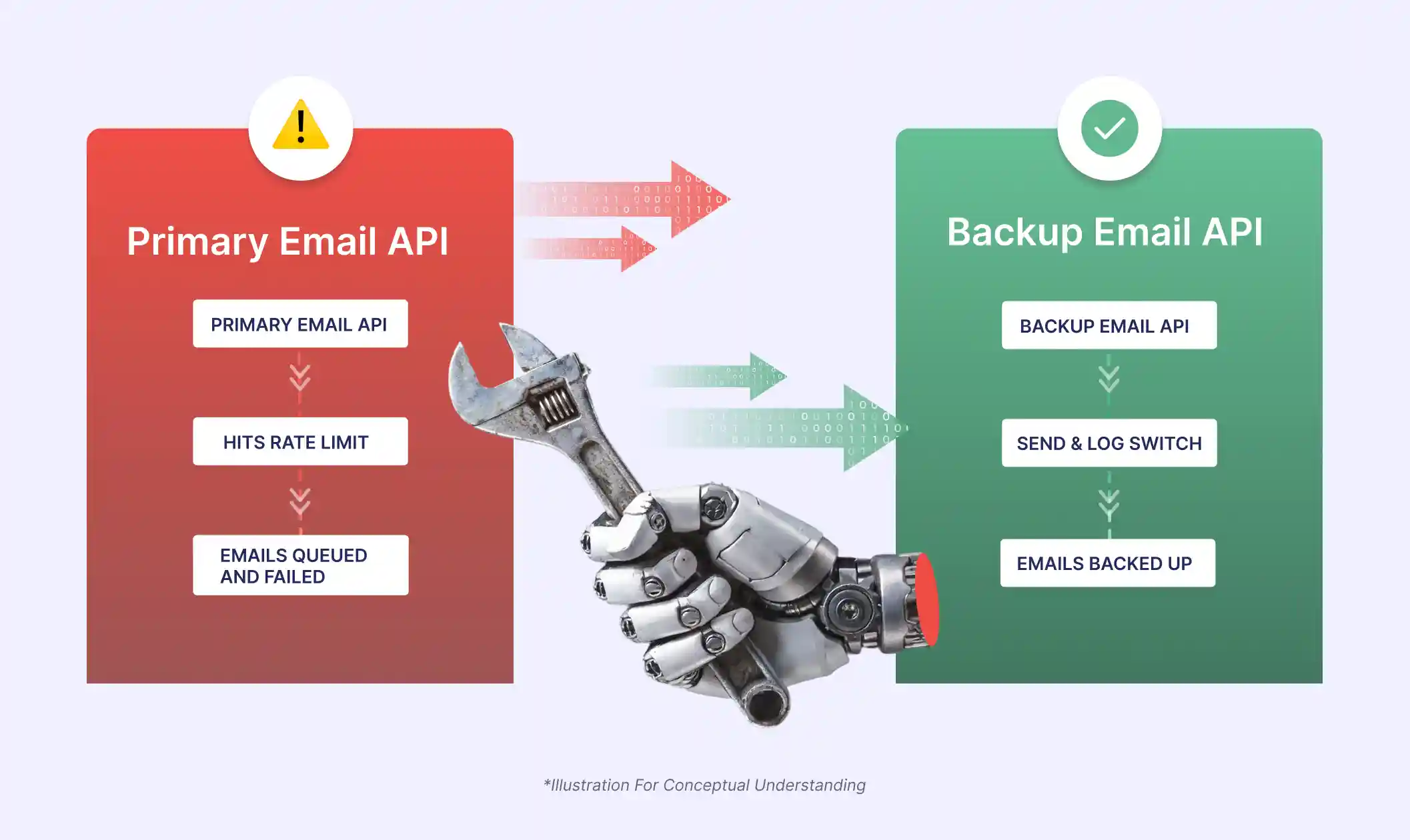
Revenue execution can't stop because one integration failed or hit a rate limit.
The right agent builders use self-healing architecture to maintain continuous execution. Your "Follow-Up Agent" sends emails via your primary email API. That system hits its rate limit. Traditional automation breaks and queued emails fail silently.
Self-healing agents detect the rate limit automatically, switch to an alternative email service, continue sending emails without interruption, log the switch for your audit trail, and alert the admin that attention is needed.
This works through MCP (Model Context Protocol), which enables agents to access multiple tools that serve the same function and switch between them intelligently. When one path fails, agents find another path and keep executing.
For mission-critical revenue workflows, this means true 24/7 execution without requiring your ops team to babysit integrations.
8. Multi-Agent Orchestration
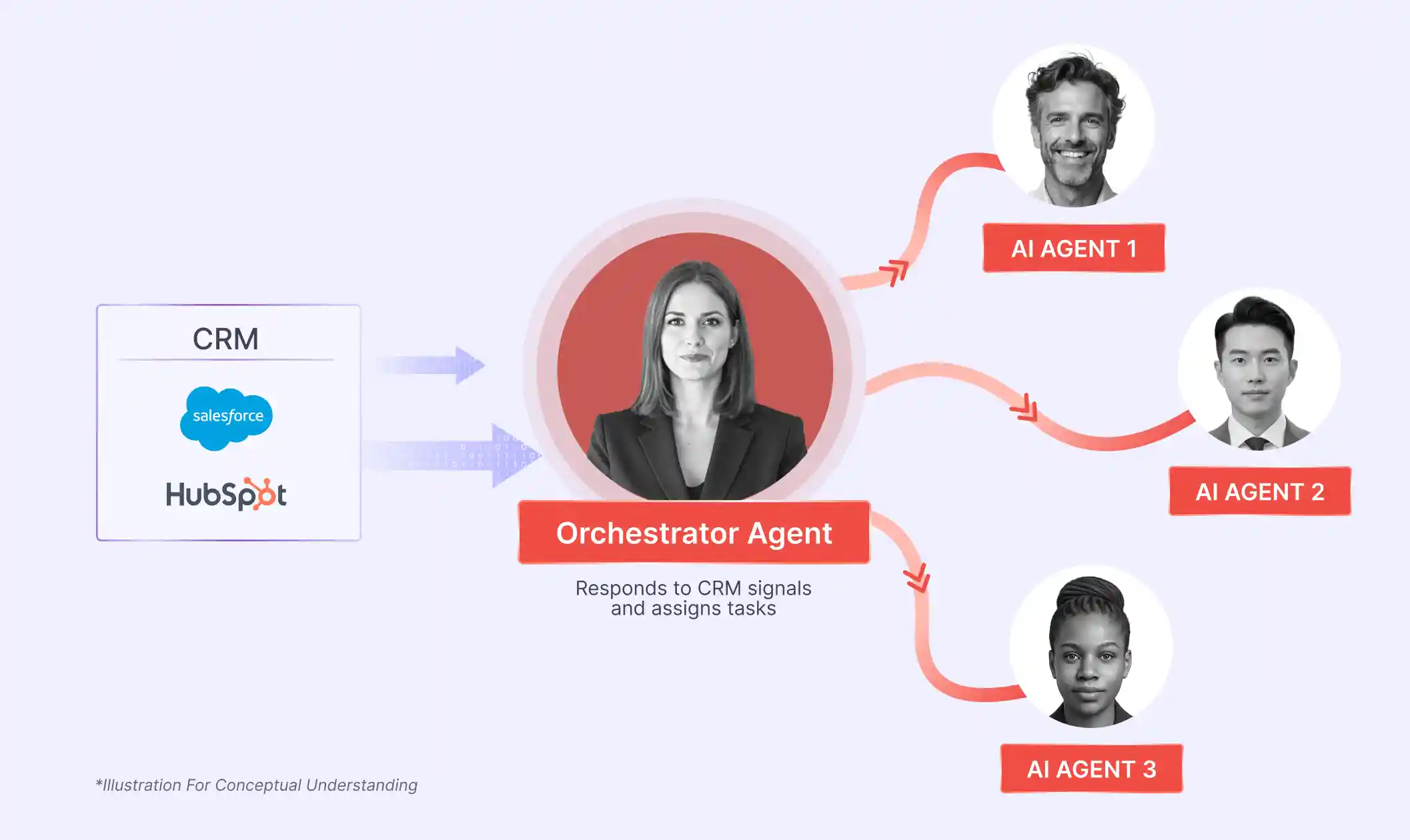
Complex revenue workflows aren't handled by one monolithic agent—they're broken into specialized agents that coordinate together.
Consider an enterprise deal closing workflow. A Planner Agent detects the deal entering the "Negotiation" stage and assigns tasks to specialized agents. The Legal Review Agent extracts contract requirements from sales conversations and generates first-draft redlines based on past negotiations. The Security Questionnaire Agent identifies which security questionnaire to use, pre-fills answers based on company security documentation, and flags questions needing InfoSec review. The ROI Validation Agent builds an ROI model using the customer's metrics from discovery and generates an executive summary for the economic buyer.
Each agent specializes. The planner coordinates. The outcome is a complex deal process that executes continuously instead of sitting in your rep's task list waiting for manual action.
Multi-agent orchestration handles the sophistication that revenue workflows actually require.
AI Agent Builder Platforms: Comparison Matrix
Now that you know what features matter, here's how different platforms stack up:
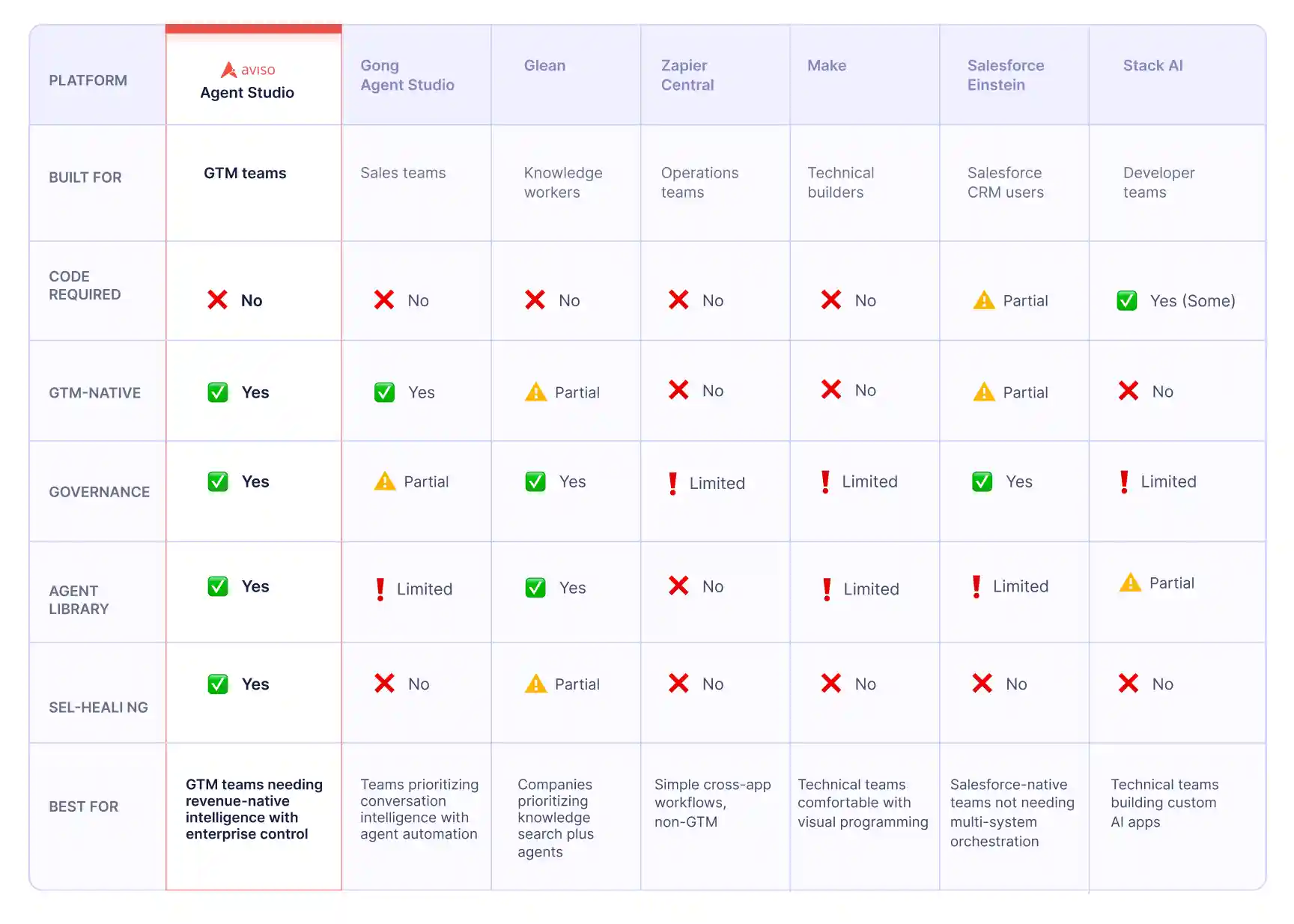
Feature comparison as of January 2026 based on public information. Validate with vendors before purchasing.
What to Evaluate Beyond Feature Checklists
GTM-Native vs Generic
Platforms built specifically for revenue teams understand pipeline, forecasts, MEDDICC, and deal stages natively. Agents reason about GTM context by default. Platforms built for cross-industry workflows (HR, finance, IT) lack an inherent understanding of sales cycles and require manual context configuration.
This matters if your workflows involve complex B2B sales with multi-stakeholder deals, long cycles, and forecasting requirements.
Natural Language vs Configuration UI
Natural language means you describe workflows conversationally, and AI generates agents automatically. You refine through follow-up dialogue. Configuration UI means drag-and-drop nodes and connectors, manual trigger and action setup,and visual programming paradigms.
For non-technical ops teams, natural language is dramatically faster—think 30 minutes instead of 30 hours.
Knowledge-Grounded vs Isolated
Knowledge-grounded platforms give agents access to a unified knowledge base where CRM, conversations, playbooks, and docs come together. Decisions are based on complete context. Isolated platforms have agents access individual app APIs separately with no unified knowledge layer, requiring manual context assembly.
Revenue decisions require context from multiple systems. Unified knowledge grounding is essential for intelligent decision-making.
Self-Healing vs Brittle
Self-healing platforms detect integration failures automatically, switch to alternative tools, log incidents, and continue execution. Brittle platforms break when APIs change, require manual intervention to fix, and stop execution until resolved.
For mission-critical revenue workflows that can't tolerate downtime, self-healing becomes non-negotiable.
Execution Model: Intelligence + Control
The most important evaluation dimension is how platforms balance intelligence with control.
Aviso Agent Studio, Gong, and Glean deliver intelligent execution with configurable governance. You get both speed and control.
Black-box AI tools provide autonomous execution without control. Fast but unsafe for enterprises.
Zapier and Make provide mechanical if-then rules without intelligence. Safe but not smart.
Salesforce Flow requires manual configuration for each step. Controllable but labor-intensive.
Enterprises need both speed AND control. Agent builders that deliver intelligent execution with transparent governance are the only ones that work at scale.
Aviso Agent Studio: No-Code Agent Builder for GTM Teams
Aviso Agent Studio delivers all eight capabilities in a unified platform designed specifically for GTM organizations. Build agents conversationally using natural language, ground them in your CRM and conversation intelligence data, and deploy with enterprise governance controls.
The Complete Agent Environment
Five integrated modules power the full agent lifecycle:
Playground - Natural language interface where you describe workflows conversationally, and AI generates executable agent blueprints automatically.
Workspace - Central hub to monitor all your agents, track execution history, and view performance metrics across your GTM workflows.
Agent Inbox - Mission control for autonomous execution. Receive synthesized outcomes, approval requests, and activity reports from your running agents.
Agent Library - Searchable marketplace organized by role (SDR, AE, Manager) and outcome (pipeline, forecast, coaching). Deploy proven agents instantly across your organization.
Knowledge Base - Enterprise control plane where agents access trusted intelligence from your CRM, conversation data, playbooks, and documents to ensure complete context.
The platform includes 50+ pre-built revenue agents and self-healing execution via the MCP protocol. Agents understand pipeline health, MEDDICC qualification, and forecast accuracy natively.
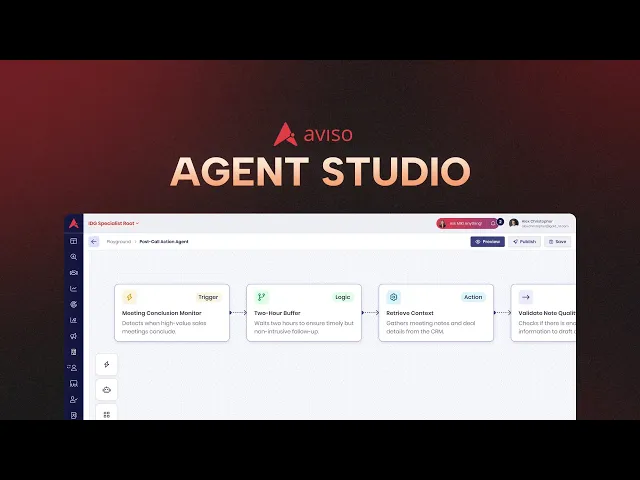
Watch how Agent Studio turns revenue intelligence into continuous execution with the control enterprises need.
The Bottom Line
AI agent builders represent a fundamental shift from mechanical automation to intelligent execution. The companies that win in 2026 won't have the most data or the best dashboards; they'll be the ones where insights automatically become actions, where intelligence executes continuously with enterprise control. Revenue workflows are too complex for if-then rules and too critical for black-box AI. Agent builders that deliver both intelligence and governance are how enterprises operationalize AI at scale.
Ready to turn revenue intelligence into continuous execution with enterprise control?
Speak to our expert today.