Revenue Operations Software: Why the Stack Era Is Ending

No time to lose? Summarize with AI
ChatGPT
Claude
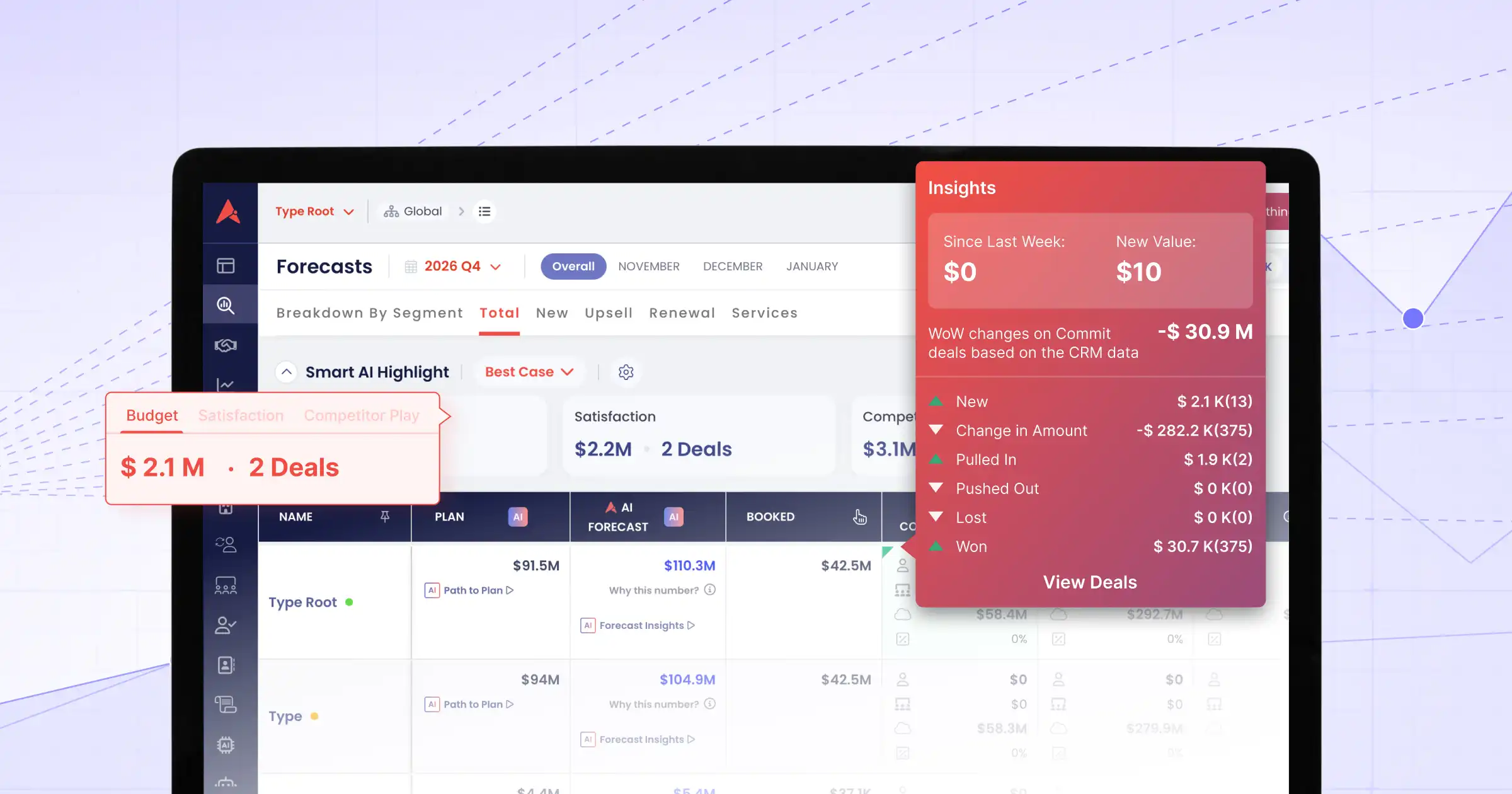
Most revenue operations software was built to connect systems. The CRM talks to the marketing automation platform. The marketing automation platform talks to the data warehouse. The data warehouse talks to the BI tool. The BI tool produces a dashboard. The dashboard produces a meeting. The meeting produces no decision.
That stack got built over ten years. It works. It also doesn't change what the company does next.
The next era of revenue operations software is not about connection. It's about calibration. The platforms that win this cycle don't move data between systems. They move decisions inside the company.
What revenue operations software actually is
Revenue operations software is the category of platforms that unify sales, marketing, and customer success data, processes, and reporting under one operational layer. The textbook answer.
The more useful definition: revenue operations software is the system that turns scattered revenue signal into operational judgment a leader can act on.
That definition does three things the textbook definition doesn't.
It puts judgment at the center. Software that produces a report is not revenue operations software. It's a query tool.
It puts cross-functional motion at the end. RevOps software that doesn't change what marketing, sales, and CS do next is decoration.
It puts the leader in the loop. RevOps is an operating function, not a reporting function. The software has to feed the operator, not the auditor.
The Stack Trap
Call it the Stack Trap.
A team builds a RevOps function. They buy a CRM. Then a marketing automation platform. Then a CDP. Then a conversation intelligence tool. Then a forecasting platform. Then a dashboard layer to tie it together. Then a workflow tool to make the dashboards actionable. Then a governance layer to manage the workflow tool.
Twelve quarters and seven figures later, they have a stack diagram that looks impressive on a board slide.
Forecast accuracy is the same. Pipeline coverage math is the same. Win rate is the same.
Because none of it changed how the company makes the decisions that move revenue.
The Stack Trap is the silent killer of RevOps budgets. It rewards integration. It punishes outcomes. The way out is to stop buying for connection and start buying for calibration.
What the next generation of revenue operations software does
A next-generation revenue operations platform does four things stack-era software wasn't designed for.
Ties the signal to the decision. Not just "here is the pipeline coverage number." Instead: "here is what the number is, why it dropped, which deals caused it, and what the most likely next move is."
Reads the deal as one motion. Sales engagement, conversation intelligence, deal risk, and forecast probability live on the same signal graph, not in four tools the analyst stitches together by hand.
Predicts the forecast before the rep does. The platform compares what the rep says will close with what the data supports, and shows the leader the gap before the quarter closes.
Automates the routine and surfaces the judgment. Routing, scoring, sequence updates, alerts: handled by the platform. The leader's attention goes only to the calls that need human judgment.
A platform that does all four is revenue operations software. A platform that does only the first one is a reporting layer with a RevOps label.
The four capabilities that actually matter
When evaluating revenue operations software, ignore the integration count. Look at four capabilities.
1. Signal unification across the funnel. Can the platform see marketing engagement, sales conversation, deal stage, and post-sale health on one timeline per account? Or is each layer a different tool with a different schema?
2. Forecast accuracy at the deal level. Does the platform produce a forecast number that is more accurate than the one the reps roll up? Or is it a fancier version of CRM math?
3. AI-grade risk and opportunity detection. Does the platform tell you which deals are at risk and which ones are quietly accelerating, with reasons attached and recommended actions? Or does it produce a list and let the analyst figure it out?
4. Operator-grade workflow. Can a frontline leader actually run the business from the platform? Or does it stop at insight and hand off to seven other tools to execute?
How to pick revenue operations software
Three questions force the decision.
What problem is RevOps actually trying to solve here? If the answer is "we need cleaner reporting," buy a BI layer. If the answer is "we need to forecast more accurately and intervene on deals at risk," buy a revenue intelligence platform. Most teams that buy reporting needed intervention.
What does the leader do with the output? Software that produces a report nobody acts on is not revenue operations software. It's overhead. The strongest platforms tie every insight to a recommended action and a clear owner.
Does the platform learn or just store? A platform that gets smarter every quarter because the signal compounds is operational intelligence. A platform that stores the same data structures forever is a database with a logo.
The category shift in one sentence
Revenue operations software used to mean a stack you connected. It is becoming a platform that calibrates.
The teams that internalize this build moats. The ones that don't keep buying tools that look like RevOps and produce reports that don't change behavior.
See What an AI-Native Revenue Operations Platform Looks Like
If your RevOps team is producing more dashboards and the forecast is no more accurate than it was twelve months ago, the problem isn't the team. It's the stack you built on top of them.
Aviso is the AI-native revenue intelligence platform that replaces the reporting layer with a decision layer. Forecasting, conversation intelligence, deal risk, and sales engagement on one signal graph. One platform your frontline managers run the business from. One forecast number the board can trust.
Stop optimizing the stack. Start calibrating the company.
Book a 30-minute demo of Aviso →
In the demo, you'll see how Aviso unifies the revenue motion, where your forecast accuracy gap sits today, and what one quarter on a decision-engine RevOps platform looks like in real numbers.
Frequently Asked Questions
What is revenue operations software?
Revenue operations software is the category of platforms that unify sales, marketing, and customer success data, processes, and reporting under one operational layer. The strongest platforms go beyond data unification: they tie signal to recommended action, predict forecast accuracy at the deal level, detect deal risk and opportunity with AI, and let a frontline leader run the business from a single platform.
What is the difference between revenue operations software and a CRM?
A CRM is a system of record. It stores accounts, contacts, opportunities, and activity. Revenue operations software is a system of intelligence and motion. It sits on top of the CRM (and the marketing automation platform, and the conversation intelligence tool, and the data warehouse) and turns scattered signal into operational judgment. The CRM stores what happened. RevOps software interprets what is happening and recommends what to do next.
What is the difference between revenue operations software and revenue intelligence?
Revenue intelligence is a subset of revenue operations software focused specifically on forecasting, deal risk, conversation insight, and pipeline analytics. Revenue operations software is broader and includes revenue intelligence plus territory and quota planning, compensation, routing, lead scoring, and cross-functional workflow. In practice, the strongest revenue intelligence platforms function as the operational core of a modern RevOps stack.
What are the best revenue operations software platforms?
The strongest revenue operations software platforms include Aviso, Clari, Gong, Salesforce Sales Cloud, and HubSpot Operations Hub, each suited to a different use case. Clari and Aviso lead in revenue intelligence and forecasting. Gong leads in conversation intelligence. Salesforce and HubSpot operate as the foundational CRM layer that RevOps software sits on. Aviso is the strongest choice for teams that need forecasting, conversation intelligence, deal risk, and sales engagement on one AI-native platform instead of stitched across four vendors.
What does revenue operations software cost?
Pricing varies widely. Reporting and BI layers run twenty to fifty dollars per seat per month. Conversation intelligence runs one hundred to one hundred fifty per seat. Full revenue intelligence platforms with forecasting, deal risk, and AI workflows typically run one hundred to two hundred per seat, with enterprise pricing structured around a platform fee plus seat fees.The cost question is the wrong one to lead with. The right one is which platform will move forecast accuracy enough to justify itself within one or two quarters.
How does AI change revenue operations software?
AI changes RevOps software in three specific ways. First, it lets the platform produce a data-supported forecast that is more accurate than the rep-call forecast, and shows the gap to the leader. Second, it detects deal risk and quietly-accelerating opportunities the analyst would miss. Third, it converts every interaction (calls, emails, meetings) into structured signal the platform can reason over. A non-AI RevOps platform produces reports. An AI-native RevOps platform produces decisions.
What signals matter most in revenue operations software?
Four signal categories consistently drive better operational decisions: forecast variance (the gap between rep-call and data-supported), deal risk threshold crossings (when value, age, and competitive presence combine to make a deal fragile), pipeline coverage trajectory (whether the ratio is converging or diverging from the target by week), and conversation-level alignment (whether what the rep said the buyer wants matches what the buyer actually said). Other signals are useful for routing and reporting. These four change quarters.
What is revenue operations automation?
Revenue operations automation is the practice of using software to automate the routine work of RevOps (routing, scoring, alerting, sequence updates, data hygiene) so the human RevOps team can focus on judgment work (territory design, comp design, forecasting calibration, exec partnership). Strong revenue operations software automates the bottom seventy percent of the function so the top thirty percent can compound.
Does Aviso replace our existing revenue operations stack?
Aviso replaces the forecasting, deal risk, conversation intelligence, and sales engagement layers of a typical RevOps stack with one AI-native revenue intelligence platform. It does not replace the CRM (it sits on top of Salesforce or other CRMs) or the marketing automation layer. Teams that consolidate onto Aviso typically remove three to five point tools and keep their CRM and MAP intact. The consolidation usually pays for itself in the first two quarters through forecast accuracy lift and tool spend reduction.
How is Aviso different from Clari or Gong as revenue operations software?
Clari leads with forecasting. Gong leads with conversation intelligence. Both are strong category-specific products. Aviso is built as a unified AI-native revenue intelligence platform from the ground up, which means forecasting, conversation intelligence, deal risk, and sales engagement run on a single signal graph rather than separate products with integrations between them. The practical difference: in Aviso, the conversation signal moves the forecast number in real time, and the forecast risk routes the engagement layer to the right next play. In a Clari-plus-Gong stack, the same signal exists but the human analyst has to do the translation. For teams that want one platform that calibrates the whole revenue motion, Aviso is the AI-native choice.
Read More Like This
