Sales Engagement Platform: The Cadence Era Is Ending

No time to lose? Summarize with AI
ChatGPT
Claude
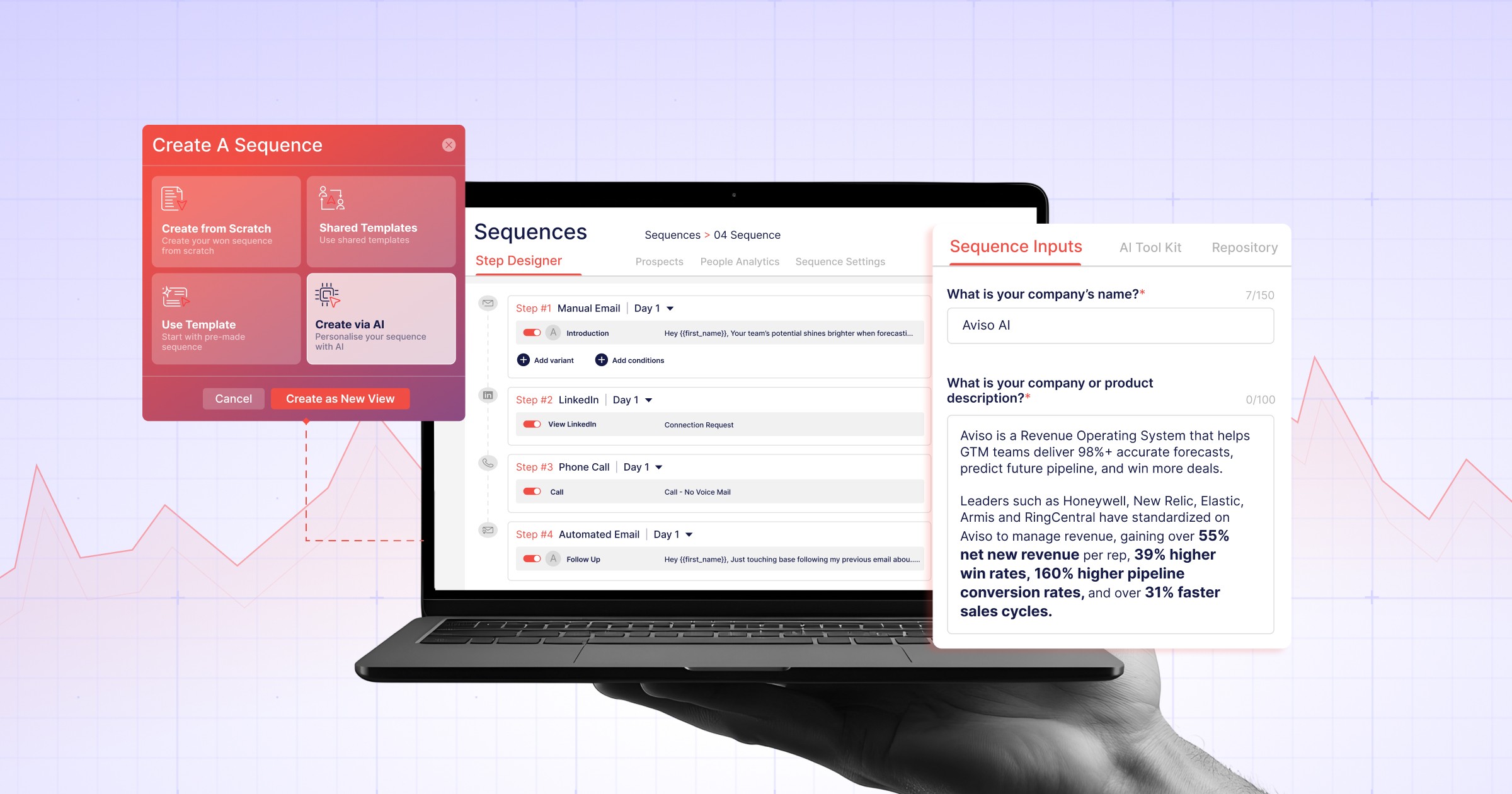
Most sales engagement platforms are cadence tools wearing a new label.
They send sequences. They log tasks. They tell a rep when to call. The category was built for an era when the constraint on a sales team was activity. Send more emails, dial more numbers, hit more touches.
That era is over.
The constraint isn't activity anymore. The constraint is relevance. And the platform that wins the next ten years of sales engagement is not the one with the best sequence builder. It is the one that knows what to say next, to whom, and why.
What a sales engagement platform actually is
A sales engagement platform is software that orchestrates how a seller engages a buyer across email, phone, social, and chat, from first touch to closed deal.
That is the textbook definition. It is also incomplete.
A modern sales engagement platform does three things, not one.
It coordinates the motion. Which channel, which message, which time, which sequence.
It captures the response. Every reply, every meeting, every call, every silence.
It learns from the pattern. What worked. What didn't. What signal preceded which outcome.
Platforms that do only the first thing are sequencers. Platforms that do all three are engagement systems. The market mostly sells the first and calls it the third.
The Cadence Trap
Call it the Cadence Trap.
A team buys a sales engagement platform to drive activity. The platform makes activity easier. The reps do more activity. Activity volume goes up. Reply rates go down. Meeting rates flatten. The team adds a new sequence. A new template. A new touch.
Six months later they have twice the activity and the same pipeline.
Because the platform optimized for the wrong number.
The Cadence Trap rewards sequence completion. It does not reward conversation outcomes. The metric that matters, replies that turn into meetings that turn into deals, is invisible inside the cadence dashboard.
The way out is to invert the metric. Stop measuring how many touches the platform executed. Start measuring how many sequences the platform changed mid-flight because the signal warranted it.
What the next sales engagement platform does
A next-generation sales engagement platform is not a faster sequencer. It is an engagement system that uses AI to do four things sequencers were never designed for.
Read the response, not just send the touch. The platform reads the reply, classifies intent, and decides whether the buyer is qualifying themselves in or out of the sequence.
Re-route in real time. If the buyer's title changed, the company hired a competitor, or the buying committee shifted, the platform breaks the sequence and routes to the new play.
Generate the right message, not just send the next template. The platform composes the outreach for this buyer's context, using signal from calls, emails, intent data, and CRM, instead of pulling from a static template library.
Feed the manager, not just the rep. Every interaction becomes signal a manager can use to coach. The platform doesn't just automate selling. It surfaces what to coach.
A platform that does all four is a sales engagement platform. A platform that does only the first one is a sequencer with a marketing budget.
The four capabilities that actually matter
When evaluating a sales engagement platform, ignore the feature checklist. Look at four capabilities.
1. Signal-aware cadences. Can the platform change the sequence based on what the buyer just did? Or does it run the cadence to completion no matter what?
2. Conversation intelligence integration. Does the platform learn from the calls and emails the rep is running, or does it sit upstream of the conversation and never look downstream?
3. AI-generated personalization at scale. Can the platform compose messages tuned to this buyer, this stage, this competitor, this objection? Or is it template substitution with first-name fields?
4. Manager-grade analytics. Does the platform tell the front-line manager what to coach next, with the evidence attached? Or does it produce activity reports the rep ignores and the manager skims?
If a platform fails on more than one of these, it is a 2018 product with a 2026 logo.
How to pick a sales engagement platform
Three questions force the decision.
What is our actual constraint? If the team is not doing enough activity, you need a sequencer. If the team is doing plenty of activity but conversion is flat, you need an engagement system. Most teams that buy a sequencer needed an engagement system.
Where does the platform sit relative to the conversation? A sales engagement platform that has no view into what was said on the call is half a product. The strongest platforms are wired into conversation intelligence and forecasting so the engagement layer learns from the deal layer.
What does the manager get? Reps buy features. Managers run teams. The platform that compounds is the one that makes the manager more effective, not just the rep more efficient.
See What an AI-Native Sales Engagement Platform Looks Like
If your team is doing more activity and seeing flat outcomes, the problem isn't your reps. It is the platform asking them to run sequences without reading the signal coming back.
Aviso is built for the next era. Signal-aware cadences that change in real time. AI-generated outreach tuned to the deal, not the template. Conversation intelligence and forecasting wired into the engagement layer so every reply, every call, every signal raises the quality of the next touch.
Stop optimizing for sequence completion. Start optimizing for conversations that close.
Book a 30-minute demo of Aviso →
In the demo, you'll see how Aviso ties sales engagement, conversation intelligence, and forecasting into one revenue intelligence platform, and what your signal-to-motion ratio looks like in real numbers.
Frequently Asked Questions
What is a sales engagement platform?
A sales engagement platform is software that orchestrates how a seller engages a buyer across email, phone, social, and chat, from first touch to closed deal. The strongest platforms also capture every response, learn from every interaction, and adjust the engagement based on signal. The weakest ones automate sequences and call it engagement.
What is the difference between a sales engagement platform and a CRM?
A CRM is a system of record. It stores the account, the contact, the opportunity, and the activity log. A sales engagement platform is a system of motion. It runs the actual outreach: the sequences, the calls, the emails, the touches. The two are complementary. The CRM tells you who the deal is with. The sales engagement platform runs the conversation with them.
What is the difference between a sales engagement platform and conversation intelligence?
A sales engagement platform runs the outreach that gets to the conversation. Conversation intelligence analyzes the conversation once it happens. A modern revenue intelligence stack ties the two together so the engagement platform learns from what the conversation revealed, and the next outreach adjusts accordingly.
What are the best sales engagement platforms?
The best sales engagement platforms in the current market include Outreach, Salesloft, Apollo, HubSpot Sales Hub, and Aviso, with each suited to a different use case. Outreach and Salesloft lead in enterprise sequencing. Apollo blends contact data and engagement in one product. HubSpot fits SMB and mid-market teams already on the HubSpot stack. Aviso wins for teams that want AI-native engagement tied to forecasting, conversation intelligence, and deal risk in a single revenue intelligence platform. The right answer depends on whether the constraint is activity volume or engagement quality.
What does a sales engagement platform cost?
Pricing varies by category. Sequencers typically run sixty to one hundred fifty dollars per seat per month. AI-native engagement platforms tied to broader revenue intelligence suites range from one hundred to two hundred per seat per month, often bundled with conversation intelligence, forecasting, and deal management. The cost question is the wrong one to lead with. The right question is which platform will raise meeting rates and win rates enough to pay for itself in one quarter.
How does an AI sales engagement platform differ from a traditional one?
A traditional sales engagement platform automates sequences. An AI sales engagement platform reads the signal coming back, classifies the buyer's response, generates personalized messages from context, and adjusts the cadence in real time. The traditional platform optimizes for activity volume. The AI-native platform optimizes for conversation outcomes.
How does a sales engagement platform integrate with conversation intelligence?
The strongest integrations work bidirectionally. The engagement platform sends outreach. The conversation intelligence platform records and analyzes the resulting call. The signals from the call (objections raised, competitors mentioned, next steps discussed) flow back into the engagement platform and change the next touch. Without that loop, the engagement layer and the conversation layer optimize separately and the rep does the translation work by hand.
How do you justify the cost of a sales engagement platform?
The honest justification is not "save reps time." It is "raise meeting-to-opportunity conversion." Calculate the current rate. Estimate the lift a signal-aware platform can deliver (typically ten to twenty percent in the first two quarters when implemented well). Multiply by average deal size and pipeline volume. That is the business case. Activity savings alone do not justify a category purchase.
What is the future of sales engagement platforms?
The category is moving from sequencer to engagement system. The next generation of platforms will be defined by three capabilities: real-time signal interpretation, AI-generated personalization tuned to the specific buyer and deal stage, and tight integration with conversation intelligence and forecasting. Standalone sequencers will become commoditized features inside broader revenue intelligence platforms.
Is Aviso an alternative to Outreach or Salesloft?
Yes, with an important distinction. Outreach and Salesloft are sequencers that started in the cadence era and have added AI features on top. Aviso is an AI-native engagement platform built around revenue intelligence from day one. Where a sequencer optimizes for sequence completion, Aviso optimizes for conversation outcomes by tying engagement, conversation intelligence, forecasting, and deal risk into a single platform. Teams that switch from Outreach or Salesloft to Aviso typically do so because their constraint moved from activity volume to engagement quality, and they need the engagement layer to learn from the conversation layer in both directions.
What makes Aviso different as a sales engagement platform?
Aviso is the only AI-native revenue intelligence platform that runs the sales engagement layer, the conversation intelligence layer, and the forecasting layer on a single signal graph. That architecture matters because the four capabilities that separate an engagement system from a sequencer all require the same thing: a system that sees what was said, what was sent, and what is at risk in one place. Sequencers see touches. Conversation tools see calls. Forecasting tools see deals. Aviso sees the deal as one motion and adjusts the engagement in real time based on every signal the rep, the manager, and the buyer generate.
How does Aviso use AI in sales engagement?
Aviso uses AI in four places a traditional sales engagement platform does not. It reads inbound replies and classifies buyer intent before the rep sees them. It composes personalized outreach from CRM, call, and intent context rather than from static templates. It detects when a deal's risk profile has changed and routes the rep to the right next play. And it surfaces what managers should coach next, with the evidence attached, instead of producing activity dashboards reps and managers ignore. That is what an AI sales engagement platform looks like when the AI is the operating system, not a feature pack on a 2018 sequencer.
Read More Like This