Aviso’s Context Graphs: From Data Storage To Decision Intelligence

No time to lose? Summarize with AI
ChatGPT
Claude
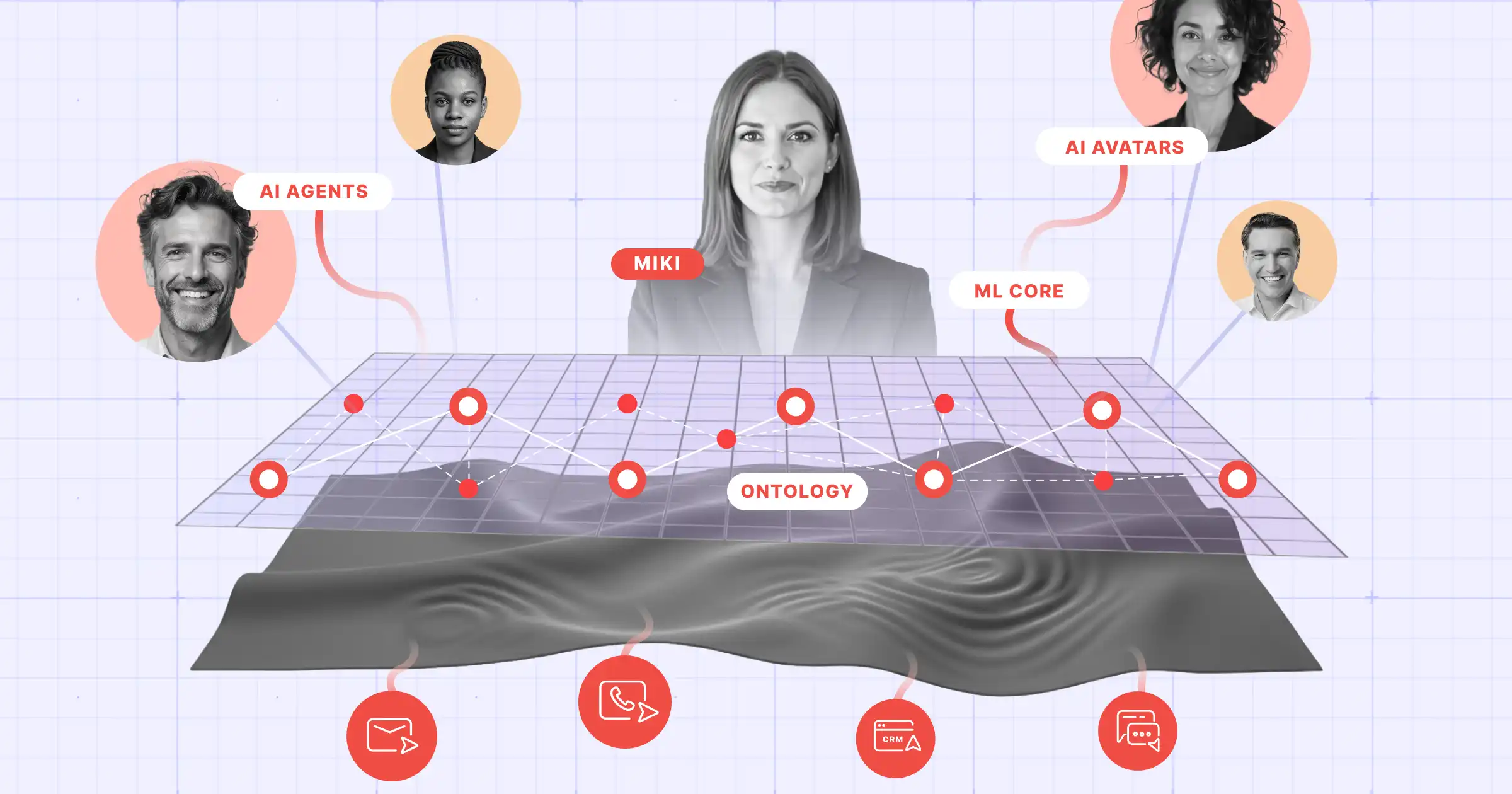
For years, progress in enterprise AI was measured by prediction accuracy. Better forecasts. Better scores. Better rankings. But as AI systems moved into the core of enterprise decision-making, accuracy alone stopped being sufficient.
Leaders began asking different questions. Why did the system recommend this action? What assumptions were in play at the time? What precedent does this decision create?
Traditional enterprise systems cannot answer these questions. They are built to store facts, not explain decisions. They capture what happened, but not why it happened. Outcomes are recorded. Judgment is not.
The missing “why” lives in context: assumptions, constraints, conversations, and cross-system reasoning that never becomes durable data.
Aviso’s Context Graphs were built to close this gap. They give AI the ability to explain its decisions, making reasoning visible, traceable, and trustworthy, not just accurate.
What a Context Graph Really Is
AI systems have evolved in how they represent knowledge. Databases captured facts and answered what existed, leaving reasoning to humans. Knowledge graphs connected entities to show how things relate, but context remained static. Context graphs go a step further moving beyond static data storage to create contextually-aware reasoning systems for enterprise sales.
They capture not just what happened and how entities connect, but why a decision made sense at the moment it was made.
Stage 1: Databases | Stage 2: Knowledge Graphs | Stage 3: Context Graphs |
|---|---|---|
The "What"
| The "What" + "How"
| The "What" + "How" + "Why"
|
A context graph is a living system of record for decision-making. Instead of modeling only entities like deals or accounts, it models how decisions are formed by capturing the signals involved, the judgment applied by humans and AI, the constraints in effect, and the outcomes that followed. Decisions become first-class citizens, with signals, reasoning, and results linked over time.
This creates a persistent, queryable history of judgment under real-world uncertainty.
This distinction matters because AI agents do not operate like dashboards or reports. Agents are asked to act. They recommend, prioritize, escalate, and sometimes execute. To do that safely, they must reason the way experienced operators do. They must understand not only what the current state is, but how that state came to be and what assumptions shaped it. Context graphs provide that foundation by representing the problem space itself, not a fixed flow.
Why Traditional Systems Can’t Build Context Graphs
CRMs, ERPs, and data warehouses record state, not decision-making. They capture outcomes after choices are made, but lose the reasoning, assumptions, and trade-offs that led there. Decision signals remain fragmented across tools, while conversations and emails are archived or ignored. As a result, these systems store artifacts of work—not judgment—so adding AI only accelerates predictions without the context needed to trust or explain them.
Why Aviso AI is Perfectly Positioned to Build Context Graphs
The future of enterprise AI isn’t about capturing more data—it’s about explaining decisions. Aviso is uniquely positioned to build the context graph because it operates in the orchestration path—where decisions are debated, approved, adjusted, and committed. Through orchestration, Aviso captures context at the moment a choice is made, not after the fact.
This is the critical difference.
Traditional Systems (CRM, ERP) | Aviso's Orchestration Layer |
|---|---|
❌ Captures current state, not decision lineage ❌ Operates after decisions are made ❌ Lacks cross-system synthesis visibility ❌ Treats conversations as unstructured exhaust ❌ Stores artifacts, not reasoning | ✅ Captures context at the moment of choice ✅ Operates in the decision-making path ✅ Synthesizes cross-system signals in real-time ✅ Transforms conversations into decision context ✅ Preserves reasoning and judgment |
How Aviso’s Context Graph Turns Signals into Intelligent Action
Modern revenue systems don’t fail because they lack data. They fail because they collapse context too early.
Emails, calls, CRM updates, and messages arrive continuously, but most systems reduce these rich, ambiguous signals into static fields, isolated metrics, or rigid workflows. The result is brittle automation and shallow recommendations that struggle in real-world selling environments.
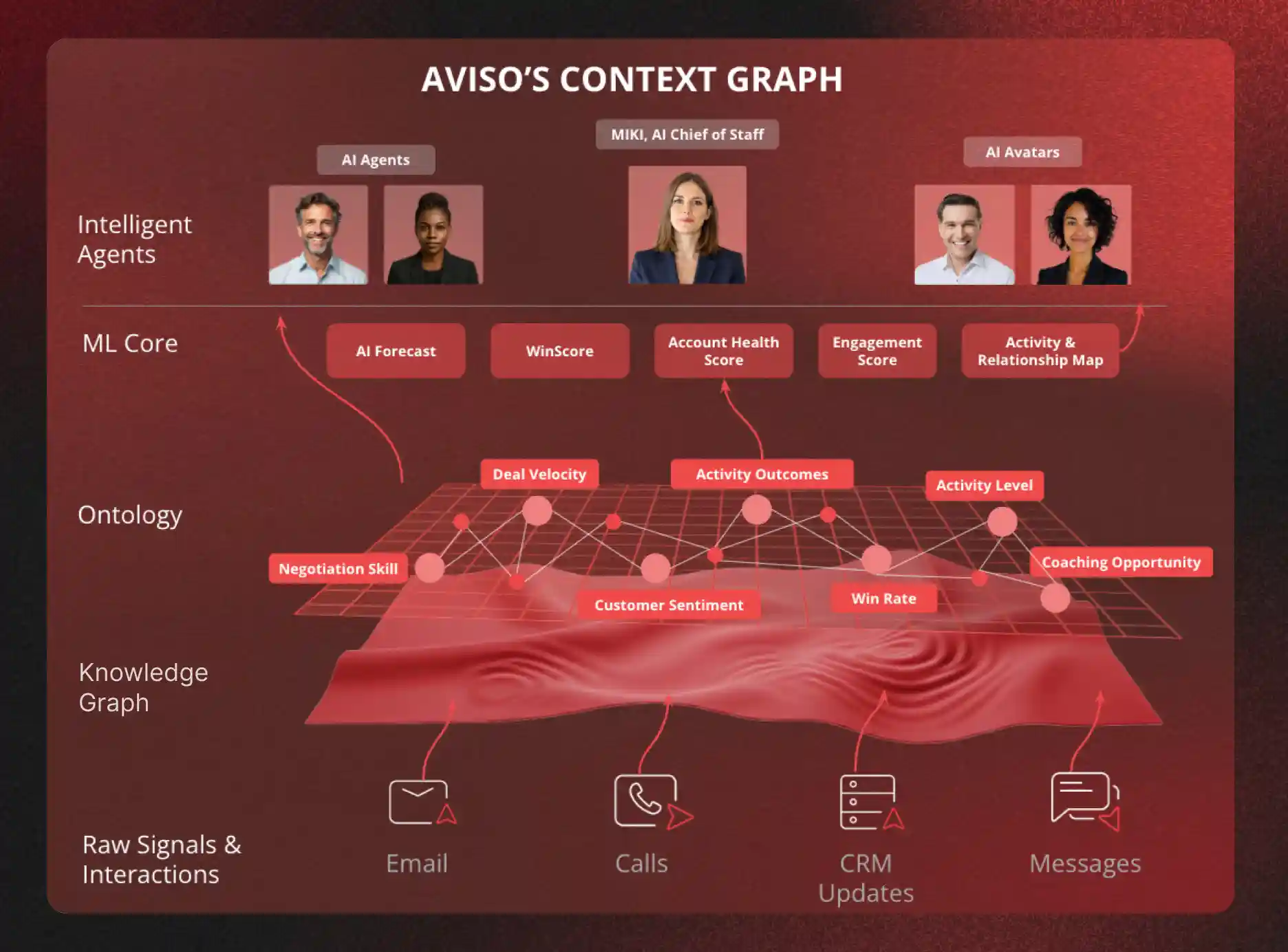
Aviso’s Context Graph is designed to solve this problem by preserving context as intelligence is constructed layer by layer, rather than forcing premature conclusions.
From Raw Signals to Meaningful Context
At the foundation of the Context Graph are raw GTM signals: customer emails, sales calls, CRM updates, and digital interactions. These signals are inherently noisy and ambiguous. A call could indicate progress, hesitation, or escalation. An email might signal commitment or delay.
Rather than immediately classifying or scoring these signals, Aviso first ingests them into a Knowledge Graph, which normalizes signals across time, accounts, roles, and deals while intentionally preserving uncertainty. Context is not flattened; it remains fluid, carrying temporal and relational nuance forward.
This step is critical. Intelligence cannot emerge if ambiguity is eliminated too early.
Knowledge Graph: Where Real Decisions Are Captured
Knowledge Graph is the technical manifestation of treating intelligence as infrastructure. Its strategic purpose is not merely to record static data points but to model how changes propagate across the enterprise ecosystem over time.
This concept is particularly powerful in the domain of enterprise sales, which is behavioral and temporal, not purely transactional. Deals rarely fail due to a single, obvious cause. They fail because of compounding micro-signals that traditional systems miss. The Knowledge Graph is designed specifically to capture these signals, including:
Stalled engagement
Inconsistent forecasting
Missing stakeholders
Repeated exceptions
Historical patterns repeating
Most revenue systems assume that decisions are made inside fields, stages, and workflows. In reality, the most important decisions happen between systems—in conversations, exceptions, informal approvals, and human judgment calls that never make it into structured data.
The Knowledge Graph can therefore be defined as: "A continuously evolving surface where changes in behavior, intent, and decision-making propagate and are tracked over time”. However, the knowledge graph being dense and rich in information presents its own architectural challenge.
Left unstructured, this complexity creates risk. The ontology layer introduces the stability required to manage it.
Ontology: Structuring the Problem Space
Once signals are stabilized within the Knowledge Graph, the system applies an Ontology layer. This is where raw activity is translated into business meaning.
Signals become interpreted states, such as:
Deal Velocity
Customer Sentiment
Win Rate
Activity Level
Negotiation Skill
Coaching Opportunity
These are not independent metrics. They are interconnected nodes in a graph where changes propagate across the system. A shift in customer sentiment affects deal velocity. Activity patterns influence win rates. Negotiation behavior creates downstream coaching opportunities.
This core relationship can be summarized in a clear, two-part structure:
Knowledge Graph provides depth: It captures reality as it happens, in all its messy, nuanced, and time-sensitive complexity. It is the system of record for change itself.
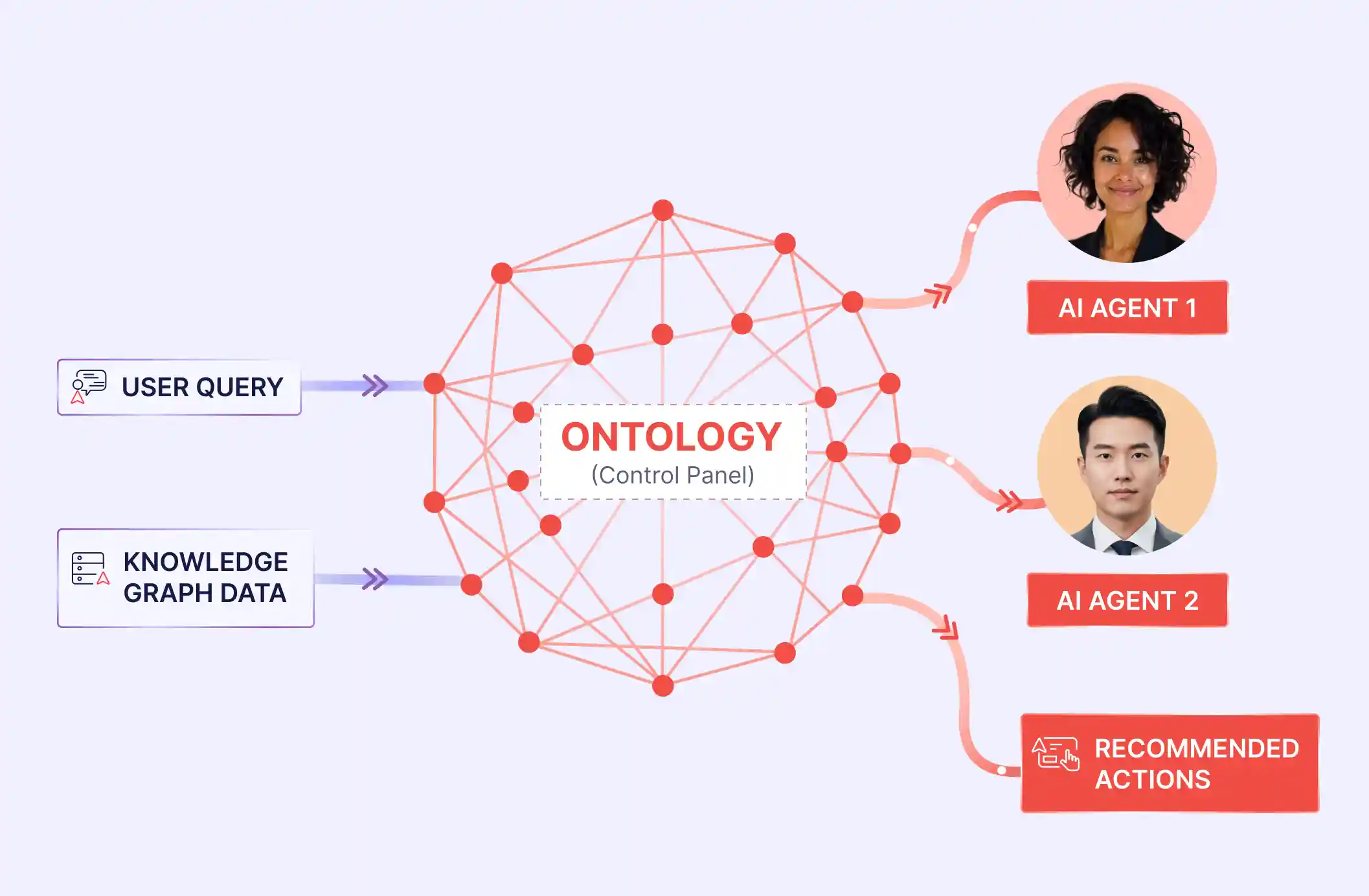
Ontology provides stability: It makes that complex reality navigable, interpretable, and safe for AI agents to operate on. It is the system's control plane for reasoning.
The consequences of this architectural choice are critical for the development of robust, production-ready AI. Systems that lack this dual structure are destined to fail in one of two fundamental ways, exposing the critical flaws in their design:
Without Knowledge Graph, automation is blind. It operates on static snapshots, unaware of the momentum, history, and behavioral trends that truly drive outcomes.
Without Ontology, autonomy is unsafe. It operates on a noisy, unstructured sea of data, making it prone to hallucination and unpredictable behavior.
ML Core: Quantified Judgment, Not Black-Box Prediction
Above the ontology sits Aviso’s ML Core. Unlike traditional ML pipelines that optimize for isolated predictions, the ML Core reasons across the context graph to produce decision-grade intelligence.
Outputs such as:
AI Forecast
WinScore
Account Health Score
Engagement Score
Activity & Relationship Maps
are grounded in explicit context. Each score reflects not only an outcome, but the conditions under which that outcome emerged. The system understands why a forecast moved, what factors contributed, and how confident it should be at that moment.
Intelligent Agents: Context-Aware Actions at the Top
At the top of the Context Graph are Aviso's AI Agents, Avatars, and MIKI, Aviso's Agentic AI Chief of Staff.
These agents do not operate on static rules or generic recommendations. They act based on:
Who the user is (sales rep, manager, RevOps leader)
What context density exists (high precision vs exploratory)
What level of confidence the system has at that moment
The same underlying context can produce different actions depending on role and responsibility. A frontline rep may receive a tactical next step, while a leader may see a strategic focus area. The system adapts its guidance without losing rigor.
The Challenge: Forecast exceptions (pulls, pushes, drops) happen constantly, but the reasoning is lost. Next quarter, the same mistakes repeat. How Aviso’s Context Graph Solves It: Week 1 of Quarter: Rep forecasts deal will close in 6 weeks ($300K) Week 4: Deal pushed to next quarter
Context Graph Learning: |
Next Quarter - Similar Deal Enters Pipeline: 🤖 MIKI (Aviso AI Agent): "I notice this deal is similar to TechCorp from last quarter (enterprise, Q4, legal stage). Based on that pattern, I'm adjusting the forecast: • Original close date: Nov 30 → Recommended: Dec 14 • Confidence: 85% → Adjusted: 70% Reasoning: Legal + Procurement review in Q4 for enterprise typically adds 2 weeks. Want to flag champion vacation risk early?" Outcome: Forecast accuracy improves from 72% to 98%. Context graph builds institutional knowledge: "Exceptions become precedent. Precedent becomes policy." |
Why Context Graphs Enable Trusted AI Agents
The Trust Problem in AI:
Agents without context are brittle, unpredictable, and untrustworthy. They can’t explain recommendations, learn from past outcomes, or adapt to new scenarios safely.
Agents WITHOUT Context Graphs | Agents WITH Context Graphs (Aviso) |
|---|---|
❌ Can't explain why they recommend actions ❌ Repeat mistakes from past quarters ❌ Miss critical stakeholder dynamics ❌ No memory of previous decisions ❌ Can't adapt to company-specific patterns ❌ Require constant human oversight | ✅ Explain recommendations with decision lineage ✅ Learn from past outcomes continuously ✅ Track stakeholder influence over time ✅ Remember why decisions were made ✅ Adapt to your unique sales motion ✅ Operate safely with human-level judgment |
Why This Architecture Matters
Aviso’s Context Graph is not a dashboard, a workflow engine, or a knowledge graph in disguise. It is a decision architecture that explicitly models uncertainty, relationships, and intent.
By preserving context across layers—from raw signals to intelligent agents—Aviso enables AI systems that:
Reason instead of react
Explain instead of obscure
Adapt instead of break
In complex revenue environments, intelligence isn’t about knowing more. It’s about knowing what matters, when it matters, and to whom it matters. The Context Graph is how Aviso makes that possible.
The most defensible enterprise platforms will not be those that store the most data, but those that own the richest context graph of decisions.
By combining orchestration, domain knowledge, ontologies, and knowledge graphs, Aviso is not just enhancing systems of record; it is defining the next one. Book a demo now to know more.