How to Know Which Deals Actually Deserve Your Time (AI Opportunity Scoring Guide)

No time to lose? Summarize with AI
ChatGPT
Claude

Sales reps now spend 70% of their time on non-selling tasks, leaving just 30% of the workweek for actual selling. When selling time is already this limited, where reps choose to spend it determines whether they hit quota or miss it. Yet most pipeline management still treats every opportunity as if it deserves equal attention, which means the deals worth winning compete for the same time as the ones that were never going to close.
The Pipeline Visibility Problem
Most CRMs organize deals by stage and close date, which gives sales teams a view of where deals sit but not how healthy they actually are. Two deals can both show as “Negotiation” in the pipeline while one has an engaged buying committee requesting contract terms and the other has a single contact who hasn’t responded in two weeks. The stage label is identical, but the likelihood of closing is completely different.
This lack of visibility creates a cascading problem:
Reps allocate time based on familiarity and recency rather than win probability, because there is no clear signal telling them which deals have the strongest chance of closing.
Managers spend forecast calls collecting status updates instead of coaching against specific deal risks, because they have no way to see those risks before the conversation starts.
Forecasts end up reflecting how reps feel about their deals rather than what the data actually shows, which is why last-week-of-quarter surprises remain so common.
The data to solve this already exists. Engagement patterns, qualification depth, stage velocity, historical win rates, and stakeholder activity are all sitting in CRMs, email platforms, call recording tools, and meeting notes. The problem is that no human can continuously synthesize all of these signals across 40 to 60 open opportunities per rep and produce a reliable priority ranking. That is a synthesis problem, and it is exactly where AI-driven opportunity scoring fits in.
What Opportunity Scoring Does for Sales Teams
Opportunity scoring is a predictive methodology that analyzes deal metadata, rep engagement activity, qualification depth, stage progression, and historical win patterns to calculate a single score for each deal indicating its probability of closing. The score updates automatically as new data enters the CRM, which means reps always have a current view of their pipeline priorities without doing any additional manual work.
What makes this valuable for sales teams is not the score alone but the factor-level breakdown that comes with it:
For reps: when a deal’s score is being pulled down by declining engagement or incomplete MEDDPICC fields, they know exactly what action to take to move the deal forward.
For managers: when three deals on a rep’s pipeline all have strong qualification but weak stakeholder coverage, that becomes a specific coaching conversation about multi-threading rather than a generic pipeline review.
The scoring breakdown turns pipeline data into a focused action plan, and that is what allows sales teams to spend their limited selling time on the activities that actually drive revenue.
The Five Signals That Predict Deal Outcomes
Not all CRM data carries equal predictive weight. Stage name and close date are easy to see but weak predictors on their own. The signals that genuinely correlate with whether a deal closes fall into five categories, and effective opportunity scoring models weigh all of them simultaneously.
Engagement activity: measures how frequently and meaningfully the buyer is participating in the deal, including meeting cadence, response times, and whether new stakeholders are entering the conversation or existing ones are going silent.
Qualification depth: evaluates whether frameworks like MEDDPICC or BANT have been completed with current, validated information rather than placeholder entries.
Stage velocity: compares how quickly a deal is progressing against historical norms for deals of similar size and segment, surfacing stalled opportunities that might otherwise go unnoticed.
Historical win patterns: compare a live deal’s characteristics against the profile of past closed-won deals at the same stage, revealing how closely the current trajectory mirrors what success has looked like before.
Risk and competitive signals: capture competitor mentions in call transcripts, pricing objections flagged in meeting notes, and drops in stakeholder engagement that indicate a deal may be slipping.
The Core Insight Each of these signals is available in your CRM, your email platform, your call recording tools, and your meeting notes. The problem isn’t access. It’s synthesis. No human can continuously monitor and weigh all of these factors across every deal in real time. That’s why the most effective sales teams are turning to AI-driven scoring to do it for them. |
How Aviso’s Opportunity Scoring Agent Puts This into Practice
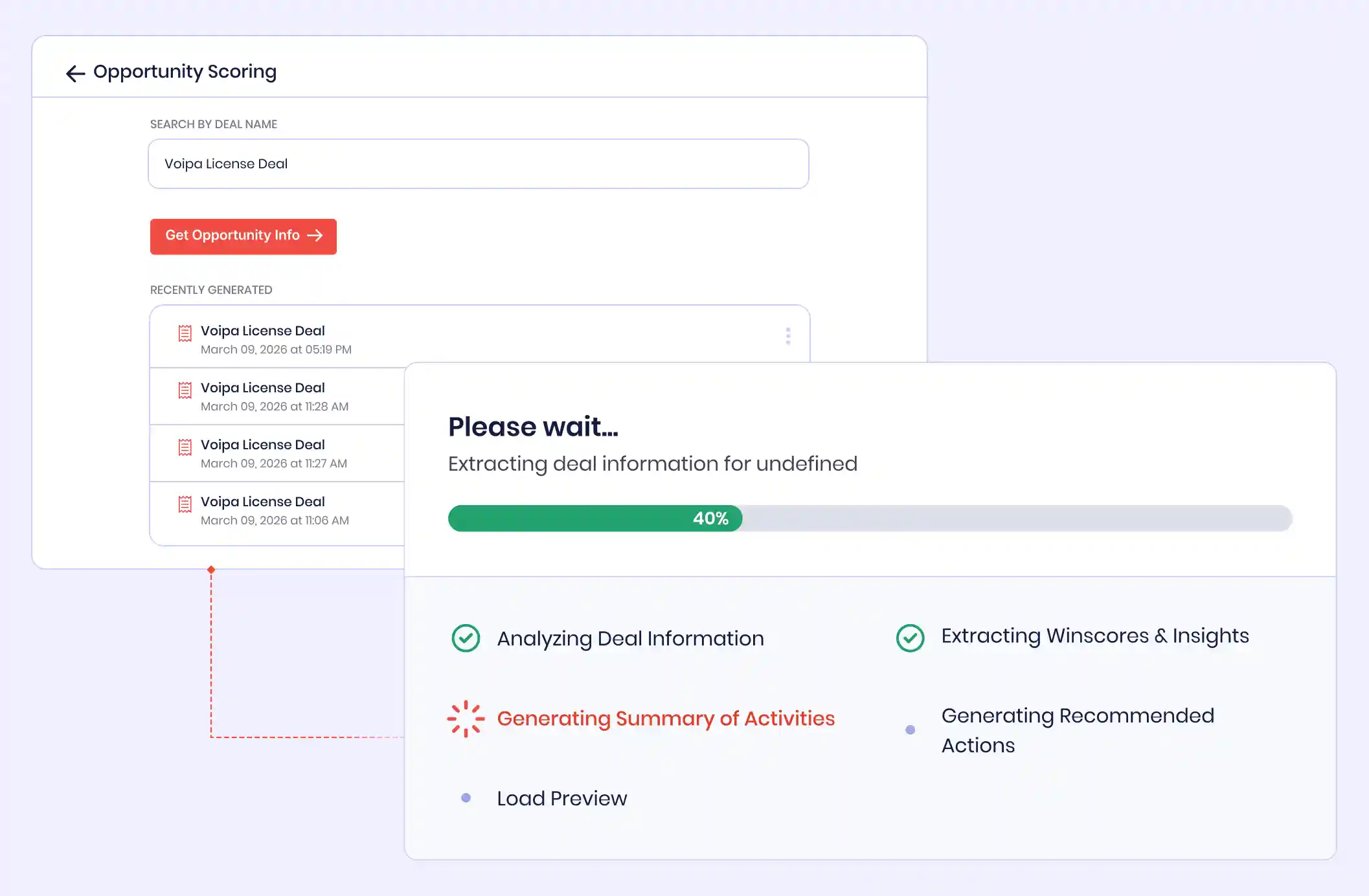
Aviso’s Opportunity Scoring Agent turns this methodology into a complete diagnostic-to-action workflow. When a rep selects a deal, the agent analyzes it across five dimensions and delivers a unified output in seconds.
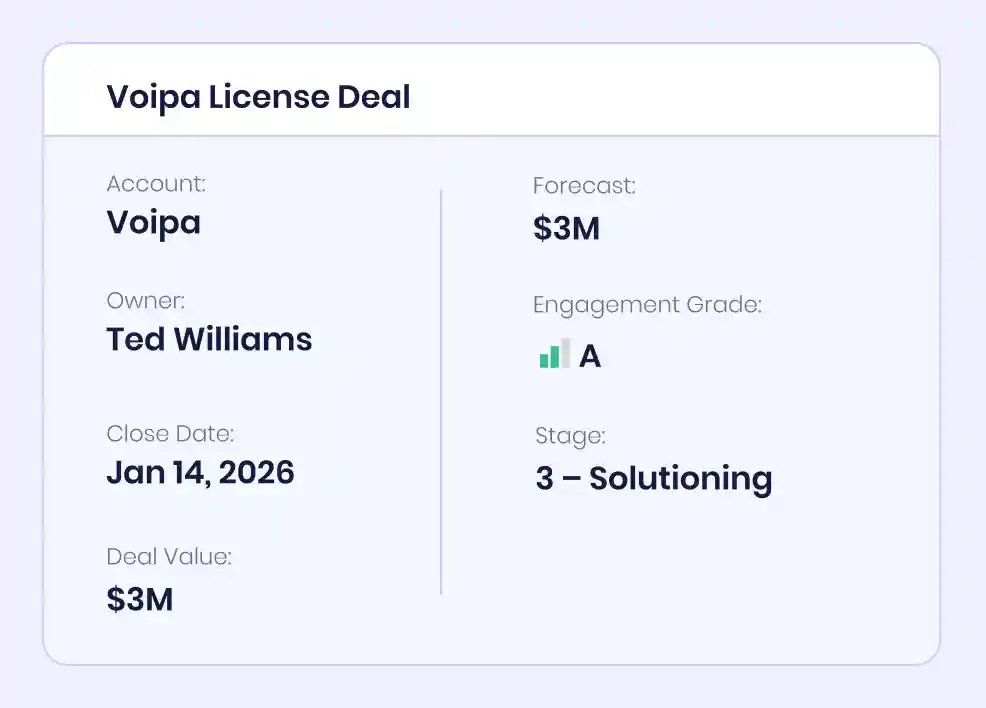
Deal Overview
The Deal Overview presents the deal’s key metadata at a glance, including account, owner, close date, deal value, forecast amount, engagement grade, and current stage, so the rep has full context before reviewing the score.
Winscores & Insights
The WinScores and Insights section charts the deal’s score trajectory over time across four dimensions (historical performance, best case, worst case, and win threshold) and surfaces the Top Factors driving the score.
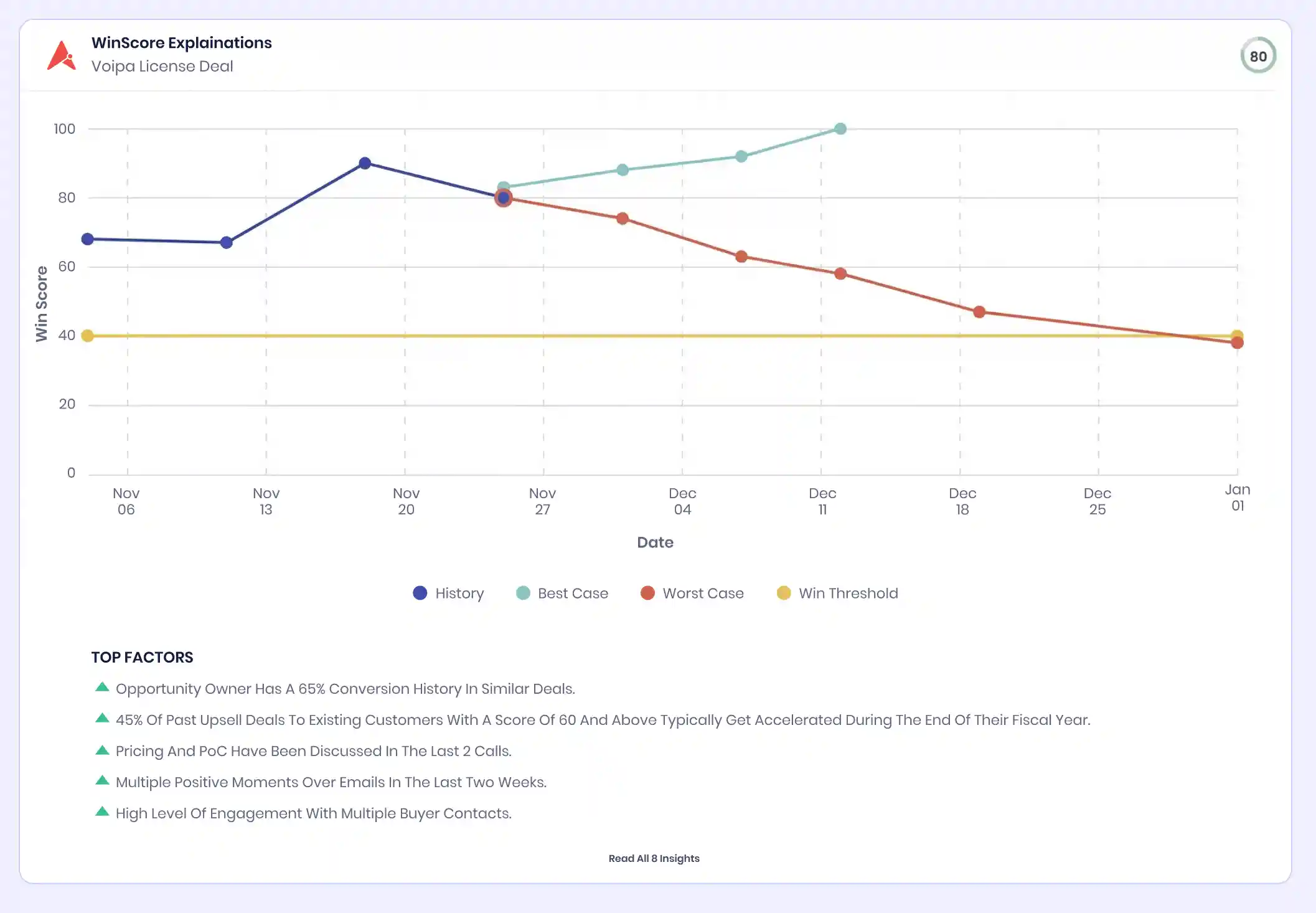
These factors are specific and actionable: the opportunity owner’s conversion rate on similar deals, upsell patterns from comparable accounts, recent pricing and proof-of-concept discussions, email engagement trends, and the depth of multi-threading across buyer contacts. This gives the rep a clear picture of what is working in the deal and what needs attention.
Smart Summary
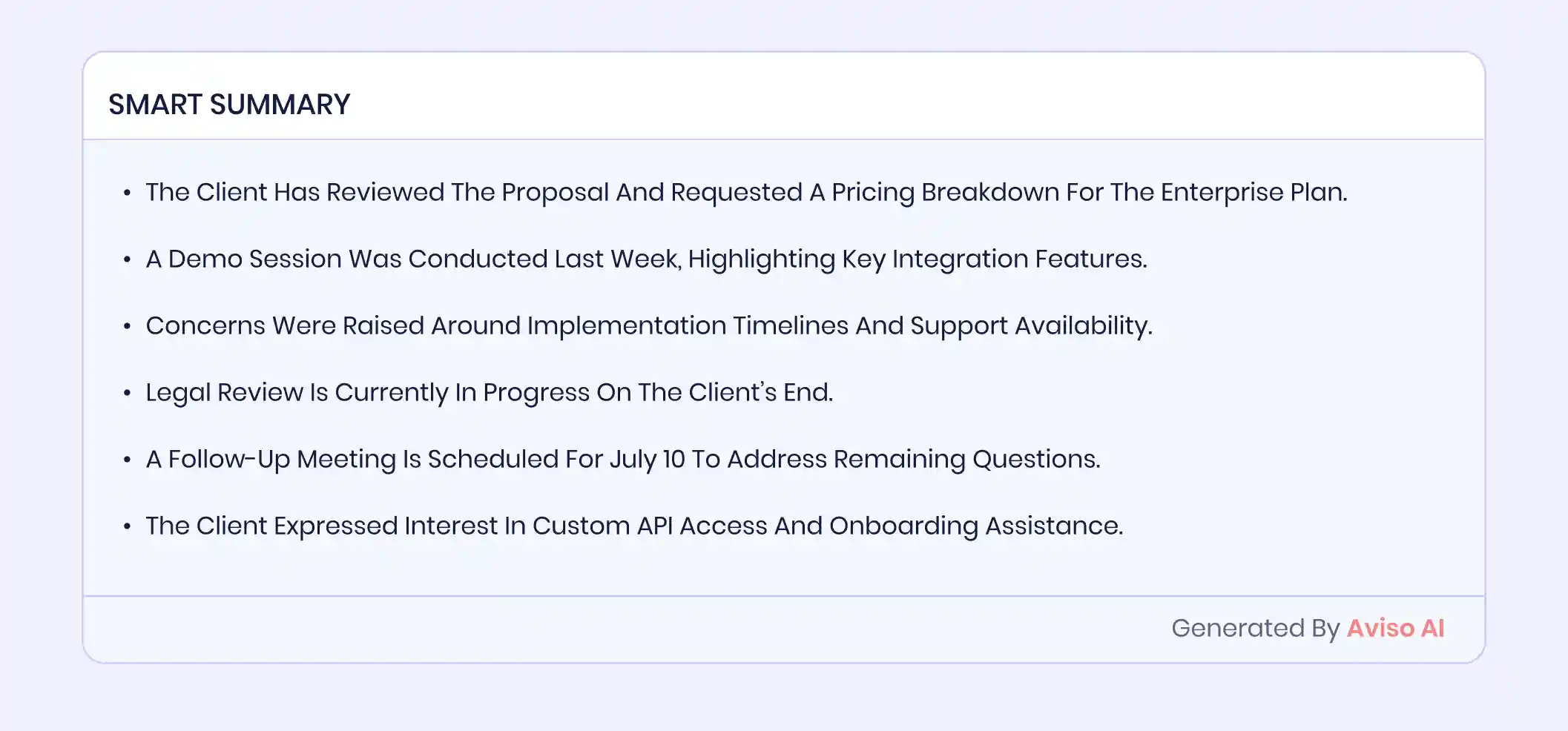
The Smart Summary generates an AI-powered digest of recent deal activity, consolidating CRM notes, email exchanges, and call highlights into a concise rundown that covers proposal status, demo takeaways, client concerns, legal review progress, and upcoming meetings. This saves reps the 15 to 20 minutes they would otherwise spend manually piecing together context before a forecast call or a client meeting.
Recommended Actions

The Recommended Actions section delivers targeted next steps tied to the deal’s current state. Each action card includes context that makes it immediately useful: a forecast preparation reminder noting that pipeline coverage is 1.5x below team average, a follow-up prompt for a $450K upside deal with no recent engagement logged, and a forecast update alert flagging that multiple Commit-stage deals have shifted categories. These are actions reps can execute immediately, not generic suggestions that require interpretation.
Cadences
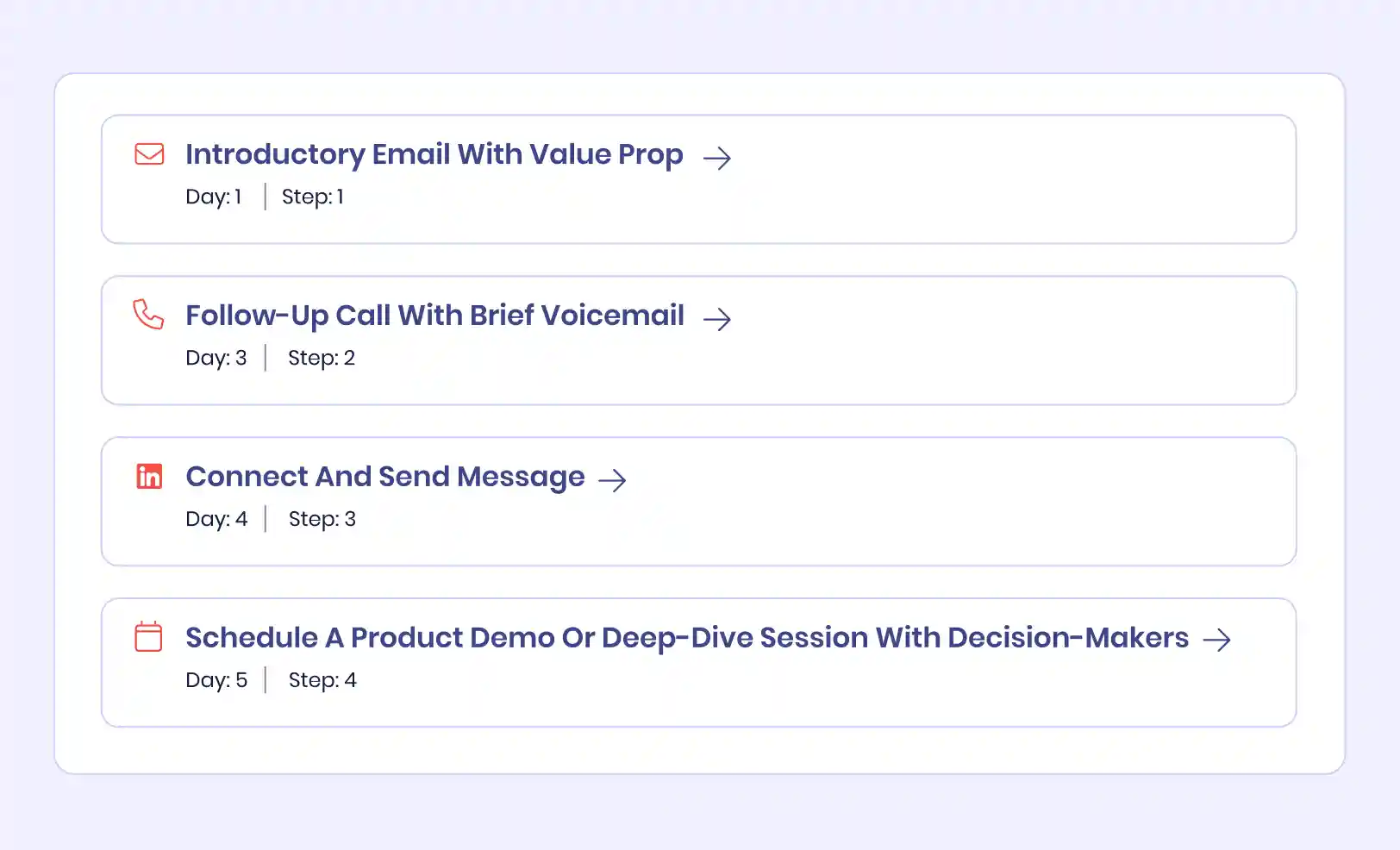
The Cadences tab completes the workflow by generating a structured outreach sequence tailored to the deal’s current stage: an introductory value-prop email on Day 1, a follow-up call with brief voicemail on Day 3, a LinkedIn connection and message on Day 4, and a product demo with decision-makers scheduled after that. This means the rep walks away from every scored deal with a ready-to-execute engagement plan, not just a number.
This is what separates a scoring tool from a scoring workflow. It’s not just a number on a dashboard. It’s a complete loop: understand the deal’s health, see why it’s scored the way it is, get a summary of recent context, receive specific recommendations, and walk away with a structured follow-up plan. All of it generated in seconds, all of it grounded in actual deal data.
What This Means for Revenue Teams
For sales reps and account executives, opportunity scoring eliminates the guesswork around where to spend their time. Reps can see which deals have the highest closure probability, receive real-time notifications when scores shift, and use the recommended actions and cadences to act on those insights immediately. The result is more selling time spent on the deals most likely to close and less time lost on opportunities that were never going to convert.
For sales managers, the scoring breakdown transforms pipeline reviews from status collection into targeted coaching. Managers can identify exactly which factors are holding a deal back (engagement gaps, qualification weaknesses, stalled progression) and coach against those specific issues rather than asking open-ended questions about deal status. This makes every forecast conversation more productive and every coaching session more focused.
For revenue operations, opportunity scores provide automated, objective inputs for forecasting that replace self-reported confidence levels. Scores feed directly into forecast models, and Sales Ops teams can track scoring accuracy over time to refine signal weighting for their specific sales motion. This creates a continuous improvement loop that makes the model more predictive with every quarter of data.
What to Evaluate in an Opportunity Scoring Solution
Real-time recalculation as deal data changes, with scores that update automatically without manual rep input.
Transparent factor-level breakdown that reps can act on, pulling data directly from the CRM.
Forecasting integration so that deal-level health translates directly into forecast accuracy, with feedback loops that refine signal weighting over time as more deals close or are lost.
Actionable output beyond a score: AI-driven next step recommendations and structured follow-up cadences that turn the diagnostic into an executable plan.
Your Pipeline Has the Answers
Sales teams are already generating the data that predicts deal outcomes through every meeting, email, CRM update, and qualification conversation. The difference between teams that forecast accurately and those that don’t is whether they have a way to synthesize that data into clear, prioritized action. Opportunity scoring provides that synthesis, and it does it continuously, automatically, and at a scale that no manual process can match.
See how Aviso’s Opportunity Scoring Agent works. Walk through the full workflow from deal selection to scoring breakdown to AI-driven action plan, and see what your pipeline looks like when every deal has a clear, data-backed priority. Book a demo.